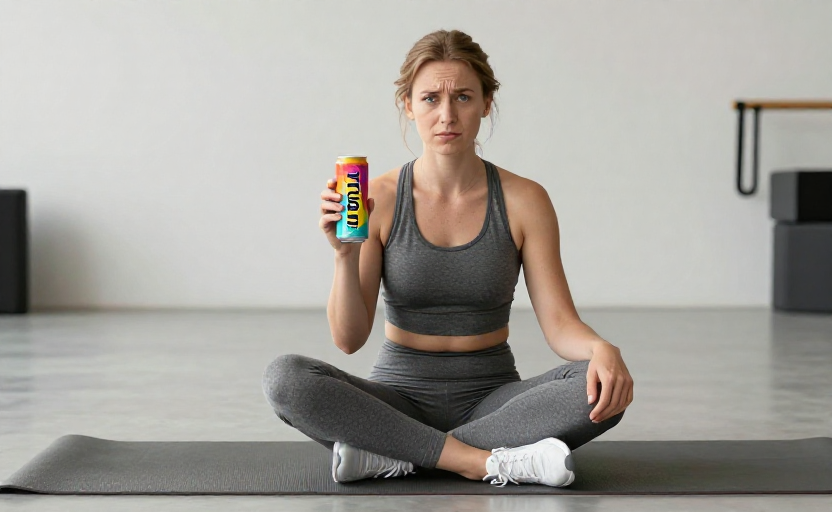
You have carved out time for mobility work—a dedicated session of hip openers, thoracic rotations, and deep stretching. You have your mat, a quiet space, and maybe a playlist. But before you start, consider what is in your hand. The drink you choose in the minutes or hour before this kind of work can either help your tissues release or quietly sabotage your range of motion.
After talking with physical therapists and sports medicine specialists, one beverage consistently tops the list of what not to consume before mobility training: high-caffeine energy drinks. Here is why that quick sip can work against everything you are trying to achieve.
Why caffeine can tighten your nervous system
Caffeine is a stimulant. It increases heart rate, sharpens alertness, and triggers the release of stress hormones like cortisol and adrenaline. For a lifting session or a sprint, that arousal can be useful. But mobility work is different. It asks your nervous system to downshift, to tolerate lengthening under tension, and to allow a stretch reflex to soften.
When your system is wired on a heavy dose of caffeine, your muscles and fascia tend to stay in a lower-level protective state. “Your nervous system is essentially more on guard,” explains Dr. Mara Bennett, a physical therapist specializing in movement recovery. “Any stretch or sustained position can be misinterpreted as a threat, so your muscles resist the very opening you are trying to create.” This resistance is not just psychological—it is a neurological reflex that limits how much slack your tissues will give.
The energy drink effect on proprioception
Beyond the tension effect, high-caffeine drinks can dull your ability to sense where your body is in space. Proprioception is the feedback loop between your joints, muscles, and brain that tells you how far to push a stretch. Energy drinks often contain not only caffeine but also high levels of sugar or artificial sweeteners, plus compounds like taurine and B vitamins that can overstimulate the sensory system.
During a hip capsule mobilization or a deep lunge to open the hip flexors, you need clean feedback. If your sensory system is busy processing a chemical spike, you may push too far into a stretch and strain a ligament, or you may hold back too much and get no benefit. Mobility work rewards subtlety. Energy drinks tend to reward speed.
Short version: Save the energy drink for before a workout that needs explosive power, not for before a session that needs surrender and control.
Does coffee count?
Not all caffeine is created equal in this context. A standard cup of black coffee—around 95 mg of caffeine—is less problematic than a can of energy drink that might pack 150 to 300 mg of caffeine along with other stimulants. For many people, a modest coffee consumed 60 to 90 minutes before mobility work will not produce the same jittery, protective response. But if you are sensitive to caffeine, even a single cup can leave your nervous system too alert for effective stretching.
The key variable is your personal tolerance and timing. If you drink coffee daily, a small amount might not interfere. But the concentrated, synthetic caffeine load in energy drinks is a different story for almost everyone.
Alternatives that support mobility
What should you reach for instead? Water is the obvious and best choice. Hydrated fascia glides more freely. Dehydrated tissues are stiffer and more prone to micro-tears under stretch. If you want something warm, plain herbal tea—chamomile, peppermint, or ginger—can calm the nervous system rather than rev it.
Some coaches recommend tart cherry juice or beet juice before mobility sessions because of their anti-inflammatory and blood-flow-supporting properties. These are not necessary, but they are far better options than anything with added caffeine or sugar. The goal is to enter the session with a quiet nervous system and well-hydrated connective tissue.
What to do if you already had caffeine
If you accidentally drank an energy drink or a strong coffee right before your mobility block, do not skip the session. Instead, modify your approach. Spend the first five minutes doing very slow, gentle breathing—inhale for four counts, exhale for six. Let that calm the sympathetic drive. Then begin with the least intense stretches first: supine twists, cat-cow, and gentle neck rolls. Avoid aggressive end-range stretching. Your tissues may not be ready to open fully, and pushing could cause strain.
This is also a good reason to schedule mobility work earlier in the day, before your caffeine intake accumulates, or to reserve it for a time when you can let your system settle.
Mobility training rewards consistency, patience, and a calm environment. The drink you choose before it is a small variable, but it can quietly make the difference between a session that unlocks new range and one that reinforces protective tightness. For most people, the worst drink to have before mobility work is a high-caffeine energy drink. Your nervous system will thank you for leaving it out.