Eating out doesn’t have to derail your nutrition goals. For anyone juggling a packed schedule, restaurant meals are often a necessity, not a luxury. The key to staying on track isn’t about avoiding restaurants altogether, but learning how to navigate the menu with a protein-first mindset. Protein is the cornerstone of a satisfying meal—it helps keep you full, supports muscle maintenance, and provides steady energy. With a few simple strategies, you can confidently choose meals that fuel your busy life without the post-meal slump or compromise.
The challenge is real: menus are filled with tempting, often carb-heavy options, and portion sizes can be deceptive. But by focusing on protein sources and how they’re prepared, you can transform any dining experience into an opportunity for a nourishing, balanced meal. This guide is about practical choices, not perfection, giving you the tools to order wisely no matter the cuisine.
Why protein should be your priority when ordering
When you’re pressed for time and mental energy, a meal that keeps you satisfied for hours is invaluable. Protein is uniquely effective at promoting satiety, meaning you’re less likely to experience energy crashes or cravings soon after eating. For busy people, this translates to better focus and sustained productivity. Beyond fullness, adequate protein supports your body’s daily repair processes and helps maintain muscle mass, which is especially important if your schedule limits dedicated workout time.
Restaurant meals often skew heavy on refined carbohydrates and fats, leaving protein as an afterthought. By making it the anchor of your order, you naturally create a more balanced plate. This approach simplifies decision-making: instead of overanalyzing every item, you start by identifying the best protein source and build from there.
Decoding the menu: what to look for
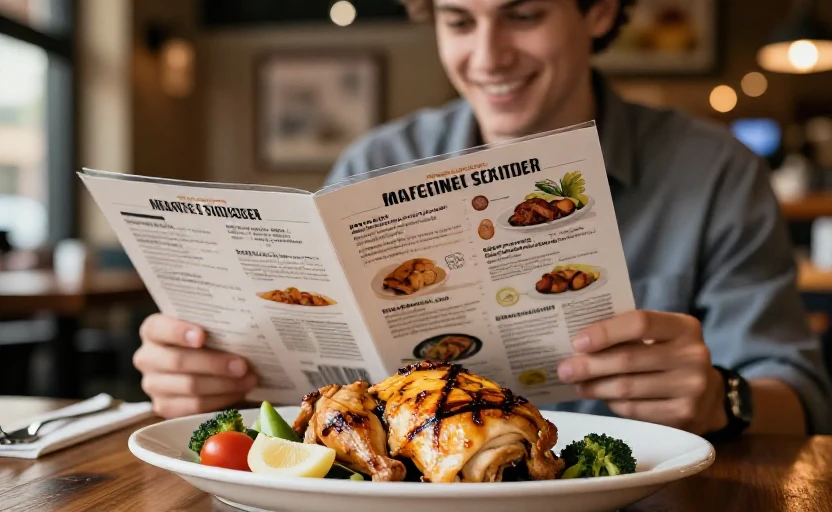
Your first scan of the menu should focus on the main protein offerings. Look for sections like “Grilled,” “Roasted,” or “From the Sea.” These are typically better starting points than “Pastas” or “Sandwiches,” though you can often find protein-rich options there, too.
Start with the protein, then add the sides. Ask yourself: “What’s the leanest, cleanest source of protein here, and how is it cooked?”
Pay close attention to preparation methods. Words like grilled, broiled, roasted, baked, or steamed usually indicate less added fat. Be cautious with terms like crispy, fried, breaded, creamy, or smothered, as these often mean extra calories from oils, batters, or heavy sauces. Don’t hesitate to ask your server for details—a simple “How is the chicken prepared?” can provide crucial information.
Smart swaps and simple requests
Most restaurants are accustomed to accommodating requests. A few small changes can significantly improve the nutritional profile of your meal without sacrificing flavor.
- Swap the sides: Instead of fries, mashed potatoes, or white rice, ask for a double portion of vegetables, a side salad, or a complex carb like quinoa or sweet potato if available.
- Sauce on the side: Request dressings, gravies, and creamy sauces on the side. This gives you control over the amount you use, often allowing you to enjoy the flavor with just a fraction of the portion.
- Choose lean cuts: Opt for skinless chicken breast, lean sirloin or filet, fish fillets, or shellfish. If you’re having red meat, a smaller portion of a leaner cut is a great choice.
- Mind the extras: Be aware of calorie-dense additions like cheese, bacon, croutons, and crispy onions. You can ask to have these omitted or served on the side.
Phrasing your request politely goes a long way. “Would it be possible to get the grilled salmon with extra broccoli instead of the risotto?” is usually met with a positive response.
Navigating different cuisines
Every cuisine has its protein stars. Here’s how to spot them.
At a casual American grill
Look for grilled chicken, steak, or fish entrees. Burgers can be a good option if you choose a lean patty (like turkey or bison), skip the cheese and bacon, and wrap it in lettuce or eat it open-faced, foregoing half the bun. Always opt for a side salad or steamed veggies over fries.
At an Italian restaurant
Focus on dishes like grilled chicken or fish (Pesce alla Griglia), shrimp scampi (ask for less butter/oil), or lean meat sauces like a marinara with meatballs. Avoid breaded proteins like chicken parmesan or veal milanese. Choose a side of vegetables instead of pasta, or ask for a smaller portion of whole-wheat pasta if available.
At an Asian restaurant
Excellent choices include stir-fries with lean meat, shrimp, or tofu, and plenty of vegetables. Ask for the sauce on the side and for the dish to be prepared with less oil. Steamed dumplings, sashimi, and soups like pho or tom yum with added protein are also great. Be mindful of deep-fried options (like General Tso’s chicken) and heavy, sweet sauces.
At a Mexican restaurant
Build a meal around fajitas (grilled meat and veggies), grilled shrimp, or chicken. Use lettuce as a base for a taco salad instead of a fried shell. Ask for black or pinto beans, extra salsa, and guacamole (in moderation) for healthy fats and fiber. Go easy on the cheese, sour cream, and refried beans, which are often cooked with lard.
Putting it into practice: a sample ordering strategy
Let’s walk through a typical scenario. You open the menu and feel overwhelmed.
- Scan for proteins: Quickly identify the grilled, roasted, or seared meat, fish, and poultry options.
- Evaluate preparation: Select 2-3 dishes that sound good and note their cooking methods and sides.
- Plan your request: Decide on your primary choice and any simple swaps (e.g., “I’ll have the grilled chicken, please, with a side salad instead of the mashed potatoes”).
- Order with confidence: Place your order clearly and politely. Remember, you’re the customer.
Making smart protein choices when eating out is a skill that gets easier with practice. It’s not about restriction, but about empowerment—choosing foods that make you feel energized and ready to tackle your busy life. By focusing on quality protein and simple preparation, you can enjoy the social and practical benefits of dining out while supporting your health and wellness goals.