
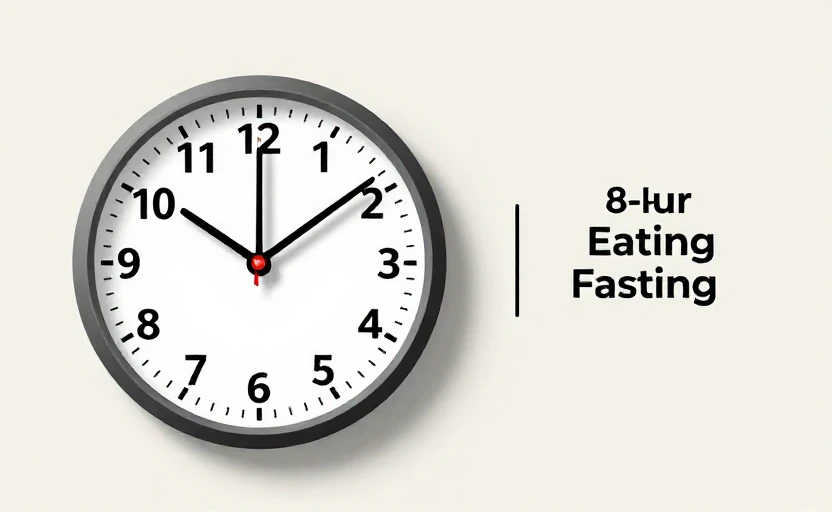
When it comes to weight loss, we often focus intensely on what we eat. Calories, macros, and food quality dominate the conversation. But a growing body of research suggests another piece of the puzzle might be just as crucial: when we eat. The concept of meal timing, or structuring your eating into specific daily windows, isn't just another fad. It's an approach grounded in our body's innate circadian rhythms, and science is beginning to outline its potential benefits for metabolism and weight management.
This isn't about skipping meals or extreme restriction. It's about aligning your eating pattern with your body's natural metabolic ebb and flow. By understanding the science behind eating windows, you can make an informed choice about whether this strategy could support your health goals.
Your Body's Internal Clock and Metabolism
Every cell in your body operates on a roughly 24-hour cycle known as a circadian rhythm. This internal clock, governed by a master regulator in your brain, influences everything from hormone release and body temperature to sleep cycles and, importantly, digestion and metabolism. Your pancreas, liver, and gut all have their own daily rhythms.
Research indicates that your body is primed to process food most efficiently during daylight hours. Insulin sensitivity—how effectively your cells respond to insulin to take in glucose—tends to be higher in the morning and decreases as the day progresses. This means you may metabolize a morning meal differently than an identical meal eaten late at night.
Eating late at night, when your body is preparing for sleep, can be like throwing a wrench into well-oiled metabolic machinery.
When you eat in misalignment with these rhythms—say, with a large meal right before bed—you're asking your digestive system to work when it's winding down. This mismatch may contribute to poorer blood sugar control, increased fat storage, and disrupted sleep, all of which can hinder weight loss efforts.
What Is Time-Restricted Eating?
Time-restricted eating (TRE) is the most studied form of meal timing for weight loss. It involves consuming all your daily calories within a consistent window of time each day and fasting for the remaining hours. The fasting window is typically 12 to 16 hours, leaving an eating window of 8 to 12 hours.
A common example is finishing dinner by 8 p.m. and not eating again until noon the next day—a 16:8 pattern. The key is consistency; the regimen works by giving your digestive system a prolonged, daily break. This fasting period allows insulin levels to drop and may trigger cellular repair processes like autophagy.
- It's not primarily about calorie restriction: While some people naturally eat less within a shorter window, the benefits of TRE appear to extend beyond mere calorie reduction. The metabolic switch from fed to fasted states seems to be beneficial in itself.
- It's flexible: You can adjust the window to fit your lifestyle. An earlier window (e.g., 7 a.m. to 3 p.m.) may align better with natural light cycles, but a later one (e.g., 12 p.m. to 8 p.m.) might be more sustainable for social and family life.
The Evidence on Eating Windows and Weight Loss
So, what does the science actually say? Numerous studies, though often short-term, show promising results. A 2020 review in the New England Journal of Medicine highlighted that TRE can lead to modest weight loss—typically in the range of 3-5% of body weight—and improvements in insulin resistance, blood pressure, and oxidative stress.
These effects are thought to stem from several mechanisms. The extended fasting period helps deplete liver glycogen stores, prompting the body to burn fat for energy. It also appears to improve metabolic flexibility, which is your body's ability to efficiently switch between burning carbs and fat.
It's crucial to note that TRE isn't a magic bullet. The weight loss achieved in studies is often similar to what's seen with traditional daily calorie restriction. Its main advantage may be simplicity; some people find it easier to follow a time rule than to count calories at every meal.
Practical Ways to Experiment with Meal Timing
If you're curious, the best approach is gradual and mindful. Drastic changes are rarely sustainable.
Start with a Gentle 12-Hour Window
Begin by simply narrowing your daily eating window to 12 hours. If you usually snack from 7 a.m. until 10 p.m., try finishing your last bite by 7 p.m. This alone can create a meaningful metabolic break and is often an easy first step.
Listen to Your Hunger Cues
Distinguish between true hunger and habitual or emotional eating. During your fasting window, drink water, herbal tea, or black coffee. Often, thirst or boredom is mistaken for hunger. Giving your body a consistent schedule can help recalibrate these signals.
Prioritize Meal Quality
An eating window is not a license for poor food choices. Within your window, focus on balanced meals with plenty of protein, fiber from vegetables and whole grains, and healthy fats. These nutrients promote satiety and stable energy, making the fasting period more comfortable.
Think of your eating window as an opportunity to nourish your body, not just a countdown to stop eating.
Who Should Be Cautious?
Meal timing strategies are not for everyone. If you have a history of disordered eating, TRE can trigger unhealthy patterns and is generally not advised. Individuals with diabetes, especially those on insulin or other glucose-lowering medications, must consult their doctor, as fasting can dangerously affect blood sugar levels. The same goes for those who are pregnant, breastfeeding, or underweight. Always prioritize your overall nutritional needs.
Finding Your Rhythm
The most effective eating pattern is the one you can maintain consistently and that makes you feel your best. For some, a structured window provides clarity and reduces mindless grazing. For others, a more flexible approach with an emphasis on an early, light dinner works better.
The science of meal timing offers a compelling perspective: our bodies are designed for cycles of feeding and fasting. By paying attention to when we eat, not just what, we can work with our biology to support metabolic health and sustainable weight management. Start small, tune into your body's responses, and remember that consistency with any healthy habit trumps perfection.