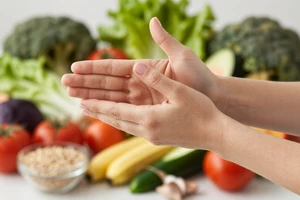
If you’ve ever felt overwhelmed by food scales, measuring cups, or calorie counting apps, there’s a simpler tool you can use to guide your meals—one you carry with you everywhere. Your own hand provides a surprisingly consistent, personalized gauge for portion sizes, helping you build balanced plates without any extra equipment.
This method, often recommended by dietitians, isn’t about rigid restriction. It’s a visual framework for understanding proportions and listening to your body’s hunger cues. It works because your hand size generally correlates with your body size, making it a built-in, custom portion guide.
Why Your Hand Works as a Portion Guide
Portion distortion is real. Restaurant servings and packaged foods have skewed our perception of what a “normal” amount looks like. Using your hand brings the measurement back to you, literally. A larger person typically has larger hands, which naturally suggests slightly larger portions to meet their energy needs. A smaller person’s hands will guide them toward portions that are right for their frame. It’s a built-in, proportional system.
Think of your hand not as a strict ruler, but as a gentle visual reminder for building a balanced plate.
This approach shifts the focus from external numbers to internal awareness. It encourages you to look at your food, consider its composition, and tune into how different portions make you feel—full, satisfied, or still hungry.
The Basic Hand-Portion Framework
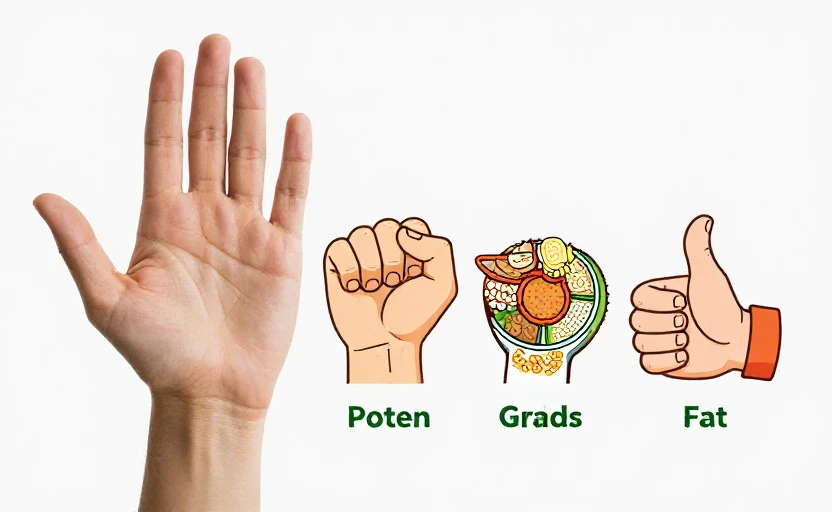
Here’s a general breakdown of how to use different parts of your hand for common food groups. Remember, these are starting points for a single meal, not hard limits.
Protein (Palm)
Your palm (not including fingers) is a guide for a serving of protein-rich foods like chicken, fish, tofu, or legumes. A portion about the size and thickness of your palm provides a solid source of protein to support muscle repair and keep you feeling full. For most people, this translates to roughly 3-4 ounces of cooked protein.
Vegetables (Fist)
Your clenched fist is a great measure for non-starchy vegetables—think broccoli, spinach, bell peppers, or a mixed salad. Aim for at least one fist-sized portion per meal, but two is even better. These foods are high in volume and nutrients but relatively low in calories, helping you feel satisfied.
Carbohydrates (Cupped Hand)
Your cupped hand holds a helpful portion for cooked grains, starchy vegetables (like sweet potato or corn), or legumes. This could be about ½ to 1 cup of cooked quinoa, rice, or oats. This portion provides energy-giving carbohydrates along with fiber.
Fats (Thumb)
Your thumb, from tip to base, is a guide for concentrated fats like oils, nut butters, cheese, or seeds. One thumb-sized portion is roughly a tablespoon. This helps you add healthy fats for flavor and satiety without overdoing it, as fats are calorie-dense.
Putting It All Together on Your Plate
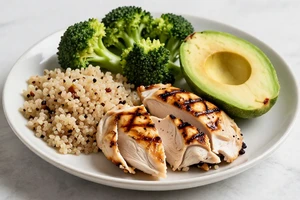
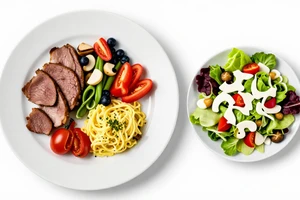
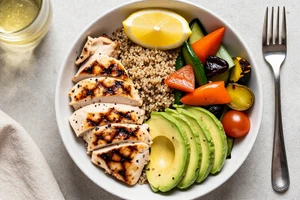
At lunch or dinner, visualize your plate using these guides. A balanced meal might include:
- 1 palm of grilled salmon or lentils
- 2 fists of roasted broccoli and a side salad
- 1 cupped hand of brown rice or quinoa
- 1 thumb of olive oil used in cooking or as a dressing
For snacks, you might combine a thumb of almond butter with an apple, or have a fist of carrot sticks with a thumb’s worth of hummus.
When the Hand Method Needs Adjustment
This framework is wonderfully simple, but life isn’t one-size-fits-all. There are times when you’ll intuitively adjust.
Listen to your hunger and activity. If you’ve just finished a long hike or a heavy training session, your body will likely need more fuel. It’s perfectly fine to add an extra cupped hand of carbohydrates or a bit more protein. Conversely, on a quiet, sedentary day, you might find a slightly smaller portion is sufficient.
Consider the food’s density. A fist of leafy greens is less dense than a fist of roasted root vegetables. A palm of lean white fish is less dense than a palm of a fatty steak. Use the hand as a visual starting point, then apply common sense about the specific food’s richness.
It’s a guide, not a gospel. Some days you’ll be hungrier, some days less so. The goal is to develop a more intuitive relationship with food, where you can assess a portion and know if it looks about right for you in that moment.
Common Questions About Hand Portion Control
What about foods that don’t fit these categories? For combined dishes like soups, stews, or casseroles, use the framework as a checklist. Look at your bowl and ask: Do I see a palm-sized source of protein? A couple of fists of vegetables? A cupped hand of grains or starch? If one element is missing, you might add a side salad or some fruit to round it out.
How do I handle nuts and seeds? These are healthy but calorie-dense. For nuts like almonds or walnuts, a single portion is roughly one handful—what you can hold in the palm of your hand without spilling. For seeds or ground nuts, use the thumb measure.
The greatest benefit of this method may be the mindfulness it fosters, pulling you out of autopilot eating.
Building a Sustainable Habit
Start by practicing for one meal a day. Simply observe how the portions on your plate compare to your hand. Don’t stress about perfection. Over time, this visual calibration becomes second nature, helping you navigate buffet lines, restaurant meals, and home cooking with more confidence.
This method works because it’s flexible, portable, and brings the focus back to whole foods and balance. It’s not about micromanaging every bite, but about creating a sustainable, visual shorthand for nourishment that travels with you, right at your fingertips.