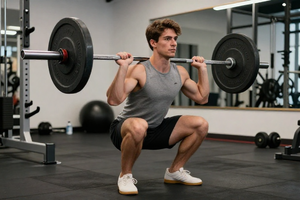
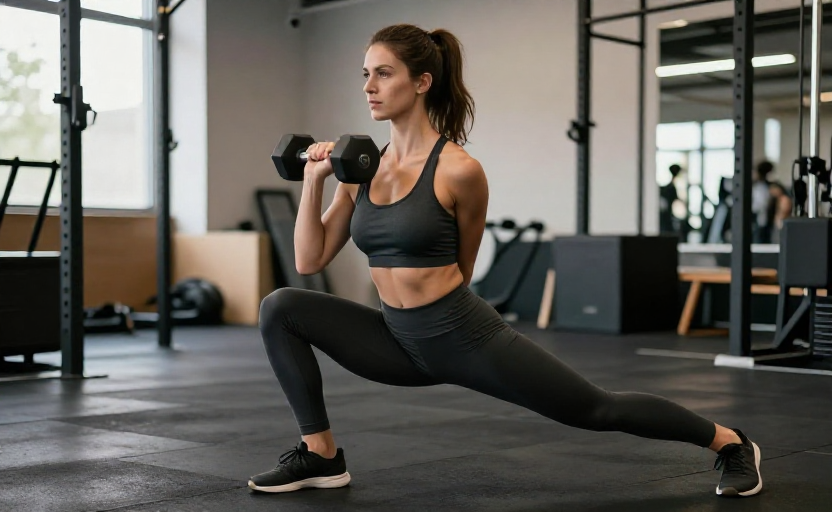
If you have ever noticed one arm feeling noticeably stronger during a push-up, or felt your dominant leg taking over during a squat, you are not alone. Strength imbalances are incredibly common, and they often develop naturally from everyday habits—carrying a bag on one shoulder, stepping forward with the same foot, or favoring your dominant hand. Left unchecked, these asymmetries can limit performance, alter your posture, and increase the risk of overuse injuries.
The good news is that correcting these imbalances does not require complicated programming. The most effective strategy relies on unilateral exercises—movements that train one limb at a time. By isolating each side independently, you force the weaker arm or leg to do its fair share of the work, which builds balanced strength and improves neuromuscular control. Below are expert-backed unilateral exercises that can be woven into any strength-training routine.
Why Unilateral Training Works
Bilateral exercises—like barbell back squats or bench presses—are excellent for building overall strength, but they allow the dominant side to compensate. Unilateral training exposes the discrepancy. Research suggests that unilateral movements may activate the core more thoroughly because your body has to stabilize against rotation and lateral movement. They also improve intermuscular coordination and can correct movement patterns that have become lopsided over time.
It is worth noting that the goal is symmetry within a reasonable range, not absolute equality. A small difference—roughly 5 to 10 percent—between limbs is common and generally not problematic. When the gap widens beyond that, or if you notice pain or compensations, unilateral work becomes particularly valuable.
Single-Leg Movements for Lower-Body Balance
Bulgarian Split Squats
This movement is often described as the king of single-leg exercises. Place the top of your rear foot on a bench or chair, and lower your front knee toward the ground while keeping your torso upright. The instability demands engagement from the quadriceps, hamstrings, glutes, and core simultaneously. Start with just your body weight, and gradually add light dumbbells when you can perform 10 to 12 reps with consistent form on each leg.
Walking Lunges
Unlike stationary lunges, walking lunges force each leg to decelerate, stabilize, and then propel forward. This dynamic pattern better mimics real-world movement and reveals imbalances in eccentric strength. Focus on a vertical shin and a 90-degree bend in both knees at the bottom of the lunge. If one leg consistently wobbles or feels hesitant, that is a clear sign it needs extra attention.
Single-Leg Glute Bridges
Lying on your back with one foot flat on the floor and the other leg extended upward, press through the working heel to lift your hips. This exercise isolates the glute and hamstring of the grounded leg, and it is especially useful if you notice one side of your lower back feeling tight after squats—that often signals your glute is not engaging properly on the other side.
Single-Arm Movements for Upper-Body Balance
Dumbbell Single-Arm Overhead Press
The seated version removes leg drive, forcing your shoulder and core to handle the entire load. Because the weight is off-center, your obliques have to brace hard to keep your spine upright. Start with a weight you can press for 8 to 10 reps on the weaker side, and do not let the stronger side exceed that number. This is critical—you want to bring the weaker side up rather than letting the stronger side grow even more dominant.
Single-Arm Dumbbell Row
Bent over a bench or in a staggered stance, pull the dumbbell toward your hip while keeping your back flat. This movement hits the latissimus dorsi, rhomboids, and biceps, but it also challenges rotational stability. Many people feel a better mind-muscle connection on one side; if that is the case, consider pausing for a beat at the top on the weaker side to strengthen the neural pathway.
Single-Arm Chest Press
Using a dumbbell or a cable, press one arm up while the other arm either rests at your side or holds a light weight for balance. This variation exposes any hesitancy or tremor in the pressing side. It also forces the stabilizing muscles of the shoulder (rotator cuff) to work harder than they would during a bilateral press.
How to Structure Your Unilateral Work
When incorporating unilateral exercises into your routine, placement matters. A simple approach is to start your workout with one unilateral compound movement—perhaps Bulgarian split squats or single-arm overhead press—when your energy and focus are highest. Then finish with a second unilateral movement later in the session.
A helpful rule of thumb: always lead with the weaker side and perform the same number of reps on the stronger side. Do not do extra sets or reps on the weak side—consistency with controlled form is more effective than chasing volume.
Twice per week is a reasonable starting frequency for unilateral-focused work, integrated into an otherwise balanced program. Over the course of four to six weeks, many people notice the strength gap narrowing and movement quality improving.
Important Caveats
Unilateral exercises place a higher demand on balance and proprioception, so it is wise to be cautious about the load. Ego-lifting with heavy dumbbells can compromise form and defeat the purpose. If you feel sharp pain in a joint rather than muscular fatigue, stop and reassess your technique. It can also be helpful to film yourself from the front and side to check for subtle compensations like hip hiking or shoulder shrugging.
As with any new training approach, consult a qualified professional if you have a history of injury or are unsure about proper form. The exercises described here are for general wellness education and are not a substitute for personalized medical advice.