
If you rely on a slow cooker for busy weeknights or weekend meal prep, you may have wondered whether the long, gentle heat is silently sapping the nutrition from your carefully chosen ingredients. It is a fair question. We are told that fresh is best and that overcooking can damage vitamins. Yet slow cookers remain a staple in countless kitchens, praised for their convenience and ability to transform tough cuts of meat into tender meals.
So, what is the real story? Does a slow cooker destroy nutrients, or is it simply a different—and still healthful—way to cook? The answer is nuanced, but the short version is this: slow cooking does cause some nutrient losses, but not nearly as much as you might fear, and in many ways, it can be a perfectly good choice for a nutrient-rich diet. Here is the practical, evidence-informed breakdown.
How heat affects different nutrients
Not all vitamins react to heat in the same way. Water-soluble vitamins—particularly vitamin C and the B-vitamin group (thiamin, folate, and B6)—are the most sensitive to both heat and water. When you simmer vegetables or meat for hours, some of these vitamins will leach into the cooking liquid and some will degrade from prolonged exposure to high temperatures.
Fat-soluble vitamins (A, D, E, and K), on the other hand, are far more stable during cooking. Minerals such as potassium, magnesium, zinc, and iron are also quite heat-stable, though they may end up in the broth rather than staying inside the food itself. Protein content does not meaningfully decrease with slow cooking, and in fact, the gentle heat can make protein more digestible.
The biggest trade-off is with water-soluble vitamins. A slow-cooked stew will contain less vitamin C than a quick stir-fry, but it may also make other nutrients more bioavailable, such as the lycopene in tomatoes or the beta-carotene in carrots.
Does a slow cooker destroy more nutrients than other methods?
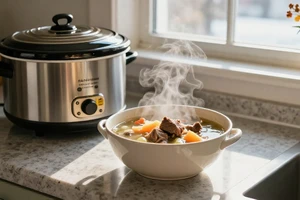
It depends on the method of comparison. Boiling, for example, can lead to significant losses of water-soluble vitamins because the cooking water is often discarded. Slow cookers keep that liquid, so if you consume the broth—as you do with soups, stews, and braises—you retain most of the vitamins that have leached out of the food. In that sense, a slow cooker can be more nutrient-preserving than boiling and draining.
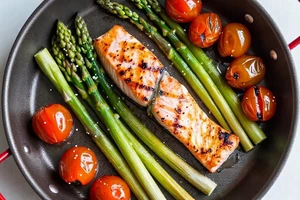
The real contrast is with methods that use very brief cooking times and minimal water, such as steaming or stir-frying. Those methods retain the highest levels of heat-sensitive vitamins, especially vitamin C, which begins to degrade at around 86°F. A slow cooker that runs at a low simmer (around 190–200°F) for six to eight hours will certainly reduce the vitamin C content of whatever is inside.
However, for many people, the trade-off is acceptable. A slow-cooked meal that includes a variety of vegetables, lean protein, legumes, and whole grains still delivers a substantial amount of fiber, minerals, and fat-soluble vitamins. It is far better to eat slow-cooked vegetables than to avoid vegetables altogether or rely on highly processed convenience foods.
Practical tips to maximize nutrient retention in a slow cooker
You do not need to give up your slow cooker to eat well. A few small adjustments can help you get the most out of your meal prep.
- Add delicate vegetables later. Leafy greens like spinach, kale, or Swiss chard, and fresh herbs such as parsley or cilantro, should be stirred in during the last 10 to 30 minutes of cooking. This protects their vitamin C and folate content while still infusing flavor.
- Use the cooking liquid. If you are making a stew, chili, or curry, the broth is where much of the water-soluble nutrition ends up. Serving it as part of the dish rather than pouring it down the drain ensures you get those nutrients.
- Keep the lid on. Every time you remove the lid, heat escapes and the cooking time extends. More time under heat means more potential for nutrient loss. Trust the recipe and resist the urge to peek.
- Cut vegetables into larger pieces. Smaller pieces have more surface area exposed to heat and water, which increases nutrient leaching. Keeping your carrot chunks and potato halves on the larger side helps reduce this effect.
- Don't overcook. If your recipe says four hours on low, try not to stretch it to six unless necessary. More hours in the pot increase the cumulative thermal exposure for sensitive vitamins.
What about protein and minerals?
For anyone focused on protein intake for muscle maintenance or general health, slow cooking is an excellent method. The long, moist heat breaks down collagen in meat and poultry, making the protein more accessible for digestion. That is part of why a slow-cooked beef stew feels so satisfying and easy to eat.
Minerals such as calcium, magnesium, potassium, and phosphorus are largely unaffected by the cooking process. If you are cooking beans or lentils, the slow cooker actually helps reduce antinutrients like phytates and lectins, which can interfere with mineral absorption. This is a net positive for nutrition.
Who should be extra mindful?
There are two groups who may want to pay closer attention to slow cooker nutrient retention: people who rely heavily on a few particular slow-cooked meals for the bulk of their nutrition, and those with specific needs for vitamin C or folate.
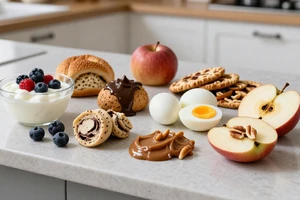
If you eat the same slow-cooked chicken and vegetable soup for lunch every day, you might be missing out on the higher vitamin C content that a quick sauté of broccoli or a fresh bell pepper salad could offer. The fix is simple: round out your week with a few no-cook or quick-cook sides. A handful of cherry tomatoes, a sliced apple, or a side of steamed snap peas adds back those heat-sensitive nutrients effortlessly.
So, does a slow cooker destroy nutrients? It does reduce some, but it also preserves others and even makes certain nutrients more available. For most people, the convenience of a slow cooker and the ability to cook whole foods from scratch is a clear win for overall diet quality. Use it wisely, pair it with fresh, raw components when possible, and you will be eating well—no compromises required.