For decades, the conversation around weight loss has been dominated by a single, simple metric: calories. While the energy balance equation is a foundational principle, focusing solely on it can feel like trying to build a house with only a hammer. You might make progress, but the process is frustrating, the structure is shaky, and you’re missing the full toolkit needed for something meant to last.
Sustainable weight management isn’t about perfect math; it’s about sustainable habits. It’s the shift from a restrictive, numbers-driven mindset to one that nourishes your body, respects your hunger, and fits into the rhythm of your life. Here are three dietitian-approved habits that move you beyond the calorie ledger and toward lasting change.
Habit 1: Prioritize Protein and Fiber at Every Meal
Instead of starting your meal planning with “How many calories can I have?”, try asking “Where is my protein and fiber coming from?” This subtle pivot changes everything. These two nutrients are the cornerstone of satiety—the feeling of fullness and satisfaction that keeps you from searching for a snack an hour after you’ve eaten.
Protein requires more energy to digest, slows the emptying of your stomach, and directly influences hunger hormones. Fiber, particularly the soluble kind found in oats, beans, and apples, absorbs water and forms a gel-like substance in your gut, slowing digestion and stabilizing blood sugar. Together, they create a powerful, natural appetite-regulation system.
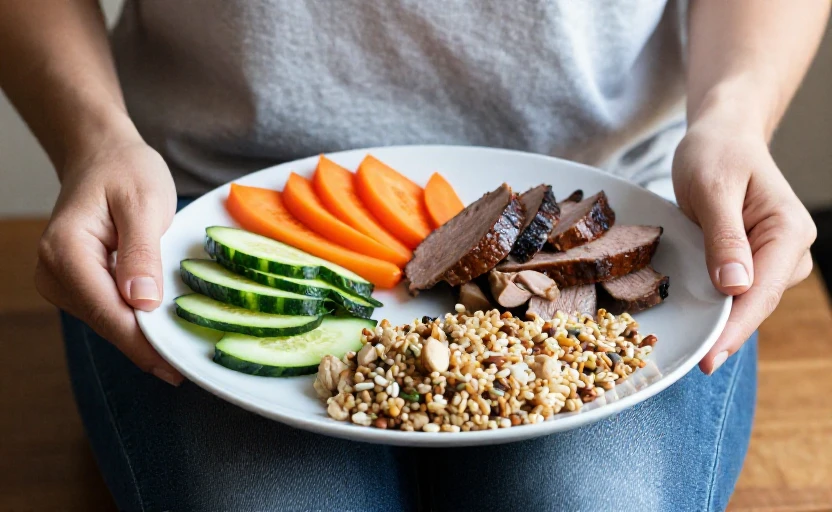
Think of your plate. A lunch of a plain bagel with fat-free cream cheese might be low in calories, but it’s a recipe for a mid-afternoon energy crash and cravings. Now, imagine a lunch plate with a generous serving of grilled chicken or lentils (protein), a large roasted sweet potato and a big handful of steamed broccoli (fiber), with a drizzle of olive oil for healthy fats. The second plate is inherently more satisfying and nourishing, guiding you toward a comfortable fullness without needing to count a single digit.
Build your meals around a protein source and a fiber-rich vegetable or whole grain first. The satisfaction they provide often naturally guides portion sizes.
Habit 2: Master the Art of Mindful Eating
How you eat can be just as important as what you eat. Mindful eating is the practice of bringing full attention to the experience of eating—the flavors, textures, aromas, and how your body feels. It’s the antithesis of eating while distracted, which is where so many of us consume extra calories without even realizing it.
When you eat in front of a screen, in the car, or while working, you bypass your body’s internal satiety signals. You’re not giving your brain a chance to register that food has arrived. It takes about 20 minutes for your gut to communicate fullness to your brain. A distracted meal is often a rushed meal, finished well before that signal has a chance to arrive.
Start with one meal a day. Sit down at a table. Put away your phone. Take three deep breaths before you start. Chew slowly. Notice the taste and texture of each bite. Pause halfway through and check in: How does your stomach feel? Are you still tasting the food with the same intensity, or are you eating out of momentum? This isn’t about creating rigid rules; it’s about re-establishing a connection with your body’s innate wisdom.
Habit 3: Reframe Your Relationship with Hunger and Fullness
Chronic dieting can blur our ability to recognize true hunger and comfortable fullness. We learn to ignore hunger until we’re ravenous, and we eat until our plate is clean or we’re uncomfortably stuffed, rather than listening to our bodies. Relearning this language is a critical habit for sustainability.
Think of hunger and fullness on a scale of 1 to 10. Aim to eat when you’re at a gentle 3 or 4 (noticeably hungry, but not starving) and stop when you’re at a 6 or 7 (satisfied and comfortably full, but not stuffed). This “gentle hunger” to “comfortable fullness” range is your target zone.
This requires checking in with yourself regularly. Before you eat, ask: “Am I eating because I’m physically hungry, or because I’m bored, stressed, or it’s simply ‘time’?” During the meal, put your fork down between bites. About halfway through, do a mindful check-in. You might find you need less food than you served yourself to reach that point of satisfaction. It’s okay to leave food on your plate or save it for later.
Putting It All Together
These three habits work in concert. Prioritizing protein and fiber makes meals more satisfying, which supports mindful eating. Mindful eating helps you tune into your hunger and fullness cues. Honoring those cues ensures you’re fueling your body appropriately, making it easier to consistently choose those nourishing, satisfying foods.
The goal is to build a resilient, flexible approach to eating—one that doesn’t shatter at the first sign of a busy week, a social event, or stress. It’s about progress, not perfection. Some days you’ll eat mindfully at every meal; other days, you’ll grab something on the run. That’s life. The habit is in the return, not in never straying. By focusing on these foundational behaviors, you build a lifestyle that supports your well-being and weight goals for the long term, far beyond the short-lived tyranny of the calorie count.