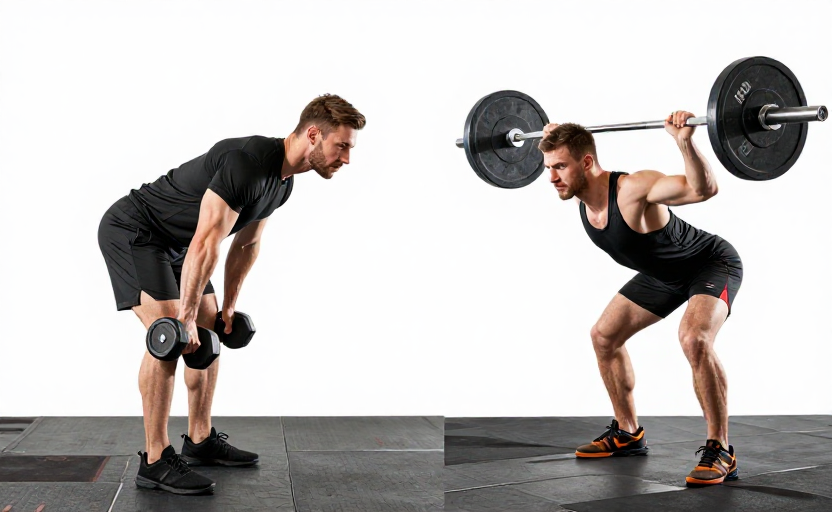
You might suspect that you have a muscle imbalance if your left shoulder feels tighter than your right during an overhead press, or your left leg consistently gives out before your right during a lunge. These asymmetries are incredibly common, but the real problem isn’t always the imbalance itself. Often, it’s the training habits that unknowingly reinforce it.
Below are four specific mistakes that can deepen strength and flexibility discrepancies between opposing muscle groups or between your left and right sides. Recognizing them is the first step toward building a more resilient, symmetrical body.
Mistake #1: Always starting with your strong side
It’s natural to lead with your dominant hand or leg—that’s how your brain is wired. However, if you consistently perform the first and most powerful reps of an exercise with your stronger side, you are giving it an unfair training advantage. Your strong side gets the freshest neural drive and energy, while your weak side has to play catch-up with fatigue already setting in.
The fix is simple but requires discipline. For unilateral exercises (dumbbell rows, lunges, single-leg presses), always start with your weaker side first. Perform your intended number of reps with that side, then match that exact number with your stronger side—no extra reps, no going heavier on the strong side. Over weeks, this forces your nervous system to adapt and close the gap.
Mistake #2: Ignoring the "rear" view
Most gym-goers spend a disproportionate amount of time looking at themselves in the mirror, which means they focus on the muscles they can see: chest, quads, and biceps. A muscle imbalance often develops because the posterior chain—the back, glutes, hamstrings, and rear deltoids—gets less volume and attention.
A common sign: Rounded shoulders and forward head posture typically indicate that your chest and anterior deltoids are pulling harder than your upper back and rear deltoids can counter.
To counteract this, build your program around a 2:1 ratio of pulling to pushing movements. For every bench press, include two rows, face pulls, or pull-ups. Similarly, deadlifts, hip thrusts, and glute ham raises should match or slightly exceed your squat volume to balance hip strength.
Mistake #3: Using the same weight for both sides
This mistake sounds counterintuitive because symmetry is the goal. But if your left arm can only curl 15 pounds for 10 clean reps, while your right arm can curl 20 pounds for 10 clean reps, forcing both sides to use 20 pounds will cause your left side to cheat. You will shift your torso, use momentum, and engage your lower back—all of which deepens the motor-pattern imbalance rather than fixing it.
Instead, train each side to its own capacity. Use different dumbbell weights on each side if needed. This is called asymmetric loading, and it is a legitimate method for rehab and prehab. Over time, as your weak side catches up, you can equalize the loads.
Mistake #4: Overlooking flexibility and joint position
Strength imbalances are often rooted in mobility restrictions. If your right hip has poor internal rotation, your squat will shift to the left, overloading one leg and underloading the other. If your left shoulder lacks overhead extension, your pressing pattern will compensate by arching your ribcage, which then creates a stability imbalance.
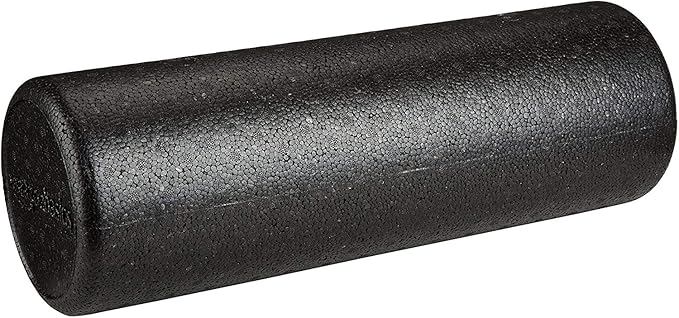
Check your ankle dorsiflexion, hip rotation, and thoracic spine extension. If one side is stiffer, add 30–60 extra seconds of stretching for that side after your workout. Use a foam roller or lacrosse ball on the tight muscles of the stronger side to release tension that might be pulling your skeleton out of alignment.
Muscle imbalances rarely fix themselves by accident. They require a deliberate strategy: start with the weak side, prioritize pulling strength, match intent to actual capacity, and address the mobility hidden beneath the strength gap. Pick one mistake to work on this week—do not try to fix all four at once. Consistency over correction is what builds a balanced body.