
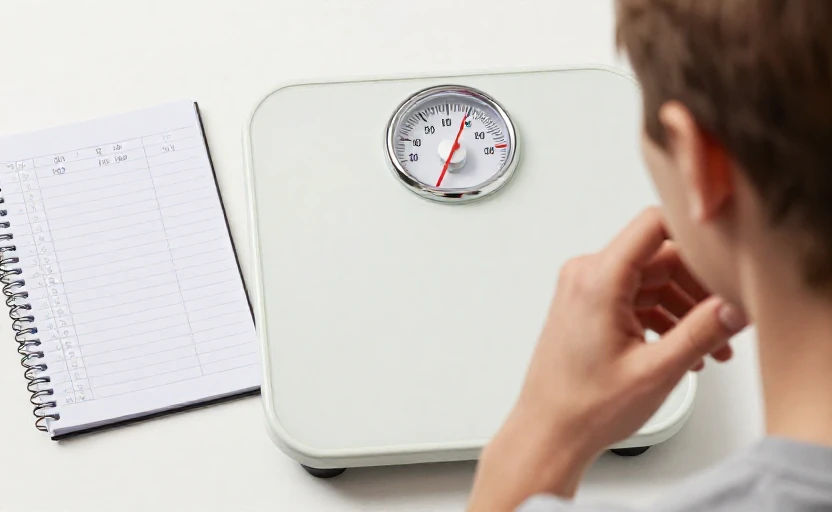
You’ve been tracking your food, making what feel like the right choices, and yet the scale isn’t moving. It’s a frustrating experience that makes you wonder: am I actually in a calorie deficit? The concept seems simple—burn more energy than you consume—but the body’s signals can be subtle and sometimes contradictory.
Recognizing the signs that you’re not in a deficit is often more practical than trying to prove that you are. It shifts the focus from rigid calculations to observable patterns in your energy, hunger, and progress. These patterns can help you adjust your approach without getting lost in the minutiae of numbers.
Your Energy Levels Feel Consistently High
This might seem counterintuitive. Shouldn’t healthy eating and exercise make you feel energetic? Absolutely. But a true, sustained calorie deficit creates a gentle but noticeable pull on your energy reserves. It’s not about feeling exhausted, but rather a lack of that surplus “bounce.”
If you find yourself with seemingly boundless energy day after day—feeling just as peppy at 4 p.m. as you did at 9 a.m., without relying on caffeine or sugar—it can be a clue. Your body is remarkably efficient at signaling when it has ample fuel. That consistent, even-keeled high energy, especially when paired with a weight-loss plateau, often means you’re feeding it enough to maintain its current weight, not to dip into stored energy.
Think of it like a car’s fuel gauge. Constant, high energy suggests the tank is being refilled as fast as it’s being used.
You’re Rarely Experiencing Gentle Hunger Cues
Hunger is not the enemy; it’s a primary communication tool. When you’re in a calorie deficit, your body will periodically send reminders that fuel stores are being accessed. These are typically gentle, predictable hunger pangs a few hours after a meal.
The absence of these cues is telling. If you can easily go four, five, or six hours after a meal without a thought about food, your intake is likely meeting your immediate energy demands. This is especially true if you’re also not losing weight. It doesn’t mean you should be starving, but a complete lack of hunger between meals can indicate your calorie intake is at or above your maintenance level.
There’s a difference between not being hungry because you’re distracted and not being hungry because you’re genuinely fueled. Tune into your body a few hours after a balanced meal. A soft, gentle reminder of hunger is a normal signal that you’re in a deficit. Its consistent absence is a sign you might not be.
The Scale Hasn’t Budged for Weeks
This is the most objective sign, but it requires context. Weight loss is not perfectly linear. Water retention, hormonal cycles, and digestive changes can cause fluctuations that mask fat loss for several days, or even a week or two.
However, a complete stall for three to four weeks, while you’re diligently following your plan, is a strong data point. The fundamental rule of a calorie deficit is that it must, over time, result in weight loss. If it doesn’t, the deficit either doesn’t exist or is so small it’s drowned in daily weight variability.
Before concluding, ensure your diligence is accurate. Common blind spots include:
- Unmeasured additions: Cooking oils, dressings, creamer in coffee, and bites while preparing food.
- Portion creep: Eyeballing portions that have slowly grown larger over time.
- Weekend adjustments: A couple of untracked meals or drinks that offset the careful deficit built during the week.
If you’ve accounted for these and the scale remains static for a month, it’s a clear sign your current intake equals your current output.
What to Do If You See These Signs
Seeing these signs isn’t a failure; it’s feedback. It means your current approach is likely a maintenance plan, not a weight-loss plan. The next step isn’t to drastically slash calories, but to make a precise, small adjustment.
First, revisit your tracking with a forensic eye for one week. Measure everything—especially calorie-dense fats and sauces. Use a food scale for solids. This isn’t about forever, but about recalibrating your understanding of your actual intake.
Based on what you find, you can choose a path:
Reduce Intake Slightly
A modest reduction of 150-250 calories per day from your current intake is often enough to restart progress. This could mean one less tablespoon of oil in cooking, slightly smaller portions of carbohydrates, or swapping a daily snack for a piece of fruit.
Increase Output Consistently
This doesn’t mean doubling your workout time. It could mean adding a daily 20-minute walk, taking the stairs, or incorporating short bodyweight exercises. The goal is to increase your non-exercise activity thermogenesis (NEAT)—the energy you burn through daily movement.
The most sustainable approach is often a combination of both: a slight dietary tweak paired with a consistent increase in daily movement. This creates the necessary deficit without making any single change feel extreme.
Adjust one thing at a time. Change your intake or your activity, then wait two to three weeks to assess the effect before changing another.
Remember, the goal of recognizing these signs is to move away from guesswork and toward a more informed, responsive approach to your health. Your body’s signals, combined with honest observation, are your most reliable guides.