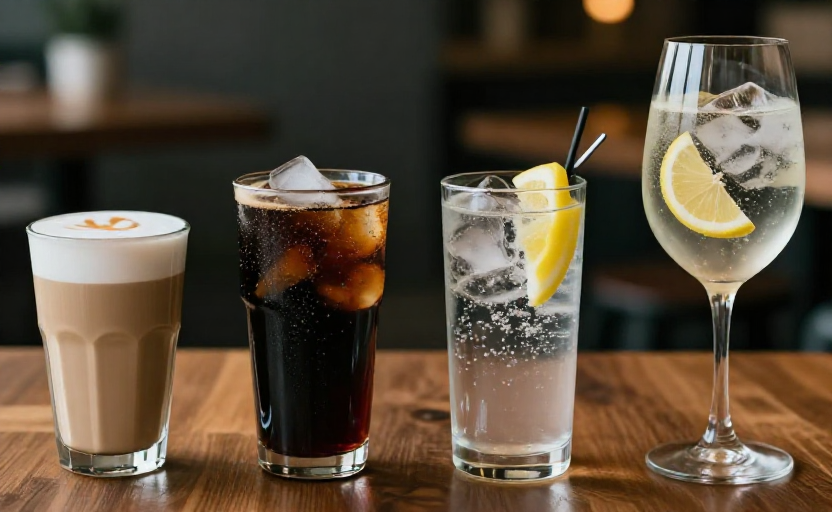
You’ve got your plate of grilled chicken and vegetables, you’re tracking your macros, and you’re hitting your step goal. Yet the scale isn’t moving the way you’d hoped. It’s a frustratingly common experience, and the culprit often isn’t on your plate—it’s in your glass. Liquid calories have a sneaky way of slipping past our internal satiety signals, adding significant energy to our day without making us feel any fuller. The good news? A few thoughtful swaps can create a meaningful calorie deficit without leaving you feeling deprived.
Think about your daily routine. That morning latte, the afternoon soda, the glass of juice with breakfast, the smoothie after the gym, the wine with dinner. Each one contributes, and because they’re consumed so quickly and don’t impact hunger the same way solid food does, they’re easy to overlook. By bringing awareness to what you drink, you unlock one of the simplest, most sustainable levers for managing your daily energy intake.
Why Liquid Calories Are So Tricky
Our bodies process beverages differently than solid food. When you eat an apple, the act of chewing and the fiber content send signals to your brain that you’re consuming energy. You feel satisfied. When you drink the equivalent calories in apple juice, those mechanisms are largely bypassed. The calories arrive rapidly, but the physiological response that says “I’ve had enough” is much weaker.
This isn’t just about sugary sodas. While sugar-sweetened beverages are a major source of empty calories, other common drinks contribute, too. A creamy coffee shop drink can easily contain 300-400 calories—the equivalent of a small meal. Even “healthy” choices like fruit juice, vitamin waters, and some smoothies pack a concentrated calorie punch without the fullness factor of whole fruit.
The goal isn’t to eliminate every enjoyable drink. It’s to make strategic choices that align with your well-being.
Three Impactful Swaps to Try
You don’t need to overhaul your life overnight. Start with one of these swaps that feels most doable for your routine. Consistency with a single change often yields better results than a perfect but short-lived overhaul.
1. Swap Sweetened Coffee Drinks for Black Coffee or Tea
This is often the highest-return swap. A daily habit of flavored lattes, mochas, or frozen blended drinks can add hundreds of calories. A medium vanilla latte from a popular chain, for instance, can have around 250 calories and 35 grams of sugar. Do that five days a week, and that’s an extra 1,250 calories from your coffee alone.
The move isn’t necessarily to bitter black coffee if you don’t enjoy it. It’s about incremental change.
- Try it with a splash of milk first. A tablespoon or two of whole milk or a milk alternative adds minimal calories but cuts the bitterness.
- Explore spices. A dash of cinnamon, nutmeg, or cocoa powder directly into the grounds before brewing adds flavor without sweetness.
- Reconsider your tea. Herbal or black teas offer complex flavors naturally. Chai spices, citrus notes, or floral hints can satisfy the desire for something interesting without added syrups.
If you use sugar, try gradually reducing the amount each week. Your taste buds will adapt.
2. Swap Sugary Sodas and Juices for Sparkling Water or Infused Water
The craving here is often for carbonation, sweetness, or simply a flavor beyond plain water. Sugary sodas and even 100% fruit juice deliver a rapid hit of sugar and calories. A 12-ounce can of cola has about 140 calories and 39 grams of sugar. A similar-sized glass of orange juice has roughly 160 calories and 33 grams of sugar.
Sparkling water, whether plain or naturally flavored, provides the satisfying fizz without the sugar. Keep a few cans or bottles chilled. If plain water feels boring, infusion is your friend.
- Add cucumber slices and mint to a pitcher of water.
- Try frozen berries instead of ice cubes—they chill the water and release subtle flavor as they melt.
- A slice of lemon, lime, or orange can make a big difference.
This swap isn’t about deprivation; it’s about finding a refreshing alternative that hydrates you without the calorie load.
3. Swap Creamy or Sweetened Alcohol Mixers for Simpler Combinations
Alcoholic beverages present a double challenge: they contain calories from the alcohol itself (about 7 calories per gram) and often from mixers. A piña colada or white Russian can contain over 400 calories. Even a seemingly innocent margarita or gin and tonic can be a significant source of sugar.
You can still enjoy a social drink while being mindful. The key is in the mixer.
- Choose soda water or seltzer as a base instead of tonic water (which contains sugar), soda, or pre-made sweet mixes. A vodka soda with lime is a classic, lower-calorie choice.
- Opt for wine or light beer over creamy liqueurs and sugary cocktails. A 5-ounce glass of red wine typically has about 125 calories.
- Use fresh citrus for flavor. A squeeze of lemon or lime adds brightness without the need for simple syrup or sour mix.
Pacing yourself with a glass of water between alcoholic drinks is also a helpful practice for both calorie intake and hydration.
Making It Stick
Sustainability is everything. If a swap feels like a punishment, you won’t maintain it. Frame these changes as discoveries—what new, refreshing drink can you enjoy? Maybe you find you love the subtle taste of unsweetened iced tea with lemon, or you look forward to your evening cup of herbal tea.
Pay attention to how you feel. Many people report having more steady energy throughout the day when they reduce the sugar spikes from sweetened beverages. Better hydration from drinking more water can improve skin clarity and focus. Notice these positive side effects; they become their own motivation.
Finally, be gentle with yourself. The objective is progress, not perfection. If you usually have three sugary drinks a day, getting down to one is a meaningful victory. That deficit adds up over weeks and months, quietly supporting your broader health and wellness intentions.