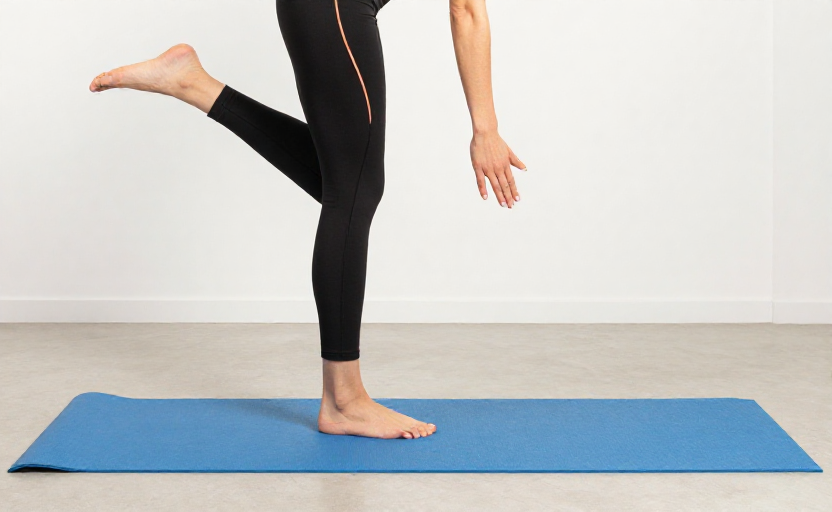
If you've ever noticed your right arm can curl a few more reps than your left, or your left leg feels noticeably steadier during a lunge, you're not alone. A small degree of asymmetry is normal—nobody is perfectly symmetrical. But when the gap grows wide enough to affect your form, slow your progress, or nudge you toward injury, it's worth taking a closer look. This guide walks you through how to spot meaningful strength imbalances between your left and right sides, and what to do about them.
Is asymmetry actually a problem?
Yes and no. A 5 to 10 percent difference between sides is common and usually not a reason to panic. But once a strength gap exceeds 15 percent, research suggests your risk for injury—particularly to the knee, shoulder, or lower back—starts to rise. A pronounced imbalance also creates movement compensations. Your stronger side subtly takes over during bilateral exercises like squats or bench presses, which means your weaker side never catches up. Over time, that cycle reinforces the imbalance instead of fixing it.
Think of it this way: a small asymmetry is a quirk. A large one is a weakness that your stronger side is actively hiding from you.
How to measure your own imbalance
You don't need a motion-capture lab to assess asymmetry. A few simple tests, performed with honest effort, will give you a clear picture.
The single-leg wall sit test
Stand about two feet away from a wall, then lean back until your back is flat against it. Slide down into a seated position—knees and hips at 90 degrees—and lift one foot off the floor. Hold as long as you can with good form, then switch sides. A difference of more than a few seconds points to a significant strength or stability gap in the legs.
The unilateral plank
Start in a high plank position. Lift one hand off the floor and place it on your lower back, balancing on the other arm and your feet. Hold for ten seconds, then switch. Watch closely: does your hip drop or twist to one side? That's your body using momentum and trunk rotation to compensate for a weaker side.
The single-arm overhead press test
Sit on a bench with back support. Press a light dumbbell overhead with one arm, then the other. Note any differences in range of motion, shoulder stability, or the amount of arch in your lower back. Your weaker side will often struggle to fully extend the arm or will need more trunk lean to get the weight up.
For a simple numeric estimate, try a one-rep max test on a unilateral exercise—like a single-leg press or a dumbbell bench press—with a spotter. Divide the heavier side's max by the lighter side's max. If the result is greater than 1.15, your imbalance is in the red zone.
Why imbalances develop in the first place
Most asymmetries trace back to habitual movement patterns. If you always lead with your right foot when climbing stairs or stepping onto a curb, your right leg gets more activation practice. If your workday posture has you constantly reaching across your body with your dominant hand, your lat and shoulder muscles develop unevenly. Past injuries, even minor ones, also leave a footprint: the nervous system remembers the pain and subtly reduces muscle recruitment on that side to protect the tissue, even after the injury is healed.
This is why simply "trying harder" on your weaker side rarely works. The imbalance is often neurological as well as muscular. Your brain has been trained to favor one side, and it needs consistent, deliberate cues to change that pattern.
Straightforward strategies to close the gap
Fixing imbalances is more about reprogramming than about doing double the work. Here are the most effective methods.
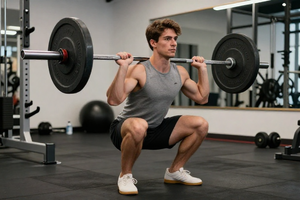
Lead with the weaker side. When you perform bilateral exercises like squats, deadlifts, or push-ups, consciously start the movement with your weaker side. If you're unracking a barbell for a squat, shift your awareness to your weaker leg's foot pressure. Over several weeks, this simple attentional cue can reduce asymmetrical loading by 20 percent or more, according to sports-performance research.
Use unilateral work as your main tool. Exercises that train each side independently—single-leg Romanian deadlifts, Bulgarian split squats, one-arm rows, single-arm overhead presses—force each side to do its share. Start your workout with two sets on the weaker side, then match that volume on the stronger side, and never exceed it. As long as the stronger side is not doing more volume, the weaker side has a chance to catch up.
Supplement with isolation moves. If a specific muscle group is lagging—say, your left glute medius, or your right infraspinatus—add a targeted isolation exercise for that muscle on your weaker side only. Three sets of side-lying leg lifts for your weaker glute, performed three times per week, can yield noticeable improvements within four to six weeks.
Slow the movement down. Eccentric (lowering) phases expose strength gaps more reliably than concentric (lifting) phases. Take three to four seconds to lower a weight on your weaker side during a unilateral exercise. This increases time under tension and forces your nervous system to maintain control through the full range of motion.
The "equal reps, equal load" rule
A common mistake is to pile extra sets onto the weaker side. More often, you just need to stop the stronger side from doing extra. If you normally do three sets of dumbbell bench press with 40 pounds per side, drop to 35 pounds on both sides and focus on even tempo and range of motion. Once both sides are executing clean reps, progress the load on both sides equally. This prevents the stronger side from widening the gap while the weaker side catches up.
How asymmetry shows up in specific movements
Understanding where imbalances tend to surface in common lifts can help you target your efforts.
- Squat: Uneven hip height at the bottom, weight shifting onto one foot, or a tendency to twist to one side when standing up. Often linked to a weak glute or tight hip flexor on one side.
- Deadlift: The bar tilts slightly as it rises, or your shoulders roll forward on one side. Usually reflects a lat or rhomboid imbalance on one side.
- Bench press: The bar drifts toward your stronger side or lowers unevenly. Often a triceps or anterior delt strength difference.
- Pull-up: One shoulder hikes toward the ear or the body twists during the pull. Typically an imbalance in the lat or lower trapezius.
When to expect results
Patience matters here. Neuromuscular adaptations—where your brain learns to recruit the weaker side more effectively—happen in about two to four weeks. Structural strength changes, where the weaker side actually gains contractile tissue, take six to twelve weeks of consistent unilateral work. Many people see a 50 percent reduction in their asymmetry gap within eight weeks when they stay disciplined about leading with the weaker side and keeping unilateral volume balanced.
If you've put in three months of targeted effort and see no movement in the gap—or if the gap is accompanied by persistent pain, clicking, or a sensation of instability—it is worth consulting a physical therapist. They can run a formal movement screen and identify deeper issues like joint laxity, chronic tendinopathy, or a previous injury that needs its own rehabilitation plan.
In the meantime, the fix is refreshingly straightforward: do more work with your weaker side, stop letting your stronger side do overtime, and give your nervous system time to rewire. Your body is adaptable. With some consistent attention, that asymmetry can shrink from a liability to a minor quirk.