You know the feeling: you're following a healthy eating plan, but the recipe says "3 ounces of chicken" and your kitchen scale is buried somewhere in the back of a cabinet. Or you're at a friend's cookout and need to eyeball a reasonable serving of pasta salad. Learning how to estimate portion sizes without a scale is one of the most useful, real-world skills you can pick up. It frees you from fussing over grams and ounces while still keeping your meals balanced and your portions in check.
This isn't about being precise to the decimal point. It's about being close enough that your body's own hunger and fullness cues can do the rest of the work. Think of these visual cues as training wheels for your intuition. After a few weeks of using them, you'll likely find you don't even need to think about it anymore.
Why Your Hand Is the Best Tool You Own
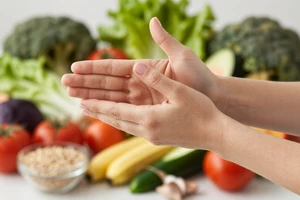
Your hand is proportional to your body size, which makes it a surprisingly accurate, portable measuring device. It's always with you, and it works for everyone from a petite athlete to a large-framed manual laborer. For most adults, these general guidelines hold up well across different cuisines and meal types.
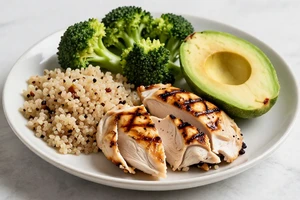
- Your palm (without fingers) is roughly the size of a deck of cards. This works perfectly for a serving of protein: chicken breast, fish fillet, lean steak, or a plant-based patty. One palm-sized portion is about 3 to 4 ounces for most women, and about two palm-sized portions (or one thicker palm) for most men.
- Your clenched fist equals about one cup. This is your go-to for carbohydrates. A fist-sized serving of cooked rice, quinoa, pasta, oatmeal, or roasted potatoes is a solid serving. For raw leafy greens, you can roughly double this—two fistfuls is a great base for a salad.
- Your cupped hand holds about one to two tablespoons. This works for high-fat, calorie-dense foods like nuts, seeds, shredded cheese, salad dressing, or dried fruit. A single cupped handful is a sensible snack portion, not a bottomless bowl.
- Your thumb tip (from the knuckle to the end) is about one teaspoon. This is your measure for oils, butter, nut butters, and mayonnaise. For most cooking oils, a thumb-tip amount is a reasonable serving (around 5 grams of fat).
Everyday Objects as Visual Cues
If your hands feel too subjective, common household items can be even more consistent. These are especially useful when you're at the grocery store or plating food for others.
- A deck of cards or a bar of soap: This is the classic size reference for a 3-ounce serving of meat, fish, or poultry. Visualize a single serving fitting neatly into the palm of your hand, about the size of a standard deck.
- A baseball or a medium apple: This roughly equals one cup. Perfect for a serving of fruit, a medium baked potato, a cup of cooked grains, or a serving of yogurt.
- A tennis ball: Slightly smaller than a baseball, a tennis ball is a great visual for a single serving of cheese (about 1.5 to 2 ounces) or a small piece of fruit like a plum or kiwi.
- A golf ball or a walnut: Use this for two tablespoons of nut butter, cheese cubes, or hummus. It's also a handy reference for a single tablespoon of dressing or oil.
- A CD or a small plate: Imagine the surface area of a CD for dense foods like a pancake, a waffle, or a corn tortilla. It helps you visualize how much room that food should take up on your plate.
A Simple Method for Mixed Meals
Restaurants and family dinners rarely come in neat, separated piles. Here's how to handle a plate of stir-fry or a bowl of chili without measuring a thing.
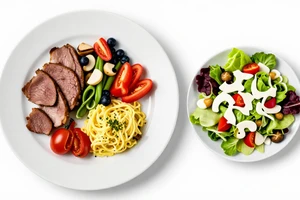
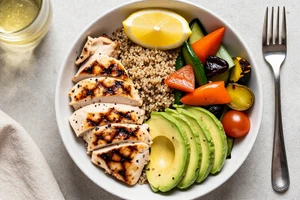
- Visualize the plate as a clock. Fill half (6 to 12 o'clock) with non-starchy vegetables like broccoli, peppers, or spinach. Fill one quarter (12 to 3 o'clock) with a palm-sized portion of protein. Fill the remaining quarter (3 to 6 o'clock) with a fist-sized portion of carbohydrates.
- For one-pot meals like stews, soups, or curries, your bowl should be about two fists deep. The majority of the volume should come from broth, vegetables, and lean protein, with only a small fist's worth of rice, pasta, or beans mixed in.
- For snacks, avoid eating directly from the bag or box. Instead, pour out a single serving into a small bowl or napkin. Use the hand guides above: a cupped handful for trail mix, a palm for crackers, or a thumb-tip of peanut butter on an apple slice.
Practice Makes Permanent (Not Perfect)
The goal here isn't to become a human scale. It's to build a reliable internal compass. Try this for one week: before you eat, use these visual cues to estimate your portion. Then, if you're curious, check it against your scale once. Don't stress if you're off by a few grams. The consistency of using the same visual over and over is what trains your brain to recognize appropriate amounts.
A good rule of thumb: If you feel satisfied but not stuffed after a meal, you're probably in the right ballpark. Your body's own feedback is the ultimate portion control tool.
Over time, these hand and object comparisons become automatic. You'll find yourself naturally plating a palm-sized piece of salmon or a fistful of roasted veggies without a second thought. That's when portion estimation stops being a chore and becomes a simple, effortless part of enjoying your food.