You’ve been consistent. The weights go up, the form feels solid, but then, progress just… stops. The numbers on the bar refuse to budge, and that satisfying feeling of weekly improvement fades. This strength training plateau is a common, frustrating experience, and while programming adjustments are crucial, what you put on your plate might be the missing link.
Nutrition provides the raw materials for repair and growth. When your training demands outpace your nutritional support, your body simply can’t build new muscle or strengthen neural pathways. Think of it like trying to build a brick wall without enough bricks or mortar. The following foods aren’t magic bullets, but they are foundational tools—dense in the specific nutrients that support recovery, protein synthesis, and energy systems—helping you provide the resources your hard-working body needs to start climbing again.
1. Eggs (The Whole Egg)
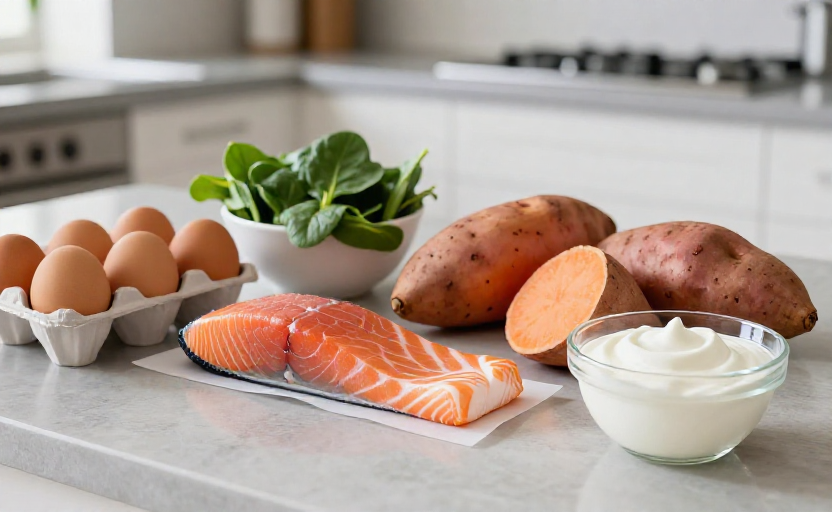
It’s time to move past the egg-white omelet era. While the white is an excellent source of pure protein, the yolk is where a powerhouse of supporting nutrients lives. It contains nearly all the egg’s vitamins, including choline, which is vital for nerve function and muscle control. It’s also rich in fats that support hormone production, including testosterone, which plays a key role in muscle building.
The complete amino acid profile in eggs makes their protein incredibly efficient for muscle repair.
By eating the whole egg, you get a complete package: high-quality protein for muscle fiber repair, plus the fats and micronutrients that create an environment where that repair can optimally occur.
2. Fatty Fish like Salmon or Sardines
When muscles are inflamed from intense training, controlled recovery is needed. The omega-3 fatty acids (EPA and DHA) found in fatty fish are potent modulators of inflammation. They help manage the natural inflammatory response to training, not eliminate it entirely, which can speed the transition from breakdown to rebuild.
Furthermore, salmon is a stellar source of vitamin D. Often discussed for bone health, vitamin D receptors are also found in muscle tissue, and adequate levels are associated with muscle strength and function. A grilled salmon fillet offers a double benefit: high-quality protein for synthesis and nutrients that create a better recovery landscape.
3. Full-Fat Greek Yogurt or Cottage Cheese
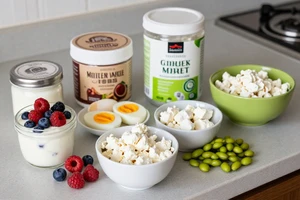
Breaking a plateau isn’t just about the workout; it’s about what happens overnight. Casein, the primary protein in dairy, is slow-digesting. A serving of full-fat Greek yogurt or cottage cheese before bed provides a steady, slow trickle of amino acids into your bloodstream during the fasting period of sleep.
This can help mitigate muscle breakdown and extend the window for repair. The fat content supports satiety and, again, hormonal health. Opt for the plain varieties to avoid added sugars, and add your own berries or a drizzle of honey for flavor.
4. Lean Beef or Bison
Red meat often gets misplaced in general wellness conversations, but for the specific goal of overcoming a strength stall, its nutrient density is worth considering. It’s famously rich in heme iron, which is highly absorbable and crucial for oxygen transport in the blood—a key factor in work capacity and endurance during sessions.
Perhaps more uniquely, it’s one of the best natural sources of creatine, which helps regenerate ATP, your muscles’ immediate energy currency. It also provides a significant dose of zinc and B vitamins, which support energy metabolism and immune function. Choosing lean cuts or bison provides these benefits with a more favorable saturated fat profile.
5. Sweet Potatoes
Carbohydrates are not the enemy of strength; they are the primary fuel for high-intensity effort. Depleted glycogen stores lead to premature fatigue, meaning you can’t train with the volume or intensity required to stimulate adaptation. Sweet potatoes offer complex carbohydrates that replenish glycogen steadily.
They are also packed with beta-carotene (which converts to vitamin A) and potassium. Potassium is an electrolyte lost in sweat that’s essential for muscle contraction and nerve signaling. A roasted sweet potato is far more than just “carbs”; it’s a nutrient-rich fuel source that enables you to push harder in your next session.
6. Spinach and Leafy Greens
You might not think of a salad as muscle food, but micronutrient deficiencies can quietly undermine progress. Leafy greens like spinach are loaded with magnesium, a mineral involved in over 300 biochemical reactions, including muscle contraction, protein synthesis, and energy production.
Chronic low-level stress from intense training can deplete magnesium. Ensuring ample intake from foods like spinach, kale, or Swiss chard helps maintain optimal nerve-muscle communication and supports the metabolic machinery that turns your food into energy and new tissue.
7. Tart Cherry Juice
This one is a strategic tool rather than a daily staple. The compelling research on tart cherry juice centers on recovery. Its high concentration of antioxidants and anti-inflammatory compounds has been shown to reduce post-exercise muscle soreness and speed strength recovery.
For the lifter hitting heavy squats or deadlifts, incorporating a small glass of unsweetened tart cherry juice in the hours after a brutal session, or in the evening, may help you feel less beaten up the next day. This improved recovery can lead to more consistent, high-quality training—the cornerstone of breaking any plateau.
Integrating these foods is about building a foundation, not seeking an instant fix. Start by looking at your current pattern: where could you add one or two of these elements? Perhaps it’s adding a couple of whole eggs to your breakfast, choosing salmon twice a week, or having a sweet potato with your post-training meal.
Pair this nutritional focus with attentive programming—ensuring progressive overload, deload weeks, and proper sleep. When training, recovery, and nutrition align, you give your body a clear, well-supported message to grow stronger. The plateau then becomes not a wall, but a stepping stone.