
Restaurant meals are a real test of willpower when you are trying to lose weight. The plates are bigger, the portions are oversized, and every dish seems to be loaded with extra butter and salt. You do not have to become a hermit to reach your goals. With a few smart, psychology-backed strategies, you can enjoy a meal out without derailing your progress.
The following tactics come from dietitians and behavioral researchers who study why we overeat in social settings. These are not about starvation or deprivation. They are about working with your environment instead of against it.
1. Scan the Menu Before You Walk In
Hunger is a terrible decision-maker. When you arrive at a restaurant with a growling stomach, every item on the menu looks like a good idea. Instead, pull up the menu online while you are still at home or on the commute. Decide on a specific meal before you sit down.
Stick to that choice. Research in the Journal of Consumer Research shows that pre-commitment reduces the likelihood of impulse ordering by nearly 30 percent. You are not limiting your options; you are making a calm choice before your brain gets hijacked by the smell of garlic bread.
2. Ask for a To-Go Box Immediately
This is the single most effective portion trick in the book. When the server brings your meal, ask for a takeout container at the same time. Immediately split the dish in half—or into thirds if it is a massive portion—and box it up before you take a single bite.
Out of sight really does mean out of mind. A study from the International Journal of Obesity found that people who pre-plated a smaller portion and packed the rest away consumed, on average, 22 percent fewer calories than those who ate from the full platter. You get a second meal for free, and you leave the table satisfied, not stuffed.
3. Use the Plate-as-Plate Trick
Your brain judges fullness partly by the ratio of food to plate. A normal restaurant entrée often covers an entire large dinner plate, which signals to your visual system that you are getting a reasonable serving. In reality, it might be two or three servings.
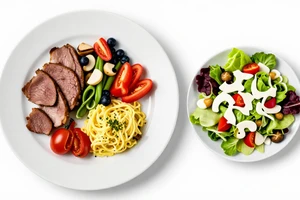
Fix this by using the salad plate or bread plate if one is available. Even better, ask the server to bring your main course on a smaller plate. When the same portion fills a smaller surface area, your brain registers it as a full, satisfying meal. This is known as the Delboeuf illusion, and restaurants exploit it in reverse. You can use it to your advantage.
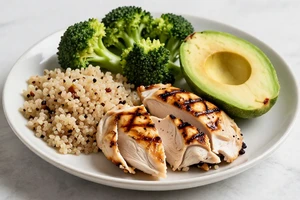
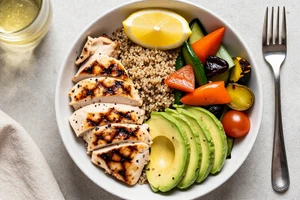
Quick visual rule: Aim for one quarter of the plate to hold lean protein, one quarter to hold a starch or grain, and the remaining half to be filled with vegetables or a green salad.
4. Order First When Dining in a Group
Social orders create a powerful anchoring effect. When the first person orders a big pasta bowl or a fried platter, everyone else tends to follow suit. It feels awkward to be the one ordering the grilled chicken and steamed broccoli if everyone else is indulging.
Flip that dynamic by ordering first. Set the anchor yourself. When you speak up early with a moderate, balanced choice, you make it socially okay for others to do the same. A 2019 study in Appetite confirmed that the first order in a group significantly influences the calorie count of subsequent orders. Be the trendsetter, not the follower.
5. Master the Appetizer-and-Salad Strategy
Entrées are where portion sizes really get out of control. Many restaurant main dishes contain 1,200 to 1,500 calories or more. A smarter move is to build your meal from the appetizer and side-dish sections.
Order a broth-based soup or a large garden salad with dressing on the side as your starter. Then pick a light appetizer for your main course—grilled shrimp skewers, a small filet of fish, or lettuce wraps. These sections of the menu are often portioned more reasonably. You avoid the huge entrée plate while still enjoying a multi-course experience.
6. Manage the Condiment Creep
Dressings, sauces, and dips are the hidden source of hundreds of extra calories in a typical restaurant meal. A ladle of ranch dressing adds around 150 calories. A drizzle of balsamic glaze adds sugar. The butter that pools under the fish fillet adds saturated fat.
Always ask for sauces and dressings "on the side." Dip your fork into the sauce before spearing a bite of food. This technique delivers the flavor with far less volume than pouring the whole container over your meal. A simple swap like this can cut 200 to 300 calories without making any other changes to your order.
7. Put Your Fork Down Between Bites
This one sounds almost too simple, but it works because it targets the pace of eating. Studies consistently show that people who eat slowly consume less food before their brain receives the "full" signal. That signal takes about 20 minutes to arrive.
Set your fork down after every bite. Chew thoroughly and swallow before picking it up again. Engage in conversation. Take a sip of water. This deliberate slow-down gives your gut hormones time to communicate with your brain. You naturally stop eating when you are comfortably full, not when the plate is empty.