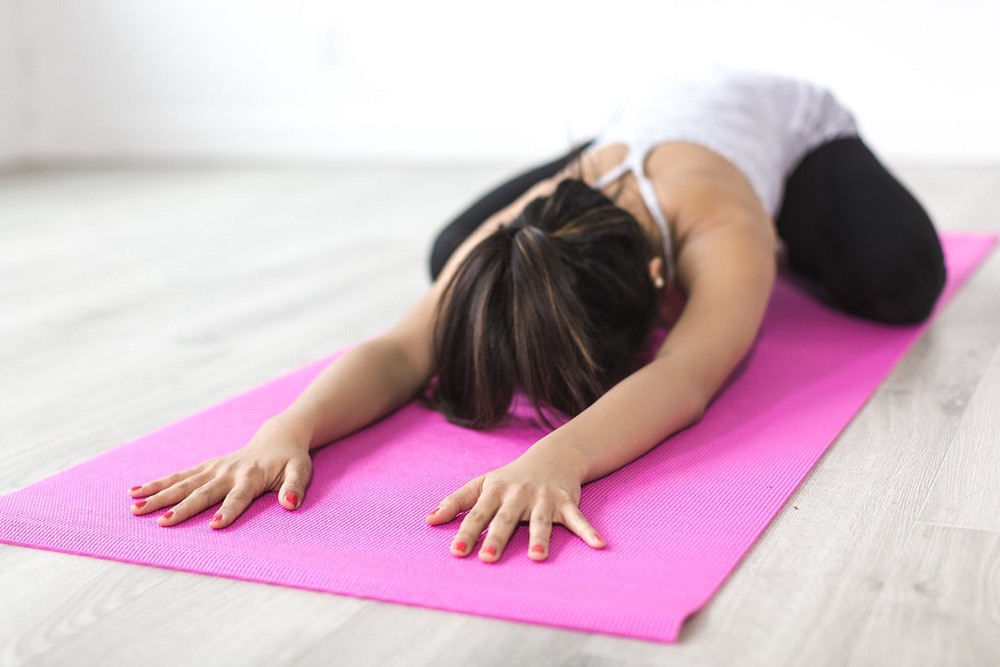
You roll out your mat three times a week, breathe through the poses, and feel that slight burn in your hamstrings. Yet a month later, your forward fold hasn't deepened. Your hips still feel tight in Downward Dog. It's frustrating—and it's not because you're doing yoga wrong. More often than not, the culprit is something happening off the mat.
For beginner yoga students, flexibility loss isn't usually caused by a bad pose. It's stealthily built by two everyday habits that most people don't think twice about. These patterns create chronic tightness that no amount of stretching can undo if you keep repeating them. Below, we break down what they are, how they sabotage your yoga practice, and the small shifts you can make to protect your range of motion.
Habit #1: The Chair Sink — How Prolonged Sitting Shortens Your Hips and Hamstrings
If you work at a desk, drive a car, or spend evenings on the couch, you're likely spending 8 to 10 hours a day in a seated position. That might sound harmless, but for the body's posterior chain—the muscles along your backside—it's a slow tightening process.
When you sit, your hip flexors (the muscles at the front of your hips) are in a shortened, contracted position. Your hamstrings (back of your thighs) remain relaxed and inactive. Over time, the brain adapts to this as the default state. The hip flexors become stiff and less willing to lengthen, and the hamstrings get 'stuck' in a passive, slightly shortened resting length. When you then attempt a Standing Forward Fold (Uttanasana) or a seated forward bend, those muscles hit their new, reduced range of motion quickly. Instead of release, you feel a sharp pull or a hard wall of tension.
The chair doesn't just tighten you—it resets your body's 'normal' to a shorter, stiffer baseline.
This is especially tricky for beginners, who often assume that tightness is purely a matter of not stretching enough. But if you sit for nine hours and stretch for one, you're fighting a losing battle against muscle adaptation. The hip flexors, in particular, can become so chronically shortened that they start pulling on the lower spine, contributing to a slight anterior pelvic tilt that further inhibits flexibility in forward folds and hip-openers like Pigeon Pose.
What You Can Do (Without Quitting Your Desk Job)
You don't need a standing desk or a gym at your office. Simple frequency breaks your body's 'sitting signal' better than long, occasional sessions.
- Stand up every 30 minutes. Even 60 seconds of walking or gentle hip circles signals the hip flexors to release their contraction.
- Try a seated hip-opener at your desk. While sitting, cross one ankle over the opposite knee, keep your spine tall, and gently lean forward. Hold for 30 seconds per side. This counteracts the hip shortening caused by the chair.
- Incorporate 'decompression' into your yoga warm-up. Before you stretch hamstrings, do a few Cat-Cow flows and gentle lunges. This reminds the hip flexors to lengthen first.
Habit #2: The Chronic Sigh — How Shallow Breathing Tightens Your Core and Upper Back
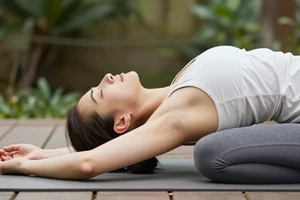
This one is quieter. You don't feel it happening. But after a long week, you notice your spine feels stiff in seated twists and your shoulders won't relax in Child's Pose. The culprit? A persistent state of low-grade stress that shows up as shallow, chest-based breathing.
When you're anxious, hurried, or simply concentrating hard, your body activates a mild 'fight or flight' response—even if your mind doesn't register it. Your breathing moves from the diaphragm (belly breathing) to the upper chest (rapid, shallow breaths). The accessory muscles in your neck, shoulders, and upper back—the scalenes, upper traps, and levator scapulae—contract to help lift the ribcage with each quick inhale. Over a few days or weeks, these muscles stay partially engaged. They lose their ability to fully relax.
This creates a 'tight cage' around the upper torso. The intercostal muscles (between the ribs) become stiff, and the fascia around the spine tightens. In yoga, this shows up as an inability to rotate deeply in a seated twist (Ardha Matsyendrasana) or a feeling of compression in the upper back during a forward fold. You might feel like you can't fully exhale, which is exactly what's happening: a chronically engaged core and ribcage restricts your diaphragm's full range of motion.
Your breath pattern is literally setting the baseline tension of your spinal muscles. If you're always braced, you can never fully release.
Beginners often try to 'fix' this by forcing deeper breaths during yoga. But if the underlying habit of shallow breathing persists during the other 23 hours of the day, the muscle memory of tightness stays programmed. The yoga mat becomes an uphill battle against your own nervous system.
Breaking the Cycle of Shallow Breathing
- Practice 'timer checks.' Set a random alarm on your phone three times a day. When it goes off, just notice your breath. Are your shoulders rising? Is your exhale short? Take three slow, diaphragmatic breaths (belly rises on inhale, falls on exhale).
- Stretch your exhale. The parasympathetic nervous system activates during long, slow exhales. At the end of your yoga practice, spend 2 minutes in a reclined twist or Savasana focusing on making your exhale longer than your inhale.
- Open the upper back daily. A simple seated Eagle Arms (Gomukhasana arms) or a gentle cat stretch focusing on upper back rounding can release the tension stored in the breathing muscles.
Why These Two Habits Create a Double Blow for Beginners
Alone, each habit is limiting. Together, they create a 'tightness loop.' Chair sitting shortens the lower body and tilts the pelvis forward. Chronic shallow breathing tightens the upper body and stiffens the spine. A beginner trying to touch their toes finds resistance from both ends: the lower back can't release because the hip flexors are tight, and the upper back can't round because the intercostals are stiff.
The result is a plateau that feels genetic or unchangeable. It's not. It's mechanical. The good news is that reversing these habits doesn't require extra yoga classes. It requires awareness of what you're doing when you're not on the mat.
Two Simple Daily Fixes to Protect Your Flexibility
- Set a 'movement snack' every 30 minutes. No need to break a sweat—just stand, reach your arms overhead, and take 3 deep breaths. This interrupts the sitting pattern and resets your breath.
- End your day with 5 minutes of floor work. Before bed, lie on your back with knees bent. Place hands on belly. Breathe deeply for 2 minutes, then let both knees drop to one side for a gentle spinal twist. Switch sides. This single sequence counteracts both the seated hip tightening and the shallow breathing tension.
Flexibility in yoga isn't about how far you can push. It's about how well you release. The most 'flexible' students aren't necessarily the ones who stretch the most—they're the ones who carry less tension into the studio. By tackling these two hidden habits, you give your body permission to soften. And that's when real progress begins.