
You've heard it a hundred times: "Just eat smaller portions." It sounds simple, but if you're stuck in a weight loss rut, the advice itself might be part of the problem. Dietitians say that well-meaning portion control guidance often turns into rigid rules that backfire, leaving you feeling hungry, deprived, or confused.
The truth is, your body isn't a measuring cup. When portion control becomes a source of stress or a set of rigid, unscientific beliefs, it can actually sabotage your progress. Here are five common portion control myths that dietitians wish you would stop believing—and what to do instead.
Myth 1: Your Hand Is the Perfect Portion Tool for Everything
Yes, using your hand as a guide (a palm for protein, a fist for veggies) is a useful starting point. But the myth is treating it like a universal law. A fist-sized portion of broccoli has a very different calorie and carbohydrate load than a fist-sized portion of rice or pasta.
Dietitians explain that hand measurements work best as a rough template, but they don't account for density or calorie density. A woman with small hands might end up with a portion of nuts that is both appropriate and inadequate depending on her activity level.
What works better: Use hand portions as a quick check, not a rulebook. Adjust based on your own hunger, fullness, and how your body feels an hour after eating. A serving of nuts should feel satisfying, not symbolic.
Myth 2: All "Single Serving" Packages Are Safe
Snack packs and 100-calorie packs are marketed as the portion-control savior. But dietitians note that these packages often train your brain to ignore internal cues. You finish the bag not because you're still hungry, but because the bag is empty.
Furthermore, many “single serving” labels are misleading. A bottled smoothie or “snack pack” may contain two or even two-and-a-half servings according to the nutrition label, but you drink it all because it's a single bottle. The problem isn't the portion; it's the disconnect between what you buy and what you actually need.
Rethink the approach: Instead of trusting the package, pour a portion into a bowl or cup. If you want more after that, you can have more. The act of pouring forces you to decide, rather than mindlessly eating from the package.
Myth 3: The Smaller the Plate, the Better
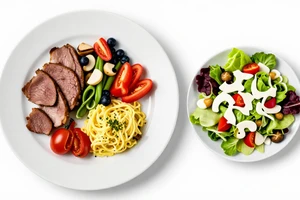
There's some logic here—a smaller plate can make a normal portion look bigger, which might help you feel satisfied with less. However, falling for the “tiny plate” trick completely can lead to under-eating, which eventually slows your metabolism and can trigger overeating later.
Dietitians often see people eating off salad plates and still feeling hungry, then wondering why they binge at night. The real secret isn't the plate size—it's the composition. A large plate filled mostly with vegetables and a modest amount of protein is far more effective than a small plate packed with calorie-dense food.
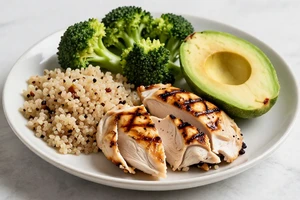
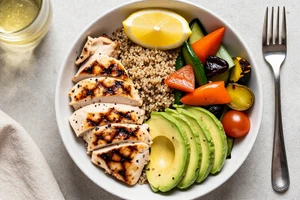
A better visual cue: Visualize filling half your plate with non-starchy vegetables, one-quarter with lean protein, and one-quarter with complex carbohydrates (like quinoa or sweet potato). The plate size matters less than the ratio.
Myth 4: You Must Weigh and Measure Everything Forever
Many weight loss plans recommend weighing chicken breast and measuring oil with teaspoons. While precise tracking can be educational for a short period—say, two to four weeks—it's not sustainable as a lifestyle. The myth is that you must maintain this rigor to succeed.
Dietitians call this “portion perfectionism.” It turns meals into math problems and removes the pleasure from eating. When you stop tracking, you often feel lost and revert to old habits. The goal should be to learn what appropriate portions look like, not to become dependent on a scale and a set of measuring cups.
Build portion intuition: After a short period of tracking, practice estimating. Check your estimate against the scale or measuring tool. Over time, your eyes will become more reliable than an app.
Myth 5: Eating Less Is Always the Answer
This is the most damaging myth of all. The assumption is that any weight loss stall means you need to cut your portions again. But dietitians explain that aggressive restriction can backfire. When you consistently eat too little, your body adapts by lowering your metabolic rate and increasing hunger hormones like ghrelin.
The result? You feel miserable, your energy plummets, and you're far more likely to binge on high-sugar, high-fat foods. The real sabotage isn't eating too much—it's eating too little for too long.
A smarter perspective: Instead of asking “How little can I eat?” ask “What is the minimum amount of food I need to feel energized and satisfied?” For many people, eating a slightly larger portion of protein or healthy fat (like avocado or nuts) is what actually helps them lose weight by controlling cravings and stabilizing blood sugar.
The Bottom Line on Portion Control
Portion control isn't about shrinking everything down to mouse-sized portions. It's about fitting the right amount of food to your body's needs. If you've been loyal to any of these myths, you're not doing it wrong—you're just using the wrong rules.
Instead of more restriction, try a little more awareness. Eat slowly. Listen to your body. And give yourself permission to eat enough. That is the portion control advice that actually works.