You crush your deadlifts. You're consistent with farmer's carries. But somehow, your grip feels like it's stuck in neutral—or worse, slipping backward. You might be blaming your programming, but the real culprit could be five everyday habits that quietly undermine your grip strength without you ever noticing.
Grip strength isn't just about how hard you can squeeze. It's a complex interplay of neural drive, muscle endurance, tendon health, and connective tissue resilience. That means the little things—what you do when you're not training—can derail progress just as effectively as a bad program. Here’s what you might be doing wrong and how to fix it.
1. Constant, Unconscious Gripping
Think about your hands right now. Are they curled into a loose fist? Are you holding your phone with a death grip? For many of us, our hands are in a state of chronic, low-level contraction for hours a day—texting, scrolling, typing, driving, holding a coffee mug.
This isn't training; it's tension without recovery. Your forearm flexors never get a chance to fully lengthen and relax. Over weeks and months, this can create adaptive shortening of the muscles and fascia, limiting your range of motion and reducing your ability to generate maximal force when you actually need it.
The fix: Build short, intentional hand breaks into your day. Several times per hour, shake your hands out like you're trying to fling water off them. Fully extend your fingers and spread them wide for 10 seconds. This resets muscle tone and flushes metabolic waste.
2. Neglecting Finger Extension Strength
Grip training is almost always about flexion—squeezing, holding, pinching. But your grip is only as strong as the muscles that oppose it. The extensor muscles on the top of your forearm are relatively small and easily overpowered. When they're weak, your flexors operate with constant background tension, creating an imbalance that leads to overuse injuries like tennis elbow and reduces your max grip output.
The simple rule: For every set of finger flexion you do, do a set of finger extension. Your forearms will thank you.
The fix: Add rice bucket work, rubber band finger extensions, or a dedicated extensor trainer to your routine. Even 2–3 minutes of extensor work after your main grip exercise can rebalance the system.
3. Overlooking Your Workout Finisher
Are you finishing every gym session with a biceps curl or a triceps pushdown? The problem is that you're pumping blood into muscles that attach near your elbow without addressing the forearm fatigued from the workout itself. That stiff, swollen feeling in your forearms after a heavy pulling day isn't just pump—it's a sign of acute inflammation that can impair recovery if not managed.
The fix: Do 1–2 minutes of gentle, active recovery for your forearms post-workout. Hang from a pull-up bar with a light grip (just enough to hold your weight) for 20 seconds, followed by wrist flexor stretches. Or use a massage ball to gently release the belly of the forearm flexors. Do this before your shower, not as an afterthought.
4. Always Using the Same Grip Type
If every deadlift, row, and pull-up uses a pronated (overhand) grip, you're not just missing variety—you're starving parts of your grip. Different grip styles recruit different muscle fibers and stabilizers. A supinated (underhand) grip biases the biceps and shifts demand. A neutral grip (palms facing each other) is often the strongest position for the wrist and thumb. A hook grip changes the mechanics entirely.
The fix: Rotate your grip style across the week. On deadlift day, use a mixed or hook grip for your top sets. For rows, alternate between overhand and underhand. For carries, use a neutral grip if possible. Your nervous system adapts to whichever position you give it—so give it more variety.
5. Skipping Direct Finger and Thumb Work
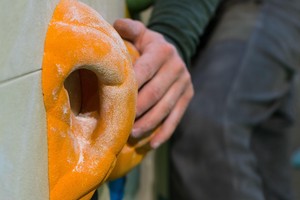
Crushing grip (deadlifts, barbell rows) trains the fingers as a unit. But many real-world tasks and athletic movements require precision—pinching, holding something between thumb and fingers, or resisting rotation. If you never train pinching, your thumb remains your weak link, and your overall grip will cap out far below your genetic potential.
The fix: Add one pinch-focused movement per week. A simple plate pinch (hold two smooth plates together with thumb on one side, fingers on the other) for time works wonders. Also, consider a wrist roller for rotational strength. These don't need to be heavy or complicated—just consistent.
The good news is that none of these habits require hours of extra training. They're corrections—small, intentional changes to how you use and recover your hands. Start with the hand breaks during the day, add extensor work twice a week, and rotate your grip. Your deadlift PR will notice the difference before your brain does.