Active recovery days are the quiet workhorses of any training plan. You move—maybe a light jog, a yoga flow, or a long walk—but you don't push for intensity. The goal is blood flow, mobility, and repair, not another PR. And what you eat on these days matters just as much as your movement choices. Your body is still rebuilding muscle tissue, replenishing energy stores, and calming inflammation from harder sessions earlier in the week.
I asked registered dietitians who work with active adults and athletes to name the foods they prioritize on recovery days. Their answers center on nutrient density, not restriction. Here are five foods that consistently came up, and the reasoning behind each one.
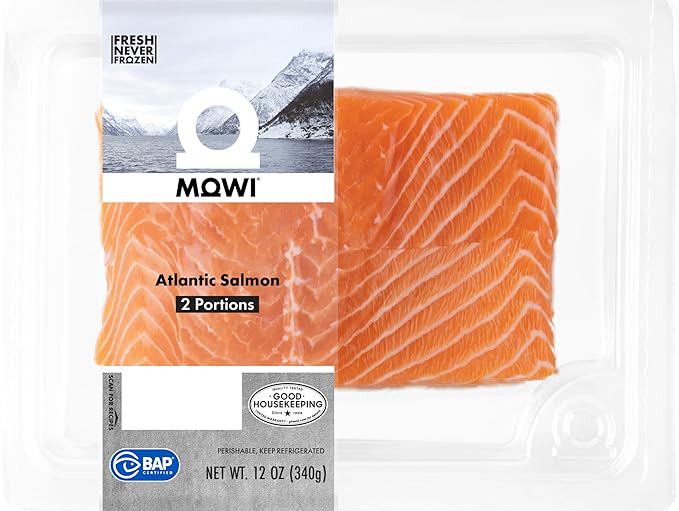
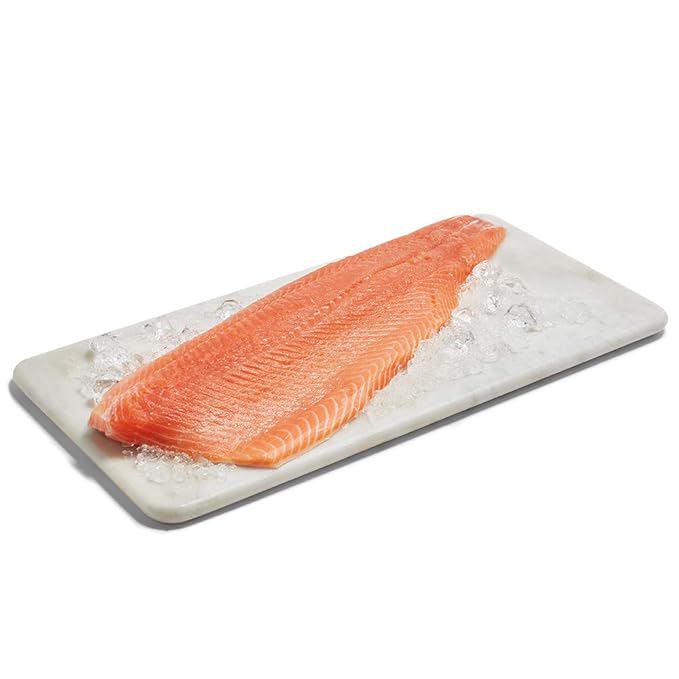
1. Salmon for Omega-3s and High-Quality Protein
Salmon appeared on nearly every dietitian's list. The reason is twofold: it delivers a concentrated dose of omega-3 fatty acids (EPA and DHA), which are well-documented for their role in reducing exercise-related inflammation and muscle soreness, and it provides about 20 grams of complete protein per 3-ounce serving. That protein supports muscle protein synthesis, the repair process that continues well after your last rep of the week.
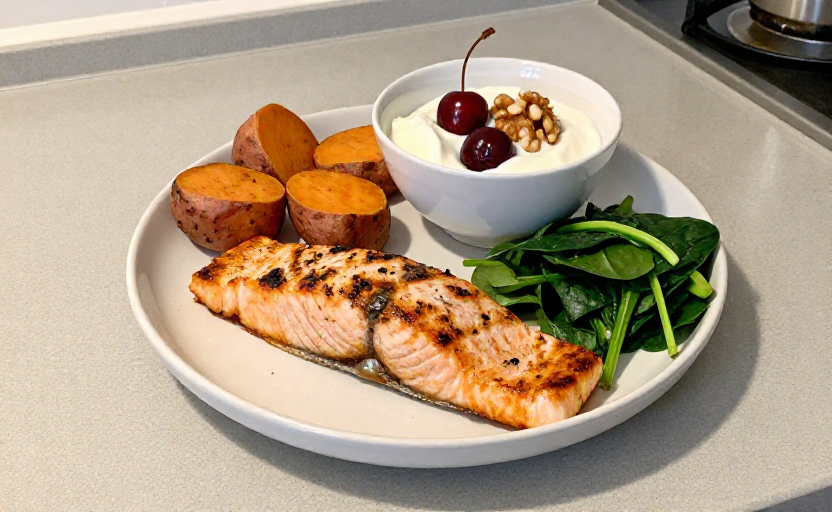
Registered dietitian Melissa Boufounos, who works with endurance athletes, recommends wild-caught salmon as a versatile recovery-day staple. She suggests pairing it with complex carbohydrates like roasted sweet potatoes or quinoa to replenish glycogen stores without spiking blood sugar. If fresh salmon isn't available, canned wild salmon (with bones, for extra calcium) is an excellent, shelf-stable alternative.
Tip: Aim for at least two servings of fatty fish per week during training cycles. An active recovery day is the perfect opportunity to schedule that first serving.
2. Tart Cherries for Inflammation and Sleep Quality
Tart cherries (often sold as Montmorency cherries) are not a gimmick. A growing body of research, including a 2021 meta-analysis in the European Journal of Sport Science, shows that tart cherry juice and whole cherries can reduce markers of muscle damage and speed up strength recovery after strenuous exercise. The anthocyanins—the pigments that give tart cherries their deep red color—are potent antioxidants that help quell oxidative stress during the repair phase.
Dietitian nutritionist Kelly Jones, MS, RD, CSSD, who works with professional athletes and active families, often recommends tart cherry juice concentrate or frozen tart cherries as a recovery-day addition. She points out that tart cherries also contain natural melatonin, which may support sleep quality—a critical but often overlooked component of recovery. For active recovery days, Jones suggests blending frozen tart cherries into a post-lunch smoothie or stirring a splash of concentrate into sparkling water.
One note: look for unsweetened tart cherry products. Many commercial blends add apple juice or sugar, which dilute the anthocyanin content and add unnecessary calories.
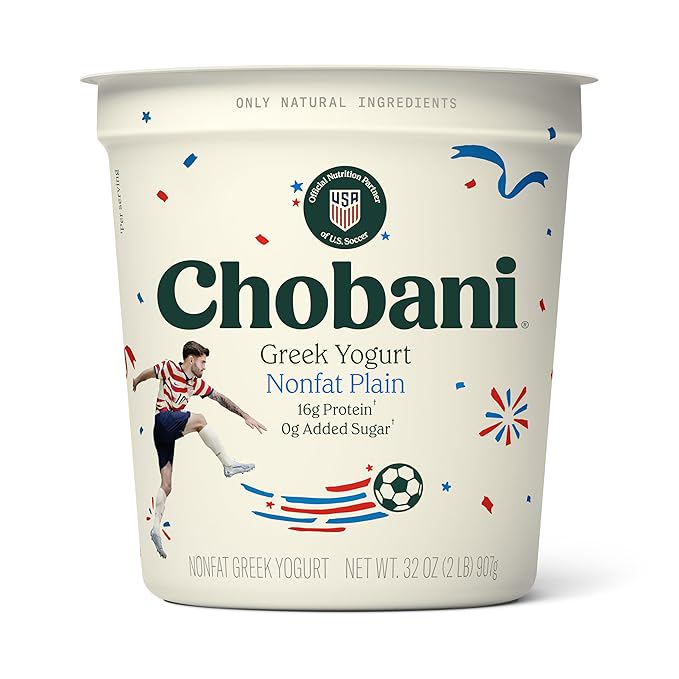
3. Greek Yogurt (or Skyr) for Casein Protein and Probiotics
Greek yogurt and its thicker Icelandic cousin, skyr, are stars of the recovery-day kitchen. They provide roughly 15–20 grams of protein per 6-ounce serving, and a significant portion of that is casein protein. Unlike whey, which digests rapidly, casein clots in the stomach and releases amino acids slowly over several hours. That steady supply can be especially beneficial on recovery days, when your meals tend to be spaced further apart and you want a sustained anabolic environment for muscle repair.
Beyond protein, yogurt supplies calcium for bone health and probiotics for gut health. Gut health is increasingly recognized as a player in overall recovery, since a healthy gut microbiome aids nutrient absorption and immune function—both of which take a hit during heavy training blocks. Registered dietitian Jaclyn London, RD, recommends plain, unflavored Greek yogurt to avoid added sugars. She likes to mix it with a handful of walnuts and a drizzle of honey for a balanced recovery snack that provides protein, healthy fats, and a touch of carbohydrate.
A quick comparison: if you tolerate lactose moderately well, Greek yogurt is a fine choice. If you are very sensitive to lactose, lactose-free Greek yogurt or skyr (which is naturally lower in lactose due to the straining process) are good alternatives, though both still contain some lactose.
4. Spinach and Dark Leafy Greens for Magnesium and Polyphenols
Spinach, kale, Swiss chard, and similar greens might seem like unglamorous recommendations, but dietitians put them high on the recovery list for one reason in particular: magnesium. This mineral is involved in over 300 enzymatic reactions, including muscle relaxation, protein synthesis, and ATP production (energy generation). Training depletes magnesium through sweat and urine, and even a marginal deficiency can contribute to muscle cramps, weakness, and prolonged soreness.
One cup of cooked spinach provides about 39% of the daily value for magnesium. To put that in perspective, you would need to eat roughly 3 cups of raw spinach to get the same magnesium content, because cooking reduces volume. That difference matters on recovery days when you may not feel like eating huge volumes of food. Dietitian Cara Harbstreet, RD, advises roasting greens with olive oil and garlic as a simple side dish, or blending a handful of raw spinach into a recovery smoothie where the flavor is masked by fruit and yogurt.
Dark greens also deliver a wide spectrum of polyphenols—plant compounds that help reduce inflammation at a cellular level. While not as widely studied as curcumin or green tea catechins in the context of exercise recovery, the polyphenol load from frequent leafy green consumption almost certainly contributes to long-term antioxidant defense and overall metabolic health.
5. Whole Eggs for Choline, Vitamin D, and High-Quality Protein
Eggs have cycled in and out of nutritional favor over the years, but the consensus among the dietitians I spoke with is that whole eggs (yolk included) are a near-perfect recovery food. A single large egg delivers about 6 grams of protein with an excellent amino acid profile, plus 147 mg of choline. Choline is an essential nutrient that supports neurotransmitter function and cell membrane health—both of which are relevant for nervous system recovery and neuromuscular adaptation after training.
Eggs are also one of the few dietary sources of vitamin D, a fat-soluble vitamin that plays a role in muscle function and immune regulation. Many athletes and active adults are borderline deficient in vitamin D, particularly in winter months or indoor-heavy lifestyles. A two-egg omelet cooked with spinach and a small serving of cheese covers protein, fat-soluble vitamins, choline, and magnesium from the greens—which is an efficient, low-effort meal for a low-effort day.
If you are concerned about dietary cholesterol, the available evidence indicates that for most people, dietary cholesterol from whole eggs does not significantly raise blood cholesterol levels or increase cardiovascular risk. The American College of Sports Medicine and the American Heart Association both state that eggs can be included as part of a heart-healthy dietary pattern for active individuals. If you have a diagnosed lipid disorder or familial hypercholesterolemia, follow your healthcare provider's guidance on egg consumption.
Putting It Together on an Active Recovery Day
You do not need to eat all five of these foods every recovery day. Think of them as a toolkit. On a day after a heavy leg session, you might have an omelet with spinach for breakfast, a Greek yogurt and cherry smoothie for a mid-morning snack, and a salmon salad with loads of greens for lunch. On a lighter recovery day after moderate cardio, your choices might shift toward eggs for breakfast and a spinach-heavy dinner with chicken or tofu.
The consistent thread across all of these foods is that they are real, minimally processed, and nutrient-dense. They support muscle repair, reduce inflammation, replenish glycogen, and provide the micronutrients that your body loses during training. No single food is a magic bullet, but consistently including these five options on recovery days will give your body the raw material it needs to come back stronger for your next hard session.