You show up, you lift, you grind. But if your progress has flatlined — or worse, if your joints ache more than your muscles — the problem isn't effort. The problem is likely hiding in your technique, your programming, or a few sneaky habits you don't realize are costing you gains.
We asked strength coaches and sports medicine specialists to pinpoint the most common errors that keep people from building lean muscle efficiently. Here are the five mistakes they see most often — and how to correct each one.
1. You're using too much weight, too fast
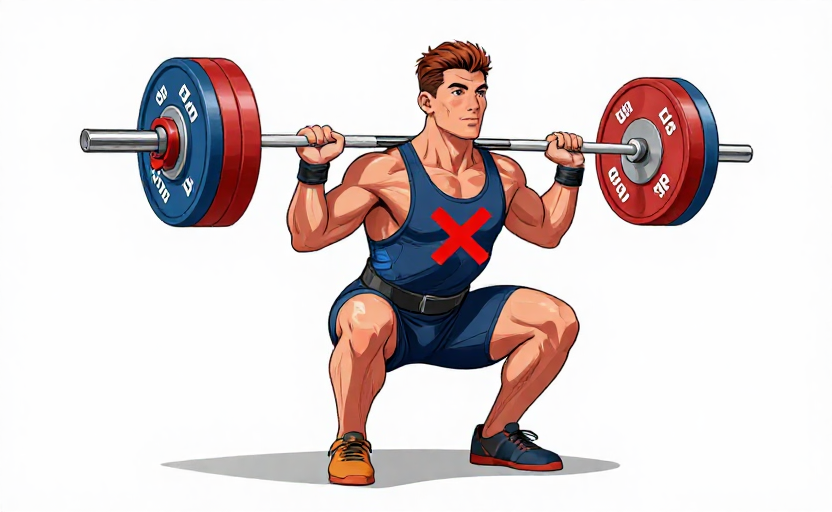
Ego lifting is the fastest route to a plateau. When the load exceeds what your stabilizers and connective tissues can handle, your body compensates by recruiting the wrong muscles — and the target muscle stops working as hard.
A 2021 study in the Journal of Strength and Conditioning Research found that lifters who prioritized controlled form over maximal load saw significantly greater muscle activation in the primary mover. The fix is humbling but effective: drop the weight by 10–15% and focus on a 2–3 second eccentric (lowering) phase. You'll feel a burn that heavy, sloppy reps never gave you.
2. You never vary your rep ranges
If every set is 8–12 reps at the same tempo, your muscles adapt. The body is a master of efficiency — once it learns a pattern, it stops building new tissue unless you introduce a different stimulus.
Periodization matters. Rotate between:
- Strength-focused (3–6 reps at 80–90% of your one-rep max)
- Hypertrophy-focused (8–12 reps at 65–80%)
- Endurance-focused (15–20 reps at 50–65%)
Spending 4–6 weeks in each zone keeps your nervous system guessing and your muscles growing.
3. Your rest periods are either too long or too short
Rest is not laziness; it's a variable you can manipulate for specific outcomes. For hypertrophy, the sweet spot is 60 to 90 seconds between sets. Rest less than 45 seconds and your energy systems don't recover enough to produce tension on the next set. Rest more than 2 minutes and you lose the metabolic pump that drives muscle fiber recruitment.
Set a timer. What feels like a minute is often two.
Be honest — track it.
4. You ignore the eccentric phase
Lowering the weight slowly under control creates micro-tears that signal your body to build muscle. Yet most people drop the bar fast, letting gravity do the work. The eccentric phase is where you get the most bang for your buck in terms of muscle damage and subsequent growth.
Try a simple cue: on the lowering portion of any exercise, count “one-thousand-one, one-thousand-two.” That two-second controlled descent, combined with an explosive concentric (lifting) phase, can increase muscle protein synthesis by up to 30% according to several meta-analyses.
5. You skip the back-off weeks
Progressive overload is essential — but relentless overload without recovery leads to systemic fatigue, hormone dysregulation, and stalled gains. Your muscles don't grow during the workout. They grow during the rest and repair window that follows.
Schedule a deload week every 6 to 8 weeks where you drop volume by 40–50% while maintaining intensity. You'll come back stronger, with less inflammation and a lower risk of injury.
Fixing these five mistakes won't require a total overhaul of your routine. Pick one to work on for the next two weeks. Once that becomes natural, move to the next. Small corrections compound into serious progress.