
You’ve done the hard work: swapped out processed seed oils for olive oil, added avocado to your lunch, and started sprinkling flaxseeds on your oatmeal. You’re eating “healthy fats,” exactly as the experts recommend. So why has the number on the scale stalled?
It’s a frustrating paradox, but a common one. The truth is that even the most nutrient-dense fats are energy-dense. Fat provides nine calories per gram, compared with four calories per gram from protein or carbohydrates. When your weight loss plateaus—or reverses—the culprit is often an excess of these “good” fats creeping into your daily intake. Here are four telltale signs that your healthy fat intake may be working against your weight loss goals.
1. Your Daily Fat Portions Are Size-of-Thumb Instead of Tip-of-Thumb
One of the most common mistakes is treating healthy fats as “free” foods. Nuts, seeds, nut butters, and avocados are nutrient powerhouses, but they are also calorie-dense. A single ounce of almonds (about 23 nuts) contains roughly 164 calories. Drizzle a generous quarter-cup of olive oil on a salad, and you are looking at nearly 480 calories.
The guideline many dietitians suggest is to keep a serving of fat about the size of your thumb—not your entire hand. For nut butters, that is roughly one tablespoon (around 90–100 calories). For avocado, one-fifth of a medium fruit is a typical serving. If you are spooning almond butter directly from the jar or slicing half an avocado onto toast without measuring, it is easy to add 300–400 calories to your day without feeling fuller.
Quick check: Measure just one day’s worth of your usual fat sources. If the total is above 50–60 grams of fat (depending on your total calorie target), consider trimming portions by half.
2. You Are Drinking Your Fats
Liquid fats are the easiest to overconsume because they do not trigger the same satiety signals as solid foods. Bulletproof coffee, coconut oil in smoothies, and even “healthy” salad dressings can turn a low-calorie drink or meal into a high-fat bomb that exceeds your daily fat target before lunch.
A typical large “keto” coffee with butter and MCT oil can contain 400–500 calories, most of which come from saturated fat. Similarly, a smoothie with half an avocado, a heaping tablespoon of almond butter, and a splash of coconut milk can easily pack 600 calories. These drinks may keep you in ketosis, but if your goal is weight loss, they are not an automatic pass to eat unrestricted later in the day.
Instead, try using liquid fats more sparingly. A teaspoon of MCT oil in your coffee (rather than a tablespoon) or a light vinaigrette made with one tablespoon of olive oil and vinegar can provide flavor and brain benefits without overwhelming your calorie budget.
3. You Are Not Adjusting Fat for the Rest of Your Diet
Eating more healthy fat should come with a trade-off, not an addition. Many people add avocado, nuts, and olive oil to an already balanced plate of protein and carbohydrates, then wonder why the scale doesn’t move. This “diet creep” happens because the same portion of chicken and rice that used to keep you full now comes with an extra 200 calories of fat on top.
A practical approach is to treat fat as a substitute for other calories rather than an extra. For example, if you add half an avocado to your lunch salad, reduce your portion of grains or fruit by a similar calorie amount. Or, if you snack on a handful of almonds in the afternoon, skip the granola bar you usually eat.
Another sign of imbalance: if your carb intake has remained the same while your fat intake has doubled, weight loss is likely to slow. The body will preferentially burn dietary fat for energy rather than stored body fat, especially if total calorie intake is not controlled.
If you notice that your energy levels are fine but your body composition isn’t changing, consider shifting your macros slightly—lowering fat by 10–15 grams per day and replacing those calories with a lean protein or a high-fiber vegetable.
4. You Are Relying on Fat for Satiety—but It’s Backfiring
Healthy fats are often praised for their satiety benefits. However, this effect is highly individual and can work against you. Some people find that a high-fat breakfast leaves them feeling heavy and less inclined to move, while others experience no difference in fullness between a high-fat meal and a high-protein, moderate-carb meal. When you rely on fat to feel full, you may end up consuming more calories overall because fat does not trigger the same hormonal satiety signals as protein or fiber.
If you are eating a fatty meal and still feel hungry within two hours, fat alone may not be the best satiety tool for you. Instead, try bumping up your protein intake and including more non-starchy vegetables. A 2020 study in the American Journal of Clinical Nutrition found that high-protein meals reduce hunger more effectively than high-fat meals, even when calorie content is matched.
Another red flag: if you feel sluggish or mentally foggy after a high-fat meal, your body may not be efficiently metabolizing fats. This can happen when fat intake is too high relative to your individual tolerance or activity level. The solution is not to eliminate fat, but to redistribute it—eating most of your daily fat earlier in the day when you are more active, and keeping dinner lighter in fat.
How to Fix the Balance
Resetting your fat intake doesn’t require extreme restriction. Start with these three steps:
- Track fat grams for two days. Use an app to see your baseline. Most people on a weight loss diet do best with 0.3–0.5 grams of fat per pound of body weight per day, depending on activity.
- Stick to one fat source per meal. If you have a salad with avocado, skip the oily dressing. If you cook with butter, don’t add cheese. This automatically reduces the total.
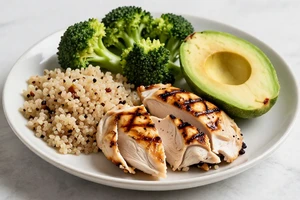
- Eat fats with protein, not alone. Pair a handful of almonds with a hard-boiled egg, or add a teaspoon of olive oil to a chicken breast rather than a bowl of pasta. Protein helps keep you full and reduces the likelihood of overeating later.
Remember: healthy fats are not the enemy. They support hormone production, vitamin absorption, and brain health. But when weight loss stalls, it’s the portion that matters—not the quality. Adjusting your fat intake by just a few tablespoons per day can reignite progress without making you feel deprived.