
You’re doing everything right. You swapped the soda for sparkling water. You ordered the grilled chicken salad instead of the burger. You feel virtuous. But halfway through, you glance down and realize you’ve just inhaled what looks like a small hay bale of quinoa, a mountain of avocado, and enough dried fruit to stock a trail mix factory. Welcome to the portion control trap.
The truth is, “healthy” labels can be the best disguise for oversized portions. A meal can be packed with nutrient-dense ingredients and still contain two to three times the calories, carbohydrates, or fat your body actually needs in a single sitting. Here are four telltale signs that your go-to healthy meal might be working against your goals.
1. The Bowl Is More Salad Bar Than Meal
A big salad sounds like a safe bet. But when your bowl is loaded with nuts, seeds, dried cranberries, crumbled cheese, crispy chickpeas, and half an avocado on top of a mountain of greens, you’re not eating a light lunch. You’re eating a calorie bomb dressed in kale.
The issue is density. A cup of mixed greens is almost nothing. Add a quarter-cup of pumpkin seeds (roughly 180 calories), a quarter-cup of dried cherries (about 130 calories), two tablespoons of feta (70 calories), and two tablespoons of vinaigrette (120 calories), and you’re already at 500 calories before you’ve touched the avocado. It’s easy to eat double that in one sitting without blinking.
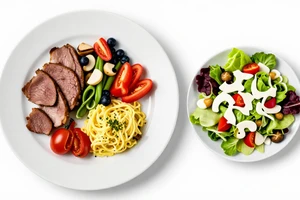
What to watch for: If your salad bowl looks like a buffet of toppings, try limiting yourself to two add-ons and one fat source (dressing or avocado). Aim for the greens to take up half the bowl or more.
2. The Grain Bowl Is a Carb Overload
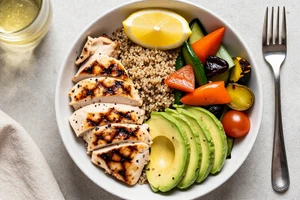
Grain bowls are a darling of the wellness world. Brown rice, quinoa, sweet potatoes, black beans, and a drizzle of tahini. Sounds perfect, but the portions have quietly crept up. A restaurant grain bowl can easily clock in at 700 to 1,000 calories, with 80 to 120 grams of carbohydrates. That’s close to a full day’s worth for someone on a moderate intake plan.
The problem starts with the base. Many bowls serve one to two cups of cooked grains as the anchor. That alone is 400–600 calories. Then you add starchy vegetables, beans, and a nut-based sauce. It’s a lot of energy in a little volume. Your body doesn’t know the difference between a bowl of quinoa and a bowl of pasta.
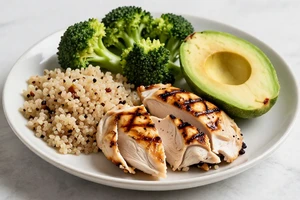
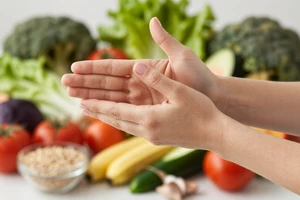
What to watch for: Train your eye to treat the grain as a small base, not the main event. A serving should be about the size of your fist. Fill the rest of the bowl with non-starchy vegetables and a lean protein source like chicken, tofu, or fish.
3. The Smoothie Has No Off Switch
Green smoothies feel like liquid health. But they are often the sneakiest portion control trap of all. The moment you blend fruit, yogurt, nut butters, seeds, and milk into a glass, you lose the natural cues that tell your brain you’re full. You can drink 500 to 800 calories in five minutes and feel hungry an hour later.
Consider what goes into a standard “detox” smoothie: one banana, one cup of berries, one cup of spinach, one cup of almond milk, two tablespoons of peanut butter, and a scoop of protein powder. That’s easily 600 calories. Now drink it. There’s no chewing, no variety in texture, no pause between bites. It’s all gone before your stomach can signal your brain that enough is enough.
A quick check: Try turning your smoothie into a bowl. Spread it out, add crunchy toppings like unsweetened coconut or a few slivered almonds, and eat it with a spoon. The same ingredients will feel more satisfying and you’ll likely eat less.
4. You’re Eating “Healthy” Versions of Junk Food
Keto cookies. Paleo brownies. Gluten-free pizza. Vegan ice cream. These products have an invisible asterisk: they might be free of certain ingredients, but they are not free of calories. Marketers have done a masterful job convincing us that removing gluten or dairy removes the need for portion control. It doesn’t.
The trap is psychological. If a brownie is labeled “low carb,” it’s easy to eat three instead of one because you feel you’ve earned a pass. In reality, those brownies still contain almond flour, coconut oil, butter, and sweeteners — all calorie-dense. A keto-friendly brownie can have 200 to 300 calories per square, and they’re often small enough that three feels reasonable.
What to watch for: Read the serving size first, not the marketing tagline. A single serving of a “healthy” cookie or protein bar is usually quite small. If you’re eating two or three, you are no longer having a snack; you’re having a double serving of dessert.
The goal here is not to make you afraid of quinoa or smoothies. It’s to help you see what’s actually on your plate. Healthy ingredients are still ingredients. They still have calories, carbohydrates, and fats. And they still require portion awareness, even when they come wrapped in green labels and wellness promises. Start looking at your bowl with fresh eyes. You might find your healthiest meal yet is actually just a bit too much of a good thing.