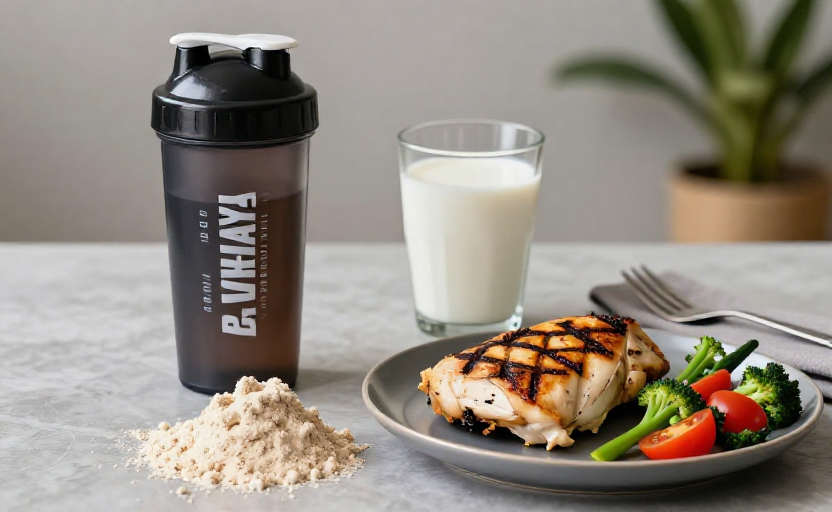
You crush your sets. You track your progressive overload. Your form is dialed in. But despite all that effort in the gym, you feel flat, sore for days, or just stuck. The culprit may not be your workout—it could be what happens after you rack the weights.
Protein is the primary building block your body uses to repair microscopic tears in muscle tissue caused by strength training. Without enough of it, your recovery stalls, and progress grinds to a halt. Here are four clear signs that you might be falling short on post-workout protein.
1. You're Sore Longer Than You Should Be
Delayed-onset muscle soreness—that familiar ache 24 to 48 hours after training—is normal. But if you're still wincing when you walk down stairs three or four days later, consider your protein intake. Muscle protein synthesis, the process that rebuilds damaged fibers, requires a steady supply of amino acids from dietary protein.
Persistent soreness that lasts beyond 72 hours can be a red flag that your body lacks the raw materials needed to repair effectively.
While some soreness is inevitable when you increase volume or intensity, chronic prolonged soreness suggests your recovery cycle is being starved. Research indicates that consuming protein within a few hours after training can accelerate recovery and reduce the perception of soreness.
2. You've Hit a Plateau in Strength Gains
You used to add weight to the bar every workout. Now, you've been stuck at the same numbers for weeks. Strength plateaus can stem from programming flaws or insufficient sleep, but inadequate protein is a frequent, overlooked cause. Your muscles can't get stronger if they can't repair and grow larger.
When protein intake is low, your body may break down existing muscle tissue for energy—the exact opposite of what you want during strength training. This catabolic state prevents the adaptation that leads to getting stronger. If your diet is otherwise in check and your program is sound, a protein assessment is a logical next step.
3. You Feel Unusually Fatigued or Irritable
Strength training taxes more than your muscles; it also stresses your central nervous system and your body's energy-regulating systems. Protein plays a role in the production of neurotransmitters and helps stabilize blood sugar levels. When protein is insufficient, you may experience a distinct kind of fatigue—not just sleepy, but a deep, heavy lack of energy that lingers through the day.
Low protein intake can impact mood-regulating neurotransmitters, making you more irritable or mentally foggy after hard training.
This sign is easy to misinterpret as needing more sleep or more calories in general, but if carbohydrate and fat intake are adequate, the missing piece may be protein specifically. Keep an eye on how you feel two to three hours after a meal; if you're crashing or snapping at small frustrations, review your protein distribution across the day.
4. You've Lost Muscle Mass Despite Training Hard
This is the most direct sign. If you notice your arms looking less defined, your waist measurement shrinking rapidly, or the scale dropping faster than expected while you're trying to gain strength, your body may be cannibalizing its own muscle for fuel. This process, known as muscle catabolism, accelerates when dietary protein is too low to support repair needs.
Strength training creates a demand for protein. If that demand isn't met, the body pulls amino acids from its own muscle tissue to cover essential functions. The result: you may actually lose size and strength even while training consistently. Some muscle loss may occur during a calorie deficit, but the goal is to slow it as much as possible—adequate protein is the primary tool for that.
How to Fix the Gap
If one or more of these signs resonates, a few simple steps can help. Spreading protein intake across three to four meals and snacks (roughly every three to four hours) helps maintain elevated muscle protein synthesis throughout the day. Good sources include lean meats, poultry, fish, eggs, dairy, legumes, tofu, and quality protein powders for convenience.
The general recommendation for people doing regular strength training is around 1.6 to 2.2 grams of protein per kilogram of body weight per day. That often translates to 25 to 40 grams of protein per meal, depending on your total needs. Tracking your intake for even a few days can reveal whether you're consistently hitting that range.
A Quick Note on Timing
While the old "anabolic window" was exaggerated, having some protein within a few hours after your workout is a practical habit. It ensures that the amino acid supply coincides with the period when your muscles are most sensitive to uptake. For most people, a post-workout meal or shake covering 20 to 40 grams of protein is a solid target.
Strength training demands recovery that is just as deliberate as the lifting itself. If any of these signs feel familiar, your protein intake deserves an honest look.