
You show up, you move, you sweat. But if your shoulders feel tight, pinchy, or just plain wrong after a few weeks of training, the problem might not be the exercises themselves. It is often the hidden habits—the small, repeated choices you make without thinking—that quietly lock up your shoulder joints.
Shoulder mobility isn't about touching your elbows behind your back. It is about having enough range of motion to perform basic pressing, pulling, and overhead movements without compensation or pain. For beginners, four common workout habits act like slow poison for the shoulders. Here is what they are and, more importantly, how to undo them before they become chronic.
Habit #1: Crushing the Grip on Every Push and Pull
When you are new to lifting, the instinct is to squeeze the bar or dumbbell handles as hard as you can. This feels strong and stable. But a death grip radiates tension up through your forearms, into your triceps, and directly into your shoulders. It tells your nervous system to brace everything tight, including the muscles around your shoulder blades and rotator cuff.
The fix: Practice a “hook grip” or a relaxed, open-handed grip on non-maximal sets. For push-ups and planks, spread your fingers wide and press through your palms as if you are trying to push the floor away. During rows and lat pulldowns, imagine you are hanging from a bar with just enough tension to hold the weight—not crush it. This releases the upper trap strain and lets your shoulder blades move freely.
Habit #2: Leading with Your Chest in Overhead Presses
Many beginners are told to “puff your chest out” for stability. While that cue works for bench pressing, taking it into an overhead press is a disaster. It pushes your rib cage forward, tilts your upper spine backward, and jams the front of your shoulder joint into the bony socket. You lose overhead range and invite impingement pain.
The fix: Instead of chest up, think “ribs down.” Brace your core as if someone is about to poke you in the belly. Keep your rib cage stacked directly over your hips. When you press overhead, the bar should travel slightly behind your ears, not in front of your face. If you cannot press without arching your back, lower the weight until you can.
A simple test: stand against a wall. Press your low back flat against it. Now press your hands overhead. If your hands cannot touch the wall, you are likely compensating through your rib cage.
Habit #3: Skipping the Scapular Warm-Up
Jumping straight into pull-ups or bench presses with cold shoulders is like trying to sprint without jogging. The shoulder joint relies on your scapula (shoulder blade) to provide a stable base. If the small muscles around the scapula are asleep, your big muscles like the pecs and lats take over, pulling the ball of the joint forward and reducing mobility.
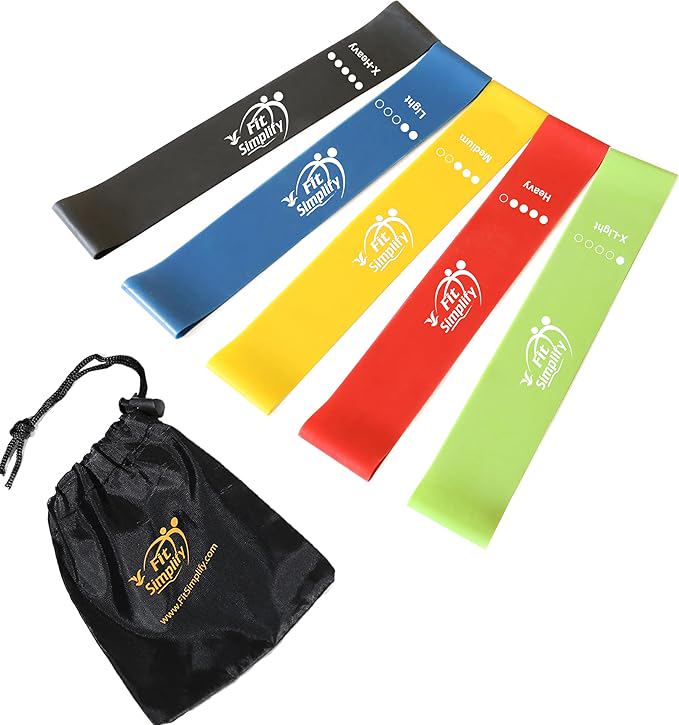
The fix: Before every workout, spend three minutes on scapular control. Do a few rounds of scapular push-ups (slide your shoulder blades together and apart without bending your elbows), band pull-aparts (pinch your shoulder blades together), and wall slides (walk your hands up a wall while keeping your ribs down). This switches on the stabilizers and primes the joint for safe movement.
Habit #4: Neglecting End-Range Control for Cables and Machines
Machines and cables feel safer because they guide your path. But they can also train you to stop the movement too early. If you never reach the end range of a pulling motion—where your shoulder blade fully retracts—you lose that last bit of extension. Over time, your body learns that full range is scary or impossible, so it tightens up to protect itself.
The fix: On any pulling exercise (seated cable row, lat pulldown, face pull), focus on a one-second pause at the most contracted position. Actively squeeze your shoulder blades together and hold that position for a breath. On pushing exercises, pause at the deepest stretch, not at lockout. For example, in a dumbbell bench press, stop when you feel a gentle stretch across your chest, not when the dumbbells bounce off your ribs. This teaches your brain that full range of motion is safe.
Small adjustments in your daily gym habits have a compounding effect. Over a month, releasing your grip, stacking your ribs, warming up your shoulder blades, and owning your end range can restore inches of healthy motion. Shoulder health is not about doing more exercises—it is about doing your current exercises better.