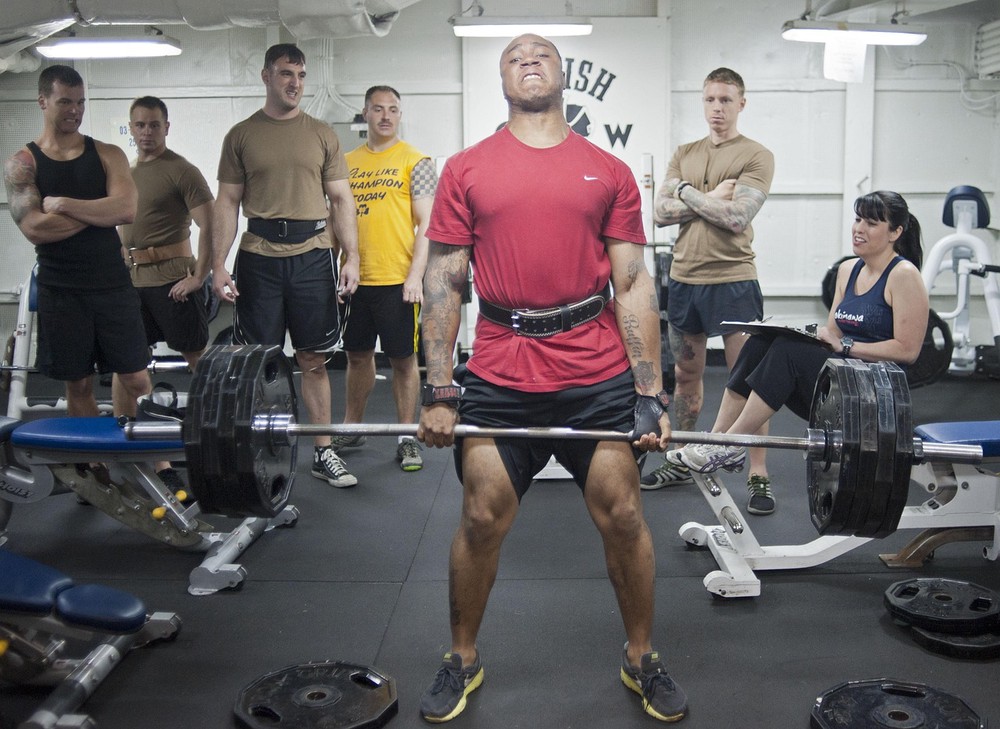
You step up to the barbell, set your grip, and pull. But something feels off — your lower back aches, your shoulders round, or the movement never quite clicks. If you’ve ever wondered why some lifts feel awkward no matter how many reps you grind through, you’re not alone. The most common weightlifting form error cuts across nearly every exercise, from deadlifts to rows to presses: a loss of neutral spine and rib position under load.
This isn’t about chasing perfection. It’s about moving safely so you can keep lifting for years. Here are two simple, expert-backed fixes that address the root of the problem — no gimmicks, no complicated drills, just practical cues you can use today.
Fix #1: Brace Your Core Like You’re Bracing for a Punch
When most people hear “tighten your abs,” they suck in and hold their breath. That’s exactly wrong. Sucking in pulls your ribs up and arches your lower back, throwing your spine out of neutral. Instead, you want 360-degree tension around your trunk — like preparing to take a hit to the gut.
Try this before your next lift: Stand tall, place your hands on your ribcage, and exhale all your air. Without letting your ribs flare upward, take a deep belly breath into your sides and back. Hold that breath tight, as if someone’s about to punch you in the stomach. That’s your brace. Now pull your shoulders down and back slightly — you’ve just created a stable platform for the bar.
Coach’s cue: “Zip up your rib cage.” Imagine a zipper running from your navel up to your sternum — when you brace, pull the zipper closed. This keeps ribs stacked over hips.
Practice this without weight first. If you can hold a plank with your ribs tucked and belly braced, you’re ready to add load. Many lifters find that simply correcting their brace eliminates low-back pain during deadlifts and squats almost immediately.
Fix #2: Set Your Shoulders by Breaking the Bar
Rounding your upper back under load — especially in pulls like deadlifts and rows — is the second half of the equation. The fix isn’t “pull your shoulders back.” That cue often leads to over-retraction and a loss of lat tension. Instead, think about bending or “breaking” the bar across your thighs.
Here’s how it works: as you grip the barbell, imagine you’re trying to snap it in half horizontally. This engages your lats, pulls your shoulders into a stable, externally rotated position, and prevents your upper back from collapsing forward. You’ll feel tension spread across your entire back, not just your arms.
Another way to get the same effect: after gripping the bar, try to “put your armpits in your pockets” — pull your lats down and back, as if you’re squeezing something between your shoulder blades and your back pockets. This sets your shoulder blades in a stable, packed position that carries through the whole lift.
Quick check: Before you pull, look at your torso from the side. Your spine should form a straight line from your ears to your tailbone. If you see a curve in your low back or a hump between your shoulders, reset.
Putting Both Fixes Together: Your Two-Step Setup
These two corrections work best as a pair. They reinforce each other — a solid brace keeps your spine aligned, and stable shoulders keep the bar path consistent. Here’s your pre-lift checklist:
- Set your feet — hip-width for squats, shin-width for deadlifts.
- Grip the bar and instantly think “break the bar.”
- Zip your ribs and take your brace breath.
- Pull your lats down (armpits to pockets).
- Lift — keeping everything tight.
This sequence takes three seconds. If you rush past it, you’re likely repeating the same form error rep after rep. Commit to the setup; it’s your insurance policy against injury.
Why This Error Is So Common (and How to Stop Chasing It)
The biggest reason lifters develop a rounded, unstable position is that it feels stronger at first. When your ribs flare and shoulders roll forward, you can use momentum and elasticity to move more weight — but only for a while. Over time, that position stresses your spinal discs, strains your erectors, and limits how much force your hips and glutes can produce.
By focusing on the rib-zip and bar-break cues, you train your nervous system to default to a safe, powerful position. The weight may feel slightly lighter initially because you’re removing the slack and stretch reflex. That’s a good sign — it means your stabilizers are finally doing their job.
A Word on Individual Differences
No single cue works for every body. If “zip your ribs” doesn’t click, try “tuck your tailbone slightly” or “pull your belly button toward your spine” — same goal, different wording. Likewise, if “break the bar” makes you overgrip and lose lat tension, experiment with “bend the bar around your back” or “spread the floor with your feet.”
The core principle remains: maintain a neutral spine from head to tailbone, and keep your shoulders packed under load. These two fixes cover the overwhelming majority of form faults in gyms worldwide. Master them, and you’ll lift stronger, safer, and more efficiently for the long haul.