
You walk into a restaurant feeling good. You skipped the bread basket, ordered a grilled chicken salad with the dressing on the side, and even asked for mineral water instead of soda. But here’s the quiet truth: sometimes the very dishes we choose in the name of “light eating” are the ones packing hidden calories, sugar bombs, and stealth fats. If your weight loss diet has hit a plateau or you’re scratching your head at the scale after a “good” meal out, it might not be the burger you need to worry about. It’s the seemingly innocent choices you never saw coming.
Below are three restaurant foods that look virtuous but can quietly derail your progress. Learning to spot them will save you hundreds of calories and keep your goals on track without turning you into the diner who interrogates the server.
The “Healthy” Smoothie That’s Really a Milkshake in Disguise
Smoothies sound like the perfect on-the-go meal replacement for someone watching their weight. Fresh fruit, maybe some yogurt, a handful of spinach—what could go wrong? Plenty. Restaurant and café smoothies are often built on a base of fruit juice, frozen yogurt or sherbet, and sweetened yogurt, not whole fruit. A single 16-ounce serving can easily clock in at 400 to 600 calories, with 70 to 90 grams of sugar. That’s more sugar than you’d find in two candy bars.
The problem is twofold. First, when you drink your calories, your brain doesn’t register fullness the same way it does when you chew solid food. So you consume a meal’s worth of energy and still feel hungry an hour later. Second, most restaurant smoothies lack the protein and fiber that would actually support weight loss. They’re just sugar in a cup.
Smart swap: If you’re craving a smoothie, order a small size and ask if they can make it with unsweetened milk or a milk alternative, no added sugar, and a scoop of protein powder. Better yet, skip the smoothie and go for whole fruit with a handful of nuts.
The Grilled Fish Entrée That’s Drenched in Butter
You did the right thing—you chose fish over the ribeye. But many restaurants prepare “grilled” or “pan-seared” fish with a generous pat of butter or a drizzle of oil that doubles or triples the fat content. A typical 6-ounce filet of salmon is already around 350 calories. When the kitchen adds a butter sauce, basting oil, or a creamy topping, that same plate can jump to 600 or 700 calories. And that’s before you even touch the side dishes.
Furthermore, the word “grilled” on a menu doesn’t guarantee light preparation. Some chefs use clarified butter or oil on the grill surface to prevent sticking, which adds fat you never accounted for. The same is true for “broiled” or “blackened” fish, which often involves a coating of butter and spice blend.
Smart swap: Ask for your fish to be prepared dry-grilled or steamed with just lemon and herbs. Request sauces and butters on the side. If the server looks confused, simply say: “I’d like it cooked without any added oil or butter, please.” Most kitchens can accommodate.
The Salad That’s a Calorie Minefield
Salads are the ultimate diet mirage. A crispy chicken salad with tortilla strips, cheese, avocado, candied pecans, dried cranberries, and a creamy ranch dressing can easily surpass 800 to 1,000 calories. Some chain restaurant salads rival a fast-food burger and fries in total energy. The culprits are the add-ons: fried chicken instead of grilled, sugary dried fruit, cheese, nuts, croutons, and that heavy dressing.
Even a Caesar salad—often considered a lighter choice—can be problematic. A classic Caesar is made with anchovies, olive oil, egg yolks, and Parmesan, all of which are nutrient-dense but calorie-dense too. A typical restaurant Caesar with croutons and parmesan hovers around 450 to 550 calories for a side-size portion, and a full entrée can be 700 or more.
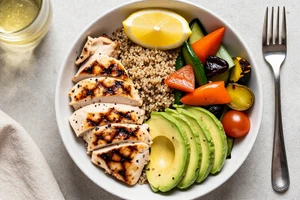
Smart swap: Build your own salad: ask for a base of leafy greens, add grilled chicken or shrimp, load up on raw vegetables, and request the dressing on the side. Use a fork to dip just the tip of each bite into the dressing—you’ll use a fraction of the amount. Skip the croutons, tortilla strips, and dried fruit entirely. Ask for avocado as a fresh fat source instead of cheese.
Ordering out doesn’t have to wreck your diet. The key is knowing that restaurant food is engineered for taste and profit, not for your waistline. Once you start seeing through the healthy-sounding names and focusing on simple preparation, vegetables, and protein, you regain control. Remember: if it feels like a treat and sounds too good to be true on a diet, it probably is. Trust your instincts, ask questions, and don’t be afraid to customize your order.