
You’re in the middle of a set of overhead presses or bent-over rows, and something feels off. Maybe your lower back starts to ache, or you notice your hips wobble as you lift. These aren’t just minor annoyances—they’re often signals that your core stability is failing during your strength workout.
Your core isn’t just your abs. It’s a complex system of muscles—including the deep transverse abdominis, multifidus, diaphragm, and pelvic floor—that work together to stabilize your spine under load. When that system gives out, your body compensates in ways that can reduce performance and increase injury risk. Here are three clear signs that your core stability needs attention, plus what you can do about it.
1. Your Lower Back Hurts During (or After) Lifting
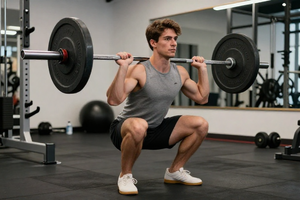
If you consistently feel a dull ache or sharp pinch in your lower back during exercises like squats, deadlifts, or overhead presses, your core may be failing to brace properly. When the deep stabilizers don’t engage, your lumbar spine takes on excessive compressive and shear forces. Instead of holding the spine neutral, you may hyperextend or round your lower back under load.
Quick cue: Before each rep, take a deep breath into your belly, brace as if someone were about to punch you in the gut, and maintain that tension throughout the movement.
Common fixes include reducing the weight temporarily, focusing on diaphragmatic breathing, and practicing exercises like dead bugs or bird dogs to retrain the bracing pattern.
2. Your Hips Drift or Wobble During Single-Leg Movements
Lunges, split squats, and single-leg deadlifts reveal a lot about core control. If your hips dip to one side or sway forward and back, your core isn’t keeping your pelvis level against the pull of gravity and the weight. This instability forces your hip adductors and lower back to overwork, often leading to groin or SI joint issues.
A good test: film yourself from the front during a walking lunge with moderate weight. If the hip of the standing leg drops more than an inch, your lateral core stabilizers (glute medius and quadratus lumborum) aren’t firing correctly. Incorporate side planks, hip hitches, and single-leg balance work into your warm-up.
3. You Can’t Breathe Smoothly Through a Set
Core stability is intimately tied to your breath. If you find yourself holding your breath for entire sets or gasping between reps, your diaphragm and deep abdominals may not be working together. A stiff, poorly coordinated core often forces shallow chest breathing, which only reinforces poor posture and compromises spinal bracing.
Try this: practice the 360-degree breath—inhale, expanding your ribcage and belly in all directions, then exhale just enough to brace without losing tension. If you can’t maintain three steady breaths during a set of heavy squats, dial back the load and focus on breathing mechanics.
Why This Matters for Long-Term Strength Gains
Ignoring these signs doesn’t just make workouts uncomfortable—it sets you up for plateaus and overuse injuries. A stable core allows you to transfer force efficiently from your lower body to your upper body, which is why a strong deadlift or pull-up starts with a solid midsection. Training with a failing core is like building a house on shifting sand; no matter how strong your arms or legs become, the foundation won’t hold.
A well-structured approach includes adding direct core stability work (not just crunches) to your routine two to three times per week. Think planks, dead bugs, Pallof presses, and controlled carries. These exercises teach your body to resist motion at the spine, not generate it.
Finally, don’t ignore mobility. The ability to brace depends on adequate mobility in your hips and thoracic spine. If those areas are stiff, your lower back will try to compensate, and your core will struggle to stay active. Include hip flexor stretches and thoracic rotations in your cooldown.
Your body is giving you honest feedback during every set—learn to listen to it, and your strength gains will follow safely.