You’ve just finished a demanding strength session. The weights are racked, your muscles are humming, and you’re ready for the next critical phase of your training—the part that happens not in the gym, but in the kitchen. What you eat in the hours after your workout isn't just about quenching hunger; it's a direct signal to your body about how to repair, rebuild, and come back stronger. Choosing the right post-workout meal can be the difference between steady progress and a frustrating plateau.
Think of your muscles after resistance training. You’ve created microscopic tears in the muscle fibers, a normal and necessary part of building strength. To repair these tears and build them back thicker and more resilient, your body needs two primary building blocks: protein to provide the amino acids for repair, and carbohydrates to replenish the glycogen (stored energy) you’ve depleted and to help shuttle those nutrients into the muscle cells. Timing matters, but precision isn't everything. A well-composed meal within a couple of hours of your session sets the stage for optimal recovery.
What makes a meal effective for strength gains?
Before we get to the specific meals, let’s break down the components. An effective post-strength-training meal balances macronutrients with a focus on quality and digestibility.
Protein is non-negotiable. It supplies leucine and other essential amino acids that trigger muscle protein synthesis—the process of building new muscle tissue. Aim for a complete source, meaning it contains all nine essential amino acids your body can’t make on its own. Think animal proteins like chicken, eggs, fish, dairy, or well-paired plant-based sources like rice and beans.
Carbohydrates are often misunderstood in strength contexts. They are not the enemy. Glycogen is your muscles' primary fuel for high-intensity work. Replenishing it post-workout helps restore energy, reduces muscle soreness, and creates an insulin response that aids in driving amino acids into muscle cells. Focus on complex carbs like sweet potatoes, oats, or quinoa for sustained energy, or simpler carbs like fruit or white rice if you need something easily digestible and quick.
Fats play a supporting role here. While healthy fats are crucial for overall health and hormone production, a very high-fat meal immediately post-workout can slow the digestion and absorption of protein and carbs. It’s fine to include some, like avocado or a drizzle of olive oil, but let protein and carbs take center stage.
The goal isn't to eat the most, but to eat the most strategically. Your meal should feel satisfying and nourishing, not like a heavy burden on a tired system.
Three simple post-workout meals to try
These meals are built on the principles above. They are templates—feel free to swap proteins, carbs, or veggies based on your preferences and what you have on hand. The key is the combination.
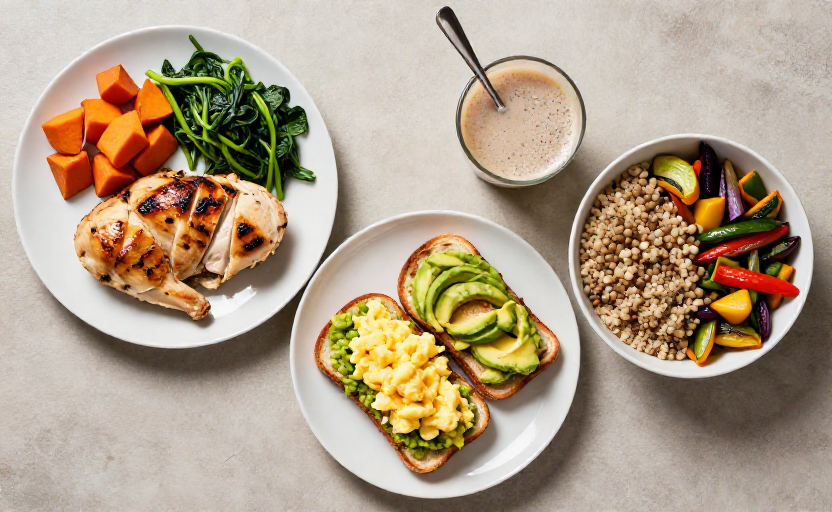
1. The Classic Power Plate: Herb-Roasted Chicken & Sweet Potato
This is a timeless, no-fuss combination that delivers exactly what your muscles need. A palm-sized portion of chicken breast or thigh provides a dense source of lean protein. Sweet potato is a powerhouse carbohydrate, rich in fiber, vitamins, and complex carbs that replenish glycogen steadily. Add a generous side of steamed broccoli or spinach for micronutrients and fiber that support overall recovery and reduce inflammation.
Why it works for breaking plateaus: Its simplicity ensures you're hitting your macro targets without guesswork. When progress stalls, sometimes returning to fundamental, nutrient-dense whole foods can reset your recovery process. The reliable protein and carb ratio gives your body a consistent signal to rebuild.
2. The Speedy Recovery Scramble: Eggs, Avocado & Whole-Grain Toast
Perfect for when you train in the morning or need something quick. Whisk two or three whole eggs with a handful of spinach and scramble them. Eggs are a gold-standard protein, with a perfect amino acid profile and high bioavailability. Serve them over one or two slices of hearty whole-grain or sourdough toast for quality carbohydrates. Add half an avocado on the side for healthy fats and creaminess.
Why it works for breaking plateaus: This meal is rich in nutrients beyond just macros. Eggs provide choline for nerve function and vitamins for energy metabolism. The combination is highly satiating and easy to digest, which is crucial if intense training sometimes suppresses your appetite. It’s a reminder that recovery nutrition doesn’t have to be complicated to be effective.
3. The Plant-Powered Bowl: Lentil & Quinoa Bowl with Tahini Drizzle
For a robust plant-based option, this bowl has you covered. Combine cooked quinoa (a complete protein and complex carb) with cooked lentils or chickpeas for a double dose of plant protein and fiber. Roast a mix of colorful vegetables like bell peppers, zucchini, and red onion. Drizzle with a simple sauce made from tahini, lemon juice, and a touch of water.
Why it works for breaking plateaus: The variety of plant proteins and fibers supports a healthy gut microbiome, which is increasingly linked to reduced inflammation and improved nutrient absorption—key factors in long-term recovery and performance. The diverse micronutrients from the vegetables combat oxidative stress caused by training.
Common pitfalls that can lead to plateaus
Sometimes, a plateau isn't about the workout itself, but what surrounds it. Here are a few nutritional missteps that can hinder strength gains:
- Skipping the post-workout window consistently: While you don't need to eat the second you put the weight down, regularly delaying food for several hours can leave your muscles in a catabolic (breakdown) state for too long, impairing repair.
- Prioritizing protein to the exclusion of carbs: Without adequate carbohydrates, your body may use protein for energy instead of repair, undermining your efforts.
- Relying too heavily on processed supplements: Protein shakes and bars have their place for convenience, but whole foods provide a broader spectrum of vitamins, minerals, and phytonutrients that support the entire recovery process.
- Not eating enough overall: Strength building requires energy. If you're in a significant calorie deficit, your body lacks the resources to build new muscle tissue, no matter how perfect your post-workout meal is.
Listening to your body's signals
These meals are starting points. Pay attention to how you feel two to three hours after eating. Do you feel energized and satisfied? Or sluggish and bloated? Your individual digestion, the intensity of your workout, and even the time of day will influence what works best for you. The best post-workout meal is the one you’ll consistently eat that leaves you ready for your next session, stronger than the last.
Consistency in your nutrition, paired with your training, is the ultimate tool for avoiding plateaus. By providing your body with the right building blocks at the right time, you create an environment where strength gains are not just possible, but expected.