Bodyweight training is one of the most accessible ways to build functional strength. No gym membership, no expensive gear—just you, gravity, and a bit of floor space. But accessibility can also breed complacency. When you strip away the external load of a barbell or dumbbell, it becomes surprisingly easy to slip into patterns that actually undermine the strength you're trying to build.
I see versions of the same three mistakes time and again from athletes and casual movers alike. The good news: each one has a straightforward fix that can immediately improve how your muscles respond to your own body weight.
Mistake #1: Racing Through Reps Instead of Controlling the Tempo
Speed feels productive. Knocking out twenty push-ups in thirty seconds can make you feel like a machine. But under that fast pace, something crucial is being lost: time under tension. Your muscles grow stronger when they are forced to work through a full range of motion under continuous load. When you rush, momentum takes over. Your joints do the bouncing, and your muscles get a fraction of the stimulus they would receive from a slower repetition.
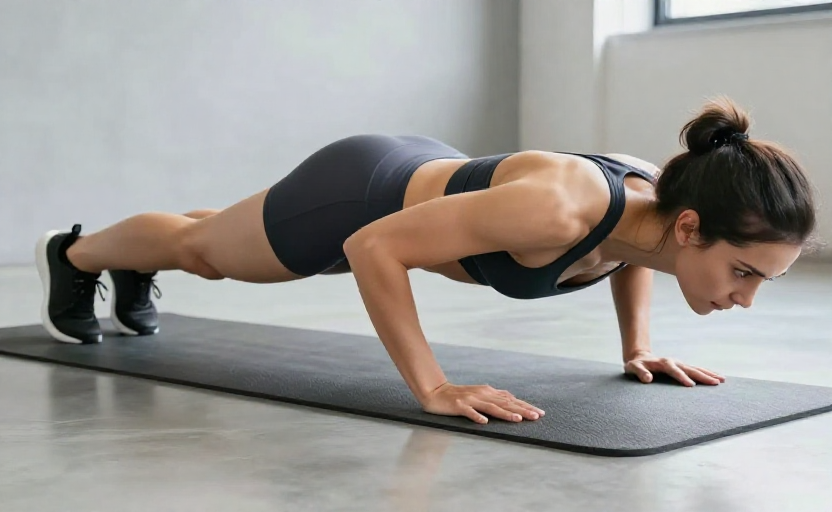
The fix is simple: slow down the lowering phase of every exercise. For a push-up, take three full seconds to lower your chest to the ground. Pause for a beat at the bottom. Then press back up with intention. This single adjustment doubles the time your pecs, triceps, and shoulders spend under tension. Try it with squats and lunges too. You will feel muscles working that you forgot you had.
A quick check: If you can do more than 25 push-ups in a row without struggling, you are almost certainly going too fast. Slow it down and watch the number drop—and your strength climb.
Mistake #2: Letting the Core Go Lazy During Compound Movements
This one is subtle, especially for experienced exercisers. You know how to do a push-up. You know how to hold a plank. But between those two movements lies a world of sloppy core engagement that leaks strength from your entire body. A push-up is not just a chest exercise. It is a full-body brace. If your hips sag, if your belly dangles toward the floor, or if your lower back arches, you are essentially doing the exercise with a broken foundation.
The same principle applies to pull-ups and inverted rows. When your core goes slack, your shoulders and arms must compensate, and they will fatigue faster with less strength output. The solution is to consciously set your torso tight before every repetition. Squeeze your glutes, brace your abs as if someone were about to poke you in the stomach, and keep that tension throughout the entire movement. It feels awkward at first. It will shorten your rep count. That is the point. You are teaching your body to recruit more muscle fibers for each repetition.
Mistake #3: Sticking to the Same Movement Patterns Indefinitely
There is comfort in routine. You do your thirty push-ups, your forty squats, your twenty lunges. You feel competent. But competence is not the same as progressive overload. Strength gains require a gradual increase in demand on the muscles. With bodyweight exercises, you cannot simply add five pounds to the bar. You have to get creative.
The mistake is never changing the angle, the leverage, or the stability demand of your main exercises. Someone who has done standard push-ups for six months will eventually plateau. The muscles adapt. The nervous system becomes efficient. And progress stops. The fix: introduce variation that increases difficulty without adding external weight. Elevate your feet for push-ups to shift more weight onto your hands. Try archer push-ups to challenge unilateral strength. With squats, move to pistol squat progressions or Bulgarian split squats. With pull-ups, experiment with wide grip or isometric holds at the top of the movement.
Progressive overload tip for bodyweight athletes: Track your "hardest set" each week. If you can do 12 clean reps on Monday, aim for 13 on Friday. If you can hold a plank for 45 seconds, try 50. Small bumps add up to real strength.
Correcting these three mistakes will not magically double your strength overnight. But they will redirect your effort into patterns that actually build muscle and neural efficiency. The next time you drop to the floor for a set of push-ups, slow down. Brace hard. And ask yourself whether the exercise still challenges you. If it doesn't, change it. Your body will thank you by getting stronger.