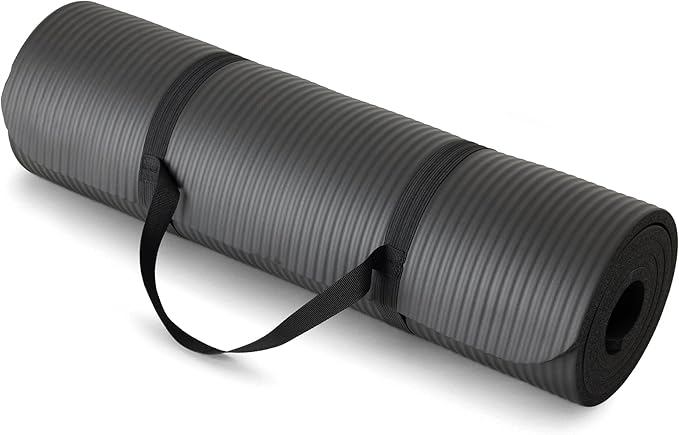

You finally cleared a corner of the living room, rolled out the mat, and committed to working out at home. For the first few weeks, the motivation is high. But then the scale doesn't budge, your knees start to ache, or you just feel like you're going through the motions without getting anywhere. It's not a lack of effort — it's likely three very common mistakes that quietly sabotage your home exercise results.
Let's fix that today. No judgment, just a practical reset so your time spent sweating actually moves you forward.
Mistake #1: Letting Your Form Fall Apart When You Get Tired
This is the biggest culprit by far. When nobody is watching, it's tempting to rush through the last few reps or cheat a movement just to finish the set. A squat turns into a half-bend, a plank sinks into a swayback, and a pushup becomes a nose-dive. The problem? Your body is incredibly adaptive — it will learn the wrong movement pattern just as readily as the correct one.
Poor alignment shifts stress away from the muscles you're trying to target and onto your joints, ligaments, and lower back. That nagging hip pain or clicking shoulder isn't bad luck; it's the result of thousands of slightly-off reps.
Quick fix: Cut your rep count in half and focus entirely on control. If you can't maintain a straight spine in a dead bug, do fewer reps and pause at the hardest point. Video yourself from the side — what feels correct often looks very different on screen.
Mistake #2: Staying in the Same Easy Zone Every Session
Home workouts often fall into a comfort trap. You find a 15-minute routine you like, and you run it three or four times a week. It feels productive because you finish without gasping, but your muscles are smart — they adapt fast. After the first few weeks, that same effort stops producing new strength, endurance, or visible change.
Progressive overload sounds like gym-bro jargon, but it simply means asking a little more from your body each time. Without it, you're maintaining, not improving.
This doesn't require a gym full of weights. You can increase the challenge by:
- Adding resistance: Use a heavier dumbbell, a resistance band, or even a filled backpack.
- Increasing time under tension: Slow down the eccentric (lowering) phase of a movement to three or four seconds.
- Reducing rest: Shorten the rest between circuits from 60 seconds to 30 seconds.
- Adding volume: Add one extra set or two extra reps per exercise each week.
If you're doing the exact same workout from three months ago, it's time to level up. Your body will thank you with better results.
Mistake #3: Skipping the Warm-Up and Cool-Down
It's tempting to jump straight into burpees to save time. But walking into intense movement with cold muscles is like stretching a rubber band straight out of the freezer — something is going to snap or lose elasticity.
A proper warm-up does more than prevent injury. It raises your core temperature, lubricates your joints, and wakes up the nervous system so your muscles fire on command. A cool-down, meanwhile, helps lower your heart rate gradually and maintains flexibility over the long term.
You don't need twenty minutes. Here's a practical middle ground:
- Warm-up (5 minutes): Arm circles, leg swings, cat-cow stretches, bodyweight squats, and inchworms. Move through full range of motion without rushing.
- Cool-down (5 minutes): Hold a deep lunge stretch on each side, a seated forward fold, a child's pose, and a gentle spinal twist.
These ten minutes are the difference between a workout that feels sustainable and one that leads to chronic tightness and setbacks.
Home exercise works — millions of people achieve real strength, fat loss, and mobility without setting foot in a gym. The secret isn't more effort. It's smarter structure. Fix these three mistakes, and your living room will start delivering the results you deserve.