
You lace up your shoes, roll out your mat, and begin your warm-up routine. It’s a ritual, a necessary step before the real work begins. But what if this preparatory phase, meant to safeguard your body, is subtly failing its most vulnerable parts—your joints? A proper warm-up should create a sense of readiness, not apprehension. If you're noticing specific, recurring sensations, it might be time to listen more closely. Your joints could be telling you that your current approach isn't offering the protection you need.
Joint health is the bedrock of sustainable fitness. A warm-up isn't just about raising your heart rate; it's about preparing the synovial fluid, cartilage, and connective tissues for load and movement. When done well, it enhances lubrication, increases blood flow to the surrounding muscles, and improves neuromuscular communication. When done inadequately, it leaves these critical structures exposed. The warning signs are often subtle, easily brushed off as normal stiffness. But paying attention to them can be the difference between lifelong movement and persistent pain.
1. You feel a sharp or pinching sensation, not just warmth
The primary goal of a warm-up is to generate literal warmth in the muscles and joints through gradual movement. The sensation you’re aiming for is one of expanding warmth and mild stiffness melting away. A clear red flag is the presence of a localized, sharp, or pinching pain at a joint during these initial movements.
This is distinct from muscular fatigue or the burn of effort. A pinch or stab often indicates that the joint itself, or the structures immediately around it like tendons or ligaments, is being compressed or irritated in a way it shouldn't be. It suggests the movement pattern or the load—even if it's just bodyweight—isn't being properly managed by the supporting musculature yet.
Your warm-up should soothe joints, not challenge them.
For example, if you feel a sharp pinch at the front of your shoulder during arm circles, or a catching sensation in your knee during bodyweight squats, your warm-up has ceased to be protective. It has become a stress test. This often happens when we move too quickly into end ranges of motion without adequate preparation, or when we perform dynamic stretches that our bodies aren't ready for. The joint is telling you it’s being asked to do a job its stabilizers aren't prepared to handle.
2. Your stiffness doesn't decrease within the first 5–8 minutes
Morning stiffness or stiffness after sitting is normal. A well-designed warm-up should systematically reduce that stiffness as you move. If you start your warm-up feeling tight in your hips or shoulders, and after several minutes of activity that specific joint feels just as stiff—or even stiffer—it’s a sign the warm-up is missing the mark.
This persistent stiffness indicates one of two issues: either the movements you’ve chosen aren't effectively mobilizing that particular joint complex, or you’re not spending enough time in the preparatory phase. You might be warming the large muscle groups but neglecting the precise, controlled movements that help distribute synovial fluid and improve capsule elasticity around the joint.
Think of it like trying to loosen a stiff hinge by randomly shaking the door instead of applying oil directly to the pin. The wrong approach creates more friction. If your hips still feel locked after leg swings and bodyweight lunges, the warm-up isn't providing the specific lubrication and neural activation needed for protection.
How to build a joint-protective warm-up
Shifting your mindset is the first step. View your warm-up not as a checklist, but as a process of communication with your body. Its purpose is to ask your joints and muscles, “Are you ready?” and to listen for the answer. Here’s how to structure it for better protection.
Start with general heat, then get specific
Begin with 3–5 minutes of very light, full-body cardio to increase core temperature and blood flow—a brisk walk, gentle cycling, or marching in place. This is the “global” phase. Then, move to “local” joint preparation. Focus on the joints you’ll be using most in your workout. Use controlled articular rotations (CARs)—slow, deliberate circles that take each joint through its full available range of motion—for ankles, knees, hips, spine, shoulders, wrists, and neck. The key is control, not speed or range.
Incorporate activation, not just stretching
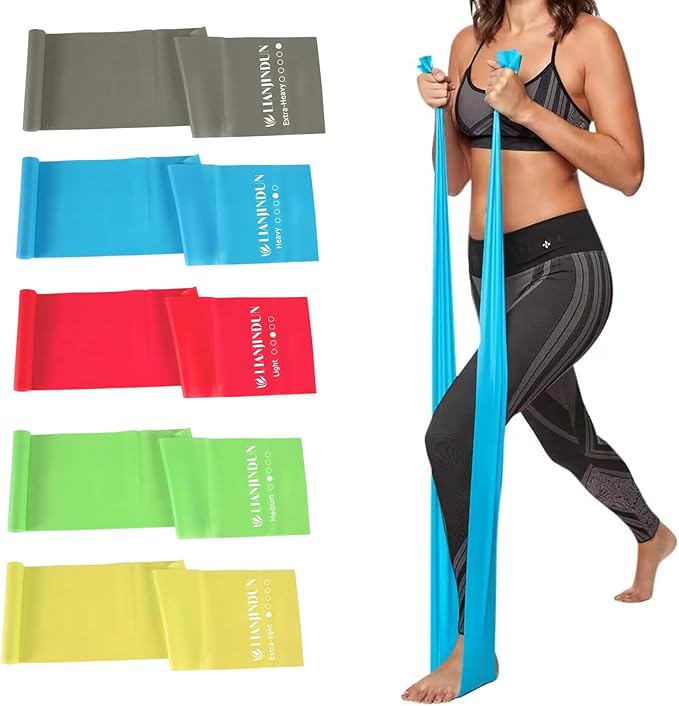
Dynamic stretching is valuable, but pairing it with activation exercises is crucial for joint stability. For shoulder health, after arm circles, try scapular push-ups or band pull-aparts to wake up the rotator cuff and scapular stabilizers. For knees, include exercises like standing quad sets or mini band walks to engage the VMO and glute medius before loading them with squats. This teaches the muscles to support the joint before you ask it to bear weight.
- Prioritize control over range: It’s better to move through a smaller range with perfect muscle control than to force a larger range using momentum or joint compression.
- Follow a sequence: Progress from simple to complex, from unloaded to lightly loaded. Move from joint rotations to dynamic stretches, then to activation exercises, and finally to lighter versions of your main workout movements.
- Respect the signal: If you feel either warning sign—sharp pain or unyielding stiffness—stop that particular movement. Regress to an easier version or a different movement that targets the same area without irritation.
A joint-protective warm-up may take a few minutes longer, but it pays in longevity. It’s an investment in the health of your cartilage, ligaments, and tendons. By tuning into these warning signs and adjusting your approach, you transform your warm-up from a routine into a foundation for pain-free, resilient movement for years to come.