Grip strength is a reliable marker of overall health and longevity, and training it is smart. But like any form of resistance work, a grip routine can backfire if form, load, or recovery is off. When the goal is stronger hands and forearms, but your joints start talking back, it's time to listen. Many athletes push through the pain, assuming it's just "good' soreness — but two specific symptoms are red flags that your grip regimen is actually straining your wrist, elbow, or shoulder joints.
Symptom #1: Sharp or catching pain in the wrist during rotation
General muscle fatigue in the forearm feels like a deep, diffuse burn at the end of a set. Joint strain feels different. If you experience a sharp, sudden catch — like a quick electric jolt or a stabbing sensation — when you rotate your palm upward (supination) or downward (pronation) while gripping, that is not normal muscle soreness. This often points to irritation of the triangular fibrocartilage complex (TFCC) on the pinky side of the wrist, or inflammation in the wrist capsule itself.
Caveat: A dull ache along the thumb side of the wrist, especially after a heavy farmer's carry or dead-hang session, might indicate De Quervain's tenosynovitis — a tendon sheath issue, not simple fatigue.
If you feel this catch, stop the movement that provoked it immediately. Continuing to grip through sharp wrist pain can convert a minor irritation into a chronic tear. The fix is not lighter grippers; it's a complete reset of wrist alignment during your holds. Ensure your wrist stays in a neutral (straight) position relative to your forearm — not bent back or craned forward — especially during exercises like the suitcase carry or pinch block holds.
Symptom #2: Aching pain in the medial elbow that lingers after exercise
The inner elbow — the side closest to your body — is the anchor point for your finger flexor tendons. When your grip routine is too aggressive, either with training frequency, volume, or an excessively strong crush grip, those tendons become overloaded. The result is medial epicondylitis, often called golfer's elbow. Unlike the brief muscle pump of the forearms, this pain is a dull, gnawing ache that persists for hours or days after your workout. It may radiate down the forearm into the ring and pinky fingers.
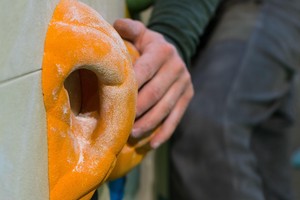
This symptom is especially common among climbers, kettlebell swingers, and anyone who does heavy rack pulls or deadlifts with a mixed grip. The constant tension from squeezing a bar or a rock hold places cumulative stress on the common flexor tendon. If you notice that gripping a coffee cup or shaking hands triggers the same ache, your grip routine needs a downgrade in intensity, not an upgrade.
Why these symptoms get worse with common grip mistakes
Two programming errors most frequently cause these joint symptoms: too much frequency and neglecting the extensors. Many people train grip every single day because they think of it as "small muscles" that recover fast. But the tendons of the wrist and elbow are slow to recover — they have poor blood supply. Hitting heavy pinch grips or thick-bar holds more than three times a week is a fast track to the symptoms above.
The second mistake is an imbalance: endlessly training the finger flexors (crush grip, support grip) while ignoring the finger extensors (the muscles on the top of your forearm that open your hand). This creates a muscle strength asymmetry that shifts the alignment of the wrist joint and puts extra torque on the medial elbow. A simple fix is to add reverse wrist curls, rubber-band finger extensions, or rice bucket work to your routine for every two flexor-dominant exercises you do.
How to train grip without causing joint strain
- Dial back frequency: Grip-specific work can be highly effective at two sessions per week, with at least 48 hours between them. Let tendon soreness be your guide — if the ache from symptom #2 is still present, skip grip work entirely.
- Warm up the wrist joints: Before any grip work, do 30 seconds of active wrist circles in both directions, plus gentle finger flexion and extension against light resistance (like a very soft spring or a thin resistance band).
- Use a neutral wrist position: For carries, holds, and pulls, keep the wrist straight. A bent wrist shifts the load to the joint capsule and away from the muscle belly.
- Rotate grip types: Alternate between open-hand support grips (like thick bar holds) and pinch grips. Avoid doing exclusively crushing grip exercises (like heavy grippers) session after session.
- Listen to the sharp pain: If a catch or jab appears during a specific movement, consider that exercise the culprit and eliminate it for two weeks before reintroducing it with lighter load and perfect form.
Grip strength training should feel like a productive challenge to your muscles, not a test of your joint tolerance. By watching for these two specific symptoms — sharp rotational wrist pain and lingering medial elbow ache — you can catch strain early and adjust your routine before a minor tweak becomes a chronic limitation.