You finally committed to getting stronger. You step up to the barbell, brace your core, and pull. The next morning, your lower back feels tight, achy, or worse. It is one of the most common setbacks for new lifters. While there are many potential causes of low back discomfort, two specific beginner weightlifting mistakes are almost always the culprit: poor bracing mechanics during the deadlift and excessive lumbar extension (arching) during the overhead press.
The good news is that both issues are fixable with attention to setup and a few movement adjustments. Correcting them not only spares your lower back but actually makes you stronger in the lifts that matter.
Mistake #1: The “Soft Belly” Deadlift
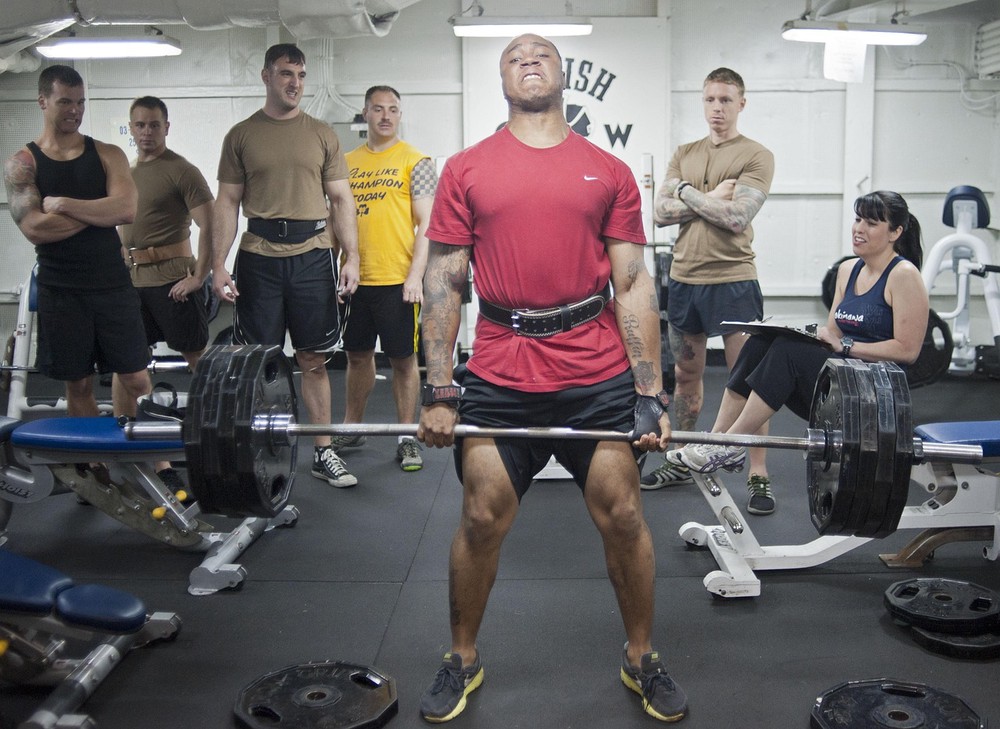
The deadlift looks simple: pick the weight up. Many beginners focus entirely on leg drive and grip, but completely neglect intra-abdominal pressure. Without this pressure, the spine has no internal support. The erector spinae muscles end up taking the entire load, which leads to a rounded lower back and shearing force on the lumbar discs.
How to fix it: brace before you pull
Stand over the bar with your shins about one inch from it. Before you grip the bar, take a deep breath into your belly — not your chest. Hold that breath and tighten your entire torso as if someone were about to punch you in the stomach. This is called the Valsalva maneuver, and it creates a rigid cylinder of pressure around your spine.
Keep that brace throughout the entire pull. Exhale only after the bar is locked out or back on the floor. Practice bracing with an empty barbell first. If you feel your lower back rounding at the bottom, you are losing tension. Reset and try again.
One quick cue: imagine you are trying to zip up a too-tight pair of jeans. That tension in your lower abdomen is exactly what your spine needs under load.
A common pitfall to watch for
A lot of beginners confuse “chest up” with “ribs up.” Puffing your chest out and overextending your ribcage will actually flare your lower ribs and shut down your core. Instead, think about pulling your ribcage down toward your hips while keeping your chest proud. This keeps the spine neutral.
Mistake #2: The Crunch-Free Overhead Press
Standing overhead press is a full-body movement, but many beginners turn it into a lower-back exercise. They lean back excessively — often called the “Gandalf press” — to get the bar overhead. This hyperextends the lumbar spine and compresses the posterior elements of the vertebrae.
The problem is usually rooted in setup. If your stance is too narrow or your core is loose, your body will naturally look for stability by arching your lower back. That arch is a liability.
How to fix it: set your ribs and squeeze your glutes
Before you unrack the bar, squeeze your glutes as hard as you can. This tilts your pelvis posteriorly and locks your lumbar spine into a safe position. Keep that squeeze during the entire set. Next, pull your ribs down — the same cue as the deadlift. You should feel your entire midsection is compact and hard.
When you press, do not chase the bar with your head. Keep your chin neutral or slightly tucked. The bar should travel in a straight line. If you have to lean way back to clear your face, you are standing too close to the bar or missing the proper bar path. Instead, let the bar brush your nose as it passes — do not move your spine to accommodate it.
A simple test
If you are unsure whether you are over-arching, video yourself from the side. Pause at the top of the press. If your torso looks like a banana — low back curved inward, belly pushed forward — you are overextending. Reset, squeeze your glutes, and try again with lighter weight.
Why this matters beyond pain
Your lower back is not meant to be a primary mover in these exercises. When you brace properly and maintain a neutral spine, your legs, glutes, and core do the work. Your back simply transfers force. That is the difference between building sustainable strength and setting yourself up for a long rehabilitation.
If you are dealing with persistent low back discomfort unrelated to lifting form, or if the pain goes into your leg or foot, it is time to see a healthcare provider. These form corrections are for general fitness education, not for diagnosing or treating injuries.