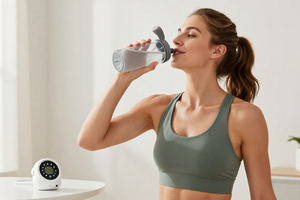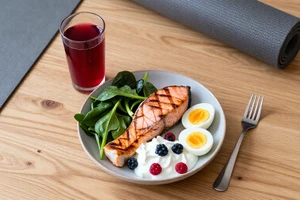
You finish a set of planks or crunches, and instead of feeling strong, your lower back tightens up. It’s a common complaint after core work—especially if you’re new to training or coming back after a break. While a few gentle stretches help, what you drink after your workout might matter just as much.
There’s one post-workout drink in particular that stands out for reducing that familiar lower back stiffness: tart cherry juice. It’s not a magic cure, but the research behind it is solid enough to make it a smart addition to your recovery routine.
Why lower back stiffness happens after core exercises
During core work—think crunches, leg raises, Russian twists, or heavy deadlifts—your spinal erectors and surrounding muscles work hard to stabilize your torso. If your deep core muscles (transversus abdominis) aren’t fully engaged, your lower back compensates. That leads to micro-inflammation and muscle tension in the lumbar region.
Post-exercise stiffness is partly mechanical (tightened muscle fibers) and partly chemical (a natural inflammatory response). Tart cherry juice targets the chemical side, helping quiet down the inflammation before it turns into days of soreness.
The research on tart cherry juice for muscle recovery
Several studies have looked at tart cherry juice as a recovery aid. A 2021 meta-analysis in the Journal of the International Society of Sports Nutrition found that tart cherry juice consistently reduced markers of muscle damage and inflammation after strenuous exercise. Another study on marathon runners showed that those who drank tart cherry juice for a week before and after a race experienced significantly less pain and recovered strength faster than the placebo group.
While most of these trials focus on general muscle soreness, the logic applies directly to lower back stiffness after core work. The active compounds—anthocyanins and other polyphenols—act as natural COX-2 inhibitors. That’s similar to how some over-the-counter anti-inflammatory drugs work, minus the side effects and with a gentler, slower action.
A note on timing: Drink it after your workout, not before. The anti-inflammatory effect builds over several hours, so you want it in your system while your body is processing the microtears from exercise.
How to use tart cherry juice without wrecking your nutrition goals
Tart cherry juice is tart—sometimes mouth-puckering. Most commercial brands cut the sourness with apple juice or added sugar. That’s not ideal if you’re watching your sugar intake. Look for unsweetened, 100% tart cherry juice concentrate. A serving is usually about 8–10 ounces of the ready-to-drink version, or 1–2 tablespoons of concentrate mixed with water.
Watch out for added sugars
Some popular brands have 25–30 grams of sugar per serving. That’s fine for immediate recovery if you just did an intense core session, but less helpful if you’re aiming for general health or weight management. Unsweetened concentrate has less sugar per ounce, and you can dilute it more to your taste.
Combine with a solid cool-down
Drinking tart cherry juice alone won’t erase poor form or skipping your cool-down. For best results, pair it with:
- 2–3 minutes of child’s pose to release the lumbar spine
- Gentle cat-cow stretches to mobilize the vertebrae
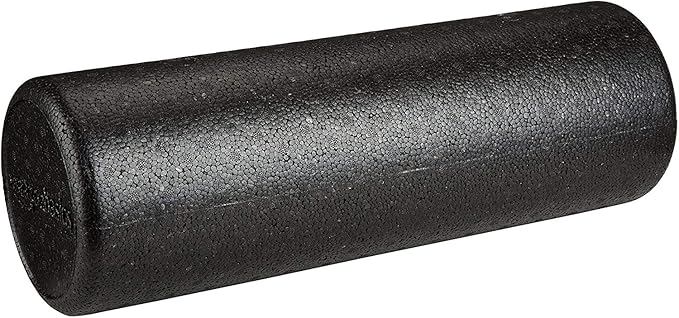
- Foam rolling the glutes and hamstrings, which often refer tension to the lower back
Alternatives if tart cherry juice isn’t available
If you can’t find tart cherry concentrate or don’t like the taste, two other drinks offer similar anti-inflammatory effects for muscle recovery:
- Pomegranate juice – rich in ellagitannins, another class of polyphenols that reduce post-exercise oxidative stress.
- Green tea – contains epigallocatechin gallate (EGCG), which may blunt delayed-onset muscle soreness.
Both are less studied than tart cherry juice specifically for exercise recovery, but they’re reasonable alternatives. For lower back stiffness, tart cherry juice has the strongest evidence base so far.
What to avoid drinking after core work
Not all post-workout beverages are helpful. Carbonated drinks, even sparkling water, can increase bloating and create pressure against the pelvic floor—exactly what you don’t want if your lower back is already tight. Also skip anything with high caffeine content if you train late in the day; the diuretic effect can exacerbate muscle tension if you’re even slightly dehydrated.
Final thought on consistency
A single glass of tart cherry juice after one workout won’t change your recovery dramatically. But using it consistently as part of your post-core routine—especially on days when you really push your midline—can reduce that cumulative stiffness that turns into chronic lower back tightness. It’s a small, evidence-supported upgrade that costs little and has zero downside for most people.