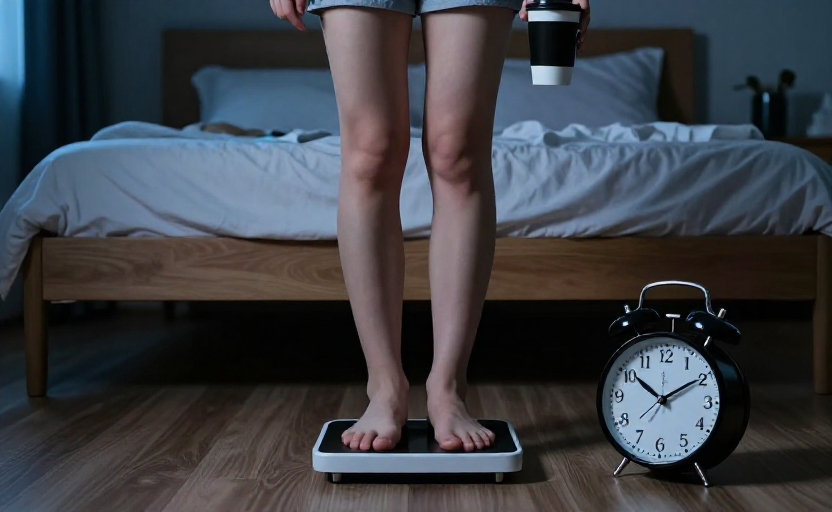
If you are tracking calories while running on little sleep, you might be undermining your own efforts. It seems logical: eat less, lose weight. But when sleep is short, the body does not respond to a calorie deficit the same way it does when you are well-rested. Restricting calories while sleep-deprived is a common body composition mistake that can lead to muscle loss, hormonal disruption, and stalled fat loss.
The connection between sleep and metabolism is not subtle. Chronic short sleep alters how the body handles energy, stress, and recovery. Piling a calorie deficit on top of that can backfire. Here is what happens inside the body and why timing your nutrition with adequate sleep matters more than just eating less.
Why Sleep Deprivation Changes Your Calorie Math
When you are sleep-deprived, your body sees it as a low-grade stressor. Cortisol rises. Ghrelin — the hunger hormone — goes up. Leptin, which signals fullness, drops. You feel hungrier, and your cravings shift toward high-energy foods like sugar and refined carbs. But even if you fight those cravings and stick to a calorie deficit, the metabolic consequences do not disappear.
Resting energy expenditure tends to decrease after poor sleep. Your body tries to conserve energy because it perceives a threat. In one controlled study, participants who slept only four hours per night for five days showed a significant drop in resting metabolic rate compared to those who slept normally. This means that the same calorie intake that once produced a deficit may now produce maintenance or even a surplus, depending on the individual's energy needs.
Muscle Loss Risk Increases Drastically
Body composition is not just about fat. Many people restrict calories to lose fat but unintentionally lose muscle instead. Sleep deprivation amplifies this risk. Cortisol is catabolic — it breaks down muscle tissue for energy. When you combine high cortisol with a calorie deficit, the body becomes more willing to sacrifice lean mass.
Growth hormone, which is largely secreted during deep sleep, also takes a hit. Lower growth hormone means reduced muscle repair and recovery. If you are strength training while sleep-deprived and eating too few calories, you are essentially signaling your body to break down muscle rather than build it. Over weeks or months, this shifts your body composition toward higher fat percentage, even if the scale shows a lower number.
A lower weight does not always mean a healthier body. If the weight lost is muscle, your metabolism slows and fat regain becomes more likely.
Fat Loss Plateaus on Low Sleep
Fat cells themselves are influenced by sleep. Insulin sensitivity declines when you are tired. That means the same carbohydrates end up being stored more readily as fat rather than being used for energy. Cortisol also encourages visceral fat storage — the type around the organs that is hardest to lose and most linked to metabolic disease.
In a calorie deficit, the body ideally pulls from fat stores for energy. But when cortisol is elevated and insulin is blunted, fat cells become more resistant to releasing stored fat. You can be eating fewer calories and still not tapping into fat stores efficiently. This creates a frustrating cycle: you eat less, feel worse, lose muscle, and see little change in body fat.
The Hormonal Ripple Effect
Beyond cortisol and insulin, sleep deprivation affects thyroid function. T3 and T4 levels can dip slightly, which slows metabolic rate. Leptin resistance can develop, making it harder to feel satisfied after meals. Testosterone, which supports muscle maintenance in both men and women, also declines with poor sleep. Each of these hormonal shifts works against the goals of calorie restriction.
Women may be more sensitive to these effects because their reproductive hormones interact with cortisol and energy balance. Low-calorie diets combined with sleep loss can disrupt menstrual cycles, further complicating body composition goals.
What To Do Instead
The fix is not to abandon calorie awareness. The fix is to fix sleep first. Aim for seven to nine hours consistently before imposing a significant calorie deficit. If sleep is poor, consider a smaller deficit — maybe 200 to 300 calories below maintenance instead of 500 or more. This reduces the metabolic stress on the body and lowers the risk of muscle loss.
Protein intake becomes more important during periods of restricted sleep. Keeping protein high — around 1.6 to 2.2 grams per kilogram of body weight — helps preserve lean mass even when calorie intake is lower.
Meal timing can also matter. Eating larger meals earlier in the day and avoiding large meals close to bedtime can improve sleep quality. Prioritize whole foods over processed ones to support stable blood sugar and reduce cortisol spikes.
Do Not Starve a Tired Body
Restricting calories while sleep-deprived is not discipline — it is a metabolic mismatch. The body needs energy to manage stress, repair tissue, and regulate hormones. Cutting food when you are already running a sleep debt forces the body to make trade-offs that usually end up hurting muscle mass and metabolic rate.
If your goal is better body composition, start with sleep. Then adjust calories. That order matters.