You just finished your first real cardio session — maybe a jog around the block, a spin class, or a few rounds of jump rope. The next morning, your calves feel like concrete. Your shins ache. Even walking down stairs is a negotiation. Meanwhile, your friend who lifts weights says they rarely get that sore from strength training anymore. What gives?
It’s a common surprise for beginners: the first few cardio workouts can leave you more sore than a comparable strength session. That’s not your imagination, and it’s not a sign you did something wrong. It’s a predictable response to unfamiliar movement, and understanding why it happens is the first step to making it stop.
Why Cardio Hits Beginners Harder
Delayed onset muscle soreness (DOMS) shows up 12 to 72 hours after exercise. It happens when muscles and connective tissues experience micro-tears from mechanical stress — especially during eccentric contractions, where a muscle lengthens under tension. Think of the braking phase when your foot hits the ground during a run, or the controlled lowering of your body in a squat.
In strength training, beginners typically start with lighter weights, controlled tempos, and fewer repetitions. The eccentric load is present but manageable. In cardio, however, you’re often performing thousands of foot strikes, strides, or pedal revolutions in a single session. Each one involves a small eccentric component, and when you’re not conditioned for it, the cumulative micro-damage can be surprisingly high.
The Eccentric Overload of Cardio
Take running as an example. When your foot hits the ground, your quadriceps and calves are lengthening under the force of your body weight to absorb impact. That’s an eccentric action repeated roughly 80 to 100 times per minute. Over a 20-minute run, that’s up to 2,000 eccentric contractions per leg. Compare that to a strength workout where you might do 30 to 50 controlled eccentric reps total. Volume explains a lot of the soreness edge that cardio has over weights for newcomers.
Unfamiliar Movement Patterns
Beginners also tend to use poor form during cardio — over-striding, landing heavily on the heels, or tensing the shoulders. These mechanical inefficiencies load muscle groups unevenly. Your stabilizer muscles (like the gluteus medius or the tibialis anterior) are forced to work overtime. Since these muscles aren’t conditioned, they become a primary source of soreness the next day.
A little soreness is a signal that your body is adapting; sharp or asymmetrical pain is a signal to stop and re-evaluate your form.
What Can You Do About It?
The good news is that this disproportionate soreness fades quickly — usually within two to four weeks for most beginners. Your muscles and connective tissues get tougher, and your nervous system learns to distribute load more evenly. But you don’t have to just tough it out. Here are several strategies that actually help.
Start Short and Gradually Increase
Don’t try to replicate the cardio volume of someone who’s been at it for months. Beginners get excellent results from 10 to 15 minutes of steady cardio, three times per week. Increase duration by no more than 10% per week. This gives your eccentric capacity time to catch up with your enthusiasm.
Low-Impact Alternatives for Early Sessions
If the soreness is keeping you from moving well, swap high-impact cardio (running, jumping rope) for lower-impact options like walking on an incline, using an elliptical, or cycling. These still build cardiovascular fitness but with far fewer eccentric forces. After two or three weeks, you can reintroduce impact gradually — try 30 seconds of jogging followed by 90 seconds of walking, and increase the ratio over time.
Active Recovery Beats Full Rest
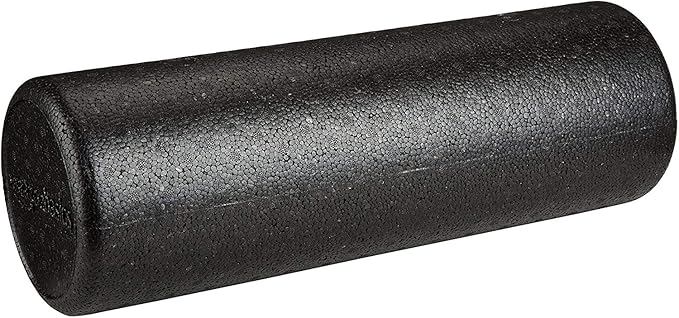
Complete rest often makes soreness feel worse. Light movement — a short walk, gentle stretching, or foam rolling — increases blood flow to the affected muscles without further damaging them. Aim for 10 to 15 minutes of low-intensity activity on the day after a tough cardio session. It’s not about flushing out lactic acid (that clears within an hour), but about reducing nerve sensitivity and muscle stiffness.
Warm Up and Cool Down Properly
A five-minute dynamic warm-up (leg swings, walking lunges, heel raises) prepares the eccentric-load receptors in your muscles. A five-minute cool-down with slow walking and static stretching (hold each stretch for 20 seconds without bouncing) helps reset muscle length. Skipping this step doubles the likelihood of intense soreness in beginners.
Is It Safe to Work Out While Sore?
The general rule is that mild to moderate soreness — a dull ache that improves as you move — is safe to work through. If the soreness is severe enough to alter your gait or form, it’s wiser to do a light active recovery day or take a full rest day. Trying to push through significant soreness with the same intensity increases injury risk without speeding up adaptation.
Pain that is sharp, unilateral (one side only), or accompanied by swelling warrants a break and possibly a consultation with a healthcare professional. DOMS should feel symmetrical — both legs sore, not just one.
Will This Happen Every Time?
No. The first few sessions are the worst because your muscles, tendons, and fascia are adapting to entirely new mechanical demands. After your body has had a few weeks to build tolerance, the same workout that left you hobbling will feel like a normal effort. If you train consistently, you’ll need a significant increase in intensity or duration to produce that same level of soreness again. That’s a sign of conditioning — not that you’ve gone soft.
Cardio and strength training both have their learning curves. The soreness from starting cardio is just a louder signal that adaptation is happening. Listen to it, respect it, and let it guide your progression rather than scare you off.