When we think about improving flexibility, our minds often jump straight to stretching routines and yoga poses. While movement is essential, what we put on our plates plays a surprisingly powerful supporting role. Our connective tissues—the tendons, ligaments, and fascia that hold us together and allow us to move—are living structures that require specific nutrients to stay resilient, hydrated, and supple. Nourishing them from the inside can make the work you do on the mat feel more effective and sustainable.
This isn't about eating for instant splits or a dramatic backbend. It’s about providing the foundational building blocks your body uses to repair and maintain these crucial tissues every single day. Over time, consistent nutritional support can help your tissues better handle the stresses of stretching and movement, potentially improving your range of motion and reducing stiffness. Let’s look at some of the key foods that offer this kind of deep, structural support.
How food supports your tendons and ligaments
Connective tissue is built from proteins like collagen and elastin, woven into a matrix. This matrix needs water, vitamins, and minerals to stay healthy. Chronic inflammation, often influenced by diet, can also make tissues feel tighter and more painful. The goal, then, is to eat in a way that provides the raw materials for repair while helping to manage inflammation. Think of it as creating a supportive internal environment where your tissues can thrive.
Four food groups for flexible tissues
These categories focus on whole foods that deliver a combination of the nutrients connective tissue loves most.
1. Vibrant, colorful fruits and vegetables
The deep reds, oranges, purples, and greens in produce aren't just for show. They signal the presence of antioxidants like vitamin C and various phytonutrients. Vitamin C is absolutely non-negotiable; your body needs it to actually synthesize collagen. Beyond that, antioxidants help combat oxidative stress, a type of cellular damage that can contribute to tissue aging and stiffness.
Make a point to include berries, citrus fruits, bell peppers, dark leafy greens, and sweet potatoes. The wider the color spectrum on your plate, the broader the range of protective compounds you’re likely getting.
A simple rule: aim for at least three different colors in every main meal.
2. Bone broth and collagen-rich proteins
Collagen is the most abundant protein in your body, a primary component of tendons, ligaments, and fascia. While your body makes its own collagen, providing it with the amino acids it needs is crucial. Bone broth, made by simmering animal bones for an extended time, releases collagen, gelatin, and minerals like calcium and magnesium into the broth.
You don’t need to drink broth daily to see benefits. Incorporating it into soups, stews, or sipping it a few times a week can be helpful. Other protein sources like chicken, fish, eggs, and beans provide the general amino acid building blocks for all protein synthesis, including collagen.
3. Omega-3 rich foods
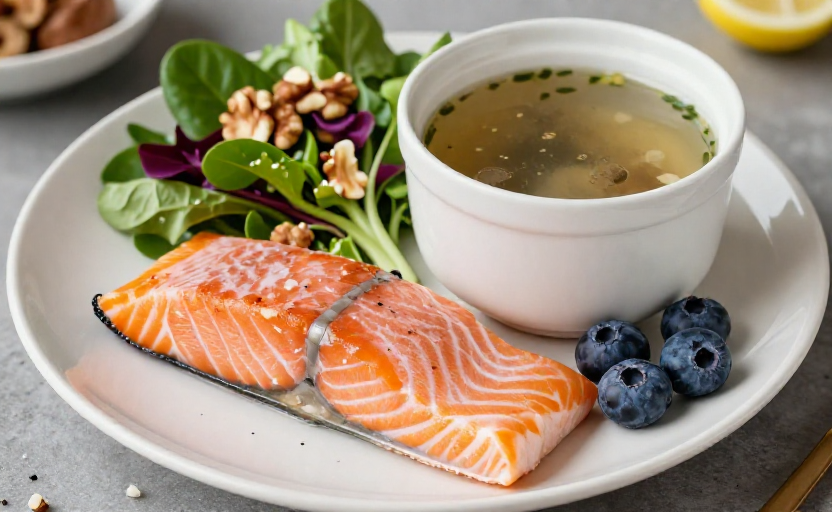
Omega-3 fatty acids, particularly those found in fatty fish, are renowned for their anti-inflammatory properties. Since low-grade, systemic inflammation can impair tissue repair and increase stiffness, consuming these fats is a proactive way to support a healthier internal environment for your connective tissues.
Focus on fatty fish like salmon, mackerel, sardines, and herring. For plant-based sources, include flaxseeds, chia seeds, and walnuts. The goal is to create a better balance between omega-3s and the more common omega-6 fats found in many processed oils.
4. Mineral-packed nuts, seeds, and leafy greens
Magnesium and sulfur are two minerals that are quietly essential for tissue health. Magnesium acts as a natural muscle relaxant and is involved in hundreds of enzymatic processes, including those related to protein synthesis. Sulfur is a key component of the connective tissue matrix itself.
You’ll find magnesium in almonds, spinach, pumpkin seeds, and black beans. Sulfur is present in garlic, onions, cruciferous vegetables like broccoli and Brussels sprouts, and in eggs. Including a handful of nuts or seeds as a snack or sprinkling them on salads is an easy way to boost your mineral intake.
Putting it all together on your plate
You don’t need a complicated diet or expensive supplements. A practical approach is to build meals that combine several of these elements. For example, a lunch of grilled salmon (omega-3s, protein) with a side of quinoa and sautéed kale (magnesium, vitamin C) and a lemon-tahini dressing (vitamin C, healthy fats) covers multiple bases.
Staying well-hydrated is the final, critical piece. Connective tissue, particularly cartilage, has a high water content. Dehydration can make tissues less pliable. Water, herbal teas, and water-rich fruits and vegetables all contribute to your fluid intake.
Remember, nutrition works gradually and synergistically with your movement practice. It supports the body’s innate ability to maintain and repair itself. By choosing foods that provide the specific nutrients your connective tissues crave, you’re investing in the long-term resilience and flexibility of your entire body.