You’ve just finished your final savasana, your body feels open and quiet, and your mind is settling into a gentle, spacious calm. Transitioning from your mat back into the rhythm of your day can feel abrupt. What you choose to do—and drink—in those next few moments can help you preserve that hard-earned sense of peace. A warm cup of herbal tea can be the perfect bridge, offering a ritual of continued care that extends the benefits of your practice.
Unlike caffeinated beverages that stimulate the nervous system, certain herbal infusions work in harmony with the relaxed state yoga cultivates. They provide warmth, hydration, and plant compounds that gently support the body’s own natural calming mechanisms. It’s less about a dramatic effect and more about nurturing the stillness you’ve created.
Why Herbal Tea Complements Your Yoga Practice
Yoga and herbal tea are natural allies. Both are ancient practices rooted in supporting holistic well-being. Physically, a warm tea helps maintain core temperature as your body cools down from practice, which can prevent stiffness. The simple act of preparing and sipping a cup mindfully is a continuation of the present-moment awareness you fostered on the mat.
More specifically, certain herbs contain compounds that interact with our nervous system. After yoga, your body is often in a parasympathetic state—the “rest and digest” mode. The right herbs can gently encourage this state, helping to soothe muscular tension and quiet mental chatter. It’s a way to drink in relaxation, quite literally.
Think of your post-yoga tea not as a separate activity, but as the final, delicious posture of your practice.
1. Chamomile: The Classic Calm
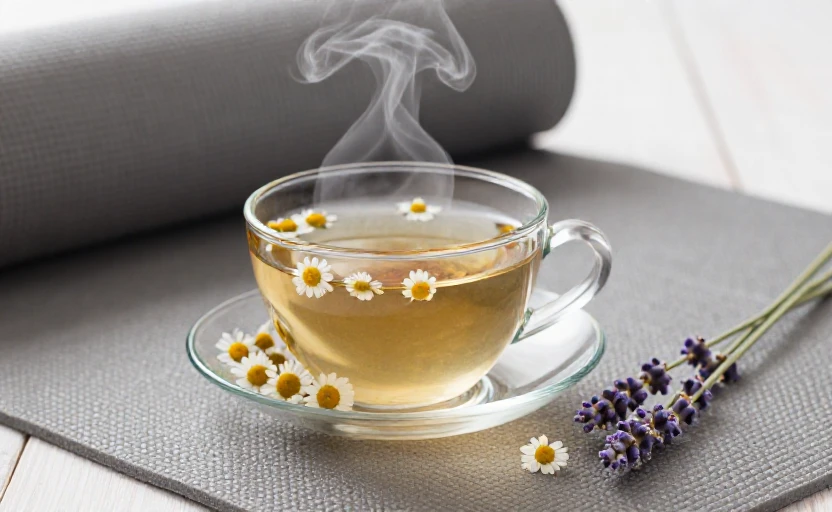
Chamomile is the quintessential bedtime tea for good reason. Its delicate, apple-like flavor comes from flowers that contain apigenin, an antioxidant that binds to specific receptors in the brain associated with reducing anxiety and initiating sleep. This isn’t a sedative effect, but rather a gentle nudge toward relaxation.
After a yoga session focused on releasing tension, chamomile can help ease any residual physical tightness and quiet a busy mind. It’s particularly supportive after a restorative or yin practice, or any evening session where you wish to carry tranquility straight into a restful night.
For best results: Steep a heaping teaspoon of dried chamomile flowers (or one quality tea bag) in just-boiled water for a full 5-7 minutes, covered. This allows the volatile oils and compounds to fully infuse. Add a thin slice of fresh apple or a tiny drizzle of honey if you like a touch of natural sweetness.
2. Lavender: A Sip of Serenity
Lavender’s soothing scent is famous in aromatherapy, and those same calming properties translate beautifully to tea. Sipping a lavender infusion engages both your sense of taste and smell, creating a multi-sensory relaxation experience. The herb contains linalool, a compound studied for its potential to moderate the nervous system’s response to stress.
This tea is ideal after a vigorous vinyasa flow or a practice that challenged you mentally. The familiar, floral aroma can help center scattered thoughts and ease feelings of overwhelm, bringing you back to a grounded, balanced state. The flavor is floral and slightly sweet, but can be potent—a little goes a long way.
For best results: Use culinary-grade lavender buds sparingly. A quarter to a half teaspoon per cup is plenty. Steep for 3-4 minutes in hot water to avoid bitterness. Lavender also pairs wonderfully with a base of chamomile or a mild green rooibos for a more complex blend.
3. Lemon Balm: The Uplifting Unwind
Lemon balm offers a different shade of calm. Part of the mint family, it has a bright, citrusy flavor that is subtly uplifting while still being deeply relaxing. Historically used to “gladden the heart,” lemon balm is thought to support mood and a sense of ease without causing drowsiness.
This makes it an excellent choice for a morning or afternoon yoga practice, when you want to maintain a gentle alertness while holding onto your post-practice calm. It’s also a great option if you sometimes find heavier relaxants to be too dulling. Lemon balm feels like a deep breath in a cup—refreshing and clarifying.
For best results: Use fresh lemon balm leaves if you can find them; they have a vibrant, true flavor. Otherwise, dried leaves work well. Steep a tablespoon of fresh leaves (or a teaspoon of dried) for 5-6 minutes. The flavor is lovely on its own or with a sprig of fresh mint.
Brewing Your Perfect Post-Practice Cup
How you prepare your tea is part of the ritual. Use fresh, filtered water and bring it to a full boil, then let it cool for a minute before pouring over delicate herbs like chamomile and lavender to preserve their nuanced flavors. Always cover your cup or teapot while steeping—this traps the essential oils that carry much of the benefit and aroma.
Give the herbs time. While a black tea might over-steep and turn bitter, most herbal teas benefit from a longer infusion of 5-7 minutes to fully extract their calming compounds. This waiting period is itself a practice in patience and presence.
Creating Your Own Ritual
Let your tea time be an extension of your mindfulness. Feel the warmth of the cup in your hands. Watch the steam curl upwards. Inhale the aroma before you take the first sip. Drink it slowly, somewhere comfortable and quiet, allowing the experience to be a seamless transition from your mat to your next moment.
Listen to your body and your mood. Some days you might crave the familiar comfort of chamomile, others the bright clarity of lemon balm. There’s no wrong choice, only what feels right for you in that moment. This attentive selection is the final act of your practice—honoring what you need.