You show up on your mat, breathe through the challenging holds, and feel that familiar mix of effort and release. Yet, weeks pass, and the ease in your forward fold or the depth of your pigeon pose seems stubbornly out of reach. The culprit might not be your practice itself, but something you’re doing—or not doing—in the other twenty-three hours of your day.
Flexibility is a conversation between your nervous system and your muscles. While your yoga session opens the dialogue, the postures you hold off the mat—the ones dictated by your daily routine—often speak louder. One habit, in particular, has a profound and quiet way of putting the brakes on your progress, tightening the very tissues you’re working to lengthen.
The Hidden Flexibility Killer: Prolonged Sitting
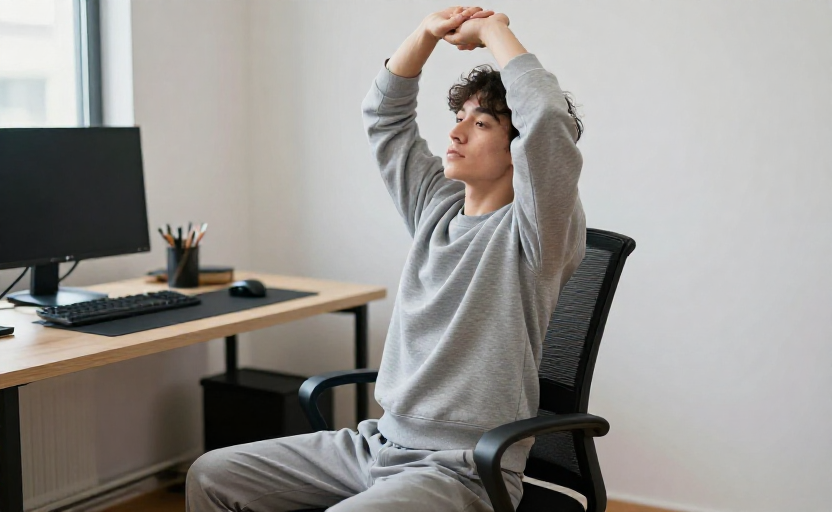
For most of us, the single greatest antagonist to flexibility isn’t a lack of stretching; it’s the cumulative effect of sitting. Hours spent folded into a chair, often with rounded shoulders and a forward head, train your body into a shortened, tightened state. Your hip flexors, hamstrings, and chest muscles adapt to this compressed position, while the opposing muscles in your glutes and upper back grow weak from disuse.
When you then step onto your mat, you’re not starting from a neutral baseline. You’re starting from a body that has been actively molded into stiffness. Your yoga practice becomes less about gaining new range of motion and more about fighting to reclaim what you lost since your last session.
Your body adapts to what you do most often. If you sit for eight hours, that’s the posture you’re practicing.
How Sitting Steals Your Range of Motion
Let’s break down the specific impacts. Sitting, especially with poor posture, creates muscular imbalances that directly oppose the goals of a well-rounded yoga practice.
Tight Hip Flexors: The primary hip flexor, the psoas, shortens when you sit. A tight psoas can pull your pelvis into an anterior tilt, limiting your ability to find a neutral spine in poses like downward dog and creating a sensation of “tight” hamstrings even when they aren’t the main issue.
Inactive Glutes: Sitting essentially turns off your gluteal muscles. Weak glutes can’t properly support your pelvis or power your movements, forcing your hamstrings and lower back to overcompensate in standing poses and backbends, leading to strain instead of length.
Rounded Upper Back and Shoulders: Hunching over a screen tightens the chest muscles (pectorals) and weakens the upper back. This makes it incredibly difficult to open the heart center in poses like cobra or wheel, and can compromise shoulder alignment in chaturanga and arm balances.
Stiff Thoracic Spine: The mid-back becomes rigid from lack of rotation and extension. This lack of mobility often forces the lower back or neck to move excessively to compensate in twists and backbends, which is a common recipe for discomfort.
Breaking the Cycle: Strategies for Your Day
The solution isn’t to quit your desk job, but to intentionally interrupt the pattern of shortening. Think of it as adding micro-doses of length and activation throughout your day to support your yoga work.
Integrate Movement Breaks
Set a timer for every 45-60 minutes. When it goes off, stand up. This isn’t just about standing; it’s about moving through a different shape.
- Take five slow, deep breaths in a standing forward fold, letting your head hang heavy.
- Interlace your fingers behind your back, straighten your arms, and gently lift your chest to open the shoulders.
- Place your hands on your desk and step back into a gentle, supported version of downward dog to stretch the hamstrings and spine.
Rethink Your Workspace
Small ergonomic tweaks can reduce the strain. Ensure your screen is at eye level to avoid craning your neck. If possible, alternate between sitting and using a standing desk or a high counter. The goal is variety, not perfection.
Move with Intention Outside the Studio
Incorporate activities that promote length and mobility in different ways. A brisk walk, especially uphill, engages the glutes and hip extensors. Swimming encourages full-body range of motion. Even lying flat on your back on the floor for a few minutes—sometimes called “the floor pose”—can be a powerful reset for a spine accustomed to chairs.
What to Focus on During Your Practice
With an awareness of how your day affects your body, you can tailor your time on the mat to be more effective.
Warm Up Thoroughly: Don’t rush to your deepest expression of a pose. Spend extra time warming up the areas most affected by sitting: cat-cow for the spine, gentle lunges for the hip flexors, and shoulder rolls and arm circles.
Prioritize Counter-Poses: Emphasize poses that directly oppose the seated position. Heart-openers like bridge pose, chest stretches in doorway, and hip extension poses like locust are crucial.
Focus on Sensation, Not Achievement: The aim is to create a feeling of release, not to force your body into a shape it has been trained against all day. Cultivate patience and listen for the subtle signals of letting go.
Your flexibility journey in yoga is woven from all the moments of your day, not just the hour on your mat. By bringing mindful movement into the spaces between your practice, you stop fighting against your daily habits and start allowing them to support your growth. The result isn’t just deeper poses, but a body that feels more integrated, resilient, and free in everything you do.