
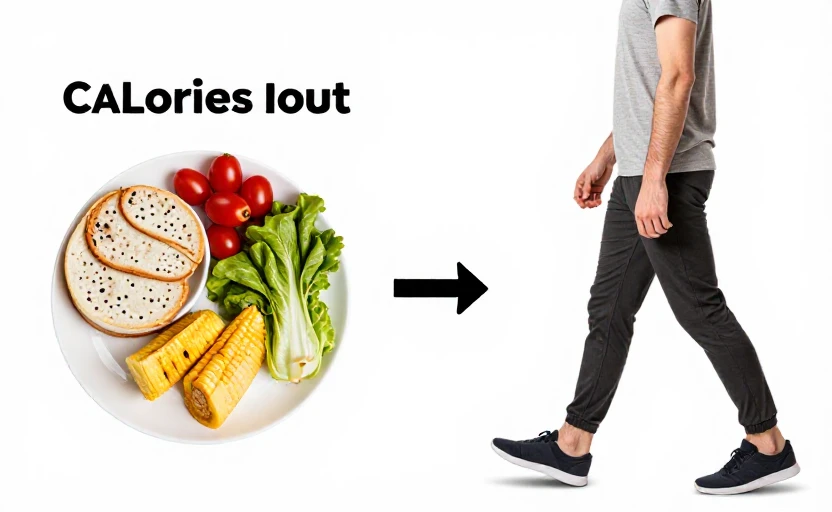
Creating a calorie deficit is the fundamental principle behind weight loss. It sounds straightforward—consume fewer calories than your body uses—but doing it safely and effectively requires a thoughtful approach. A poorly managed deficit can lead to fatigue, nutrient deficiencies, and a metabolism that fights back. This guide walks you through the basics of establishing a deficit that supports sustainable weight loss without undermining your health or energy.
What is a calorie deficit, really?
At its core, a calorie deficit is an energy shortfall. Your body needs a certain number of calories each day to maintain its current weight, a figure known as your Total Daily Energy Expenditure (TDEE). When you consistently provide fewer calories than your TDEE, your body taps into stored energy (body fat) to make up the difference, resulting in weight loss.
Think of it not as deprivation, but as a gentle nudge to your body to use its stored resources.
The key is that this deficit should be modest. A drastic cut might promise faster results, but it often triggers hunger, muscle loss, and a slowdown in your metabolic rate, making long-term success much harder.
Finding your personal starting point
Before you reduce anything, you need to know your maintenance level. Online TDEE calculators can provide a reasonable estimate based on your age, height, current weight, sex, and activity level. Remember, this is an estimate—a starting point for observation, not an absolute law.
From this estimated maintenance number, a safe deficit for most beginners is a reduction of 300 to 500 calories per day. This typically leads to a loss of about 0.5 to 1 pound per week, a pace associated with better retention of muscle mass and long-term adherence.
Creating your deficit: The two main levers
You can create this deficit by adjusting your diet, increasing your activity, or, most sustainably, a combination of both.
Mindful adjustments to nutrition
You don't need to overhaul your entire diet overnight. Small, strategic swaps and portion awareness often create the needed deficit without a sense of drastic change.
- Prioritize protein and fiber: Foods like lean meats, legumes, eggs, and vegetables help you feel fuller for longer on fewer calories.
- Watch liquid calories: Sugary drinks, fancy coffees, and alcohol can add hundreds of stealth calories. Switching to water, herbal tea, or black coffee is a simple, high-impact change.
- Practice portion awareness: Using a smaller plate, checking serving sizes on labels, and pausing halfway through a meal to assess hunger can naturally reduce intake.
Incorporating supportive movement
Exercise shouldn't be seen as punishment for eating, but as a partner in your health. It helps preserve calorie-burning muscle and improves overall well-being.
- Add NEAT: Non-Exercise Activity Thermogenesis—the calories you burn through daily movement like walking, taking the stairs, or gardening—is a powerful, underrated tool. Simply moving more throughout the day adds up.
- Include strength training: Building or maintaining muscle mass is crucial. Muscle tissue burns more calories at rest than fat tissue does. Aim for resistance exercises 2-3 times per week.
- Find enjoyable cardio: Whether it's brisk walking, cycling, or dancing, consistent cardiovascular activity increases your daily energy expenditure directly.
Signs your deficit is too aggressive
Listening to your body is non-negotiable. A safe deficit should not make you miserable or unwell. Be alert for these red flags:
- Persistent, intrusive hunger that disrupts your focus
- Feeling constantly fatigued, weak, or lightheaded
- Noticeable hair loss, brittle nails, or feeling unusually cold
- Irritability, mood swings, or obsessive thoughts about food
- For women, a loss of their menstrual cycle
If you experience these, it's a signal to increase your calorie intake, focusing on nutrient-dense foods, and reassess your approach. Your health is the priority.
Sustaining your progress
A calorie deficit is not meant to be permanent. It's a phase for reaching a weight goal. To maintain your results, you'll eventually transition to eating at your new maintenance calories. The habits you build now—like eating plenty of whole foods, staying active, and listening to your hunger cues—will form the foundation for that long-term maintenance.
Patience is your greatest ally. Weight loss is not linear; some weeks will show more progress than others. Focus on consistent habits over daily scale fluctuations. By creating a modest, thoughtful calorie deficit, you're not just losing weight—you're building a sustainable, healthier relationship with food and your body.