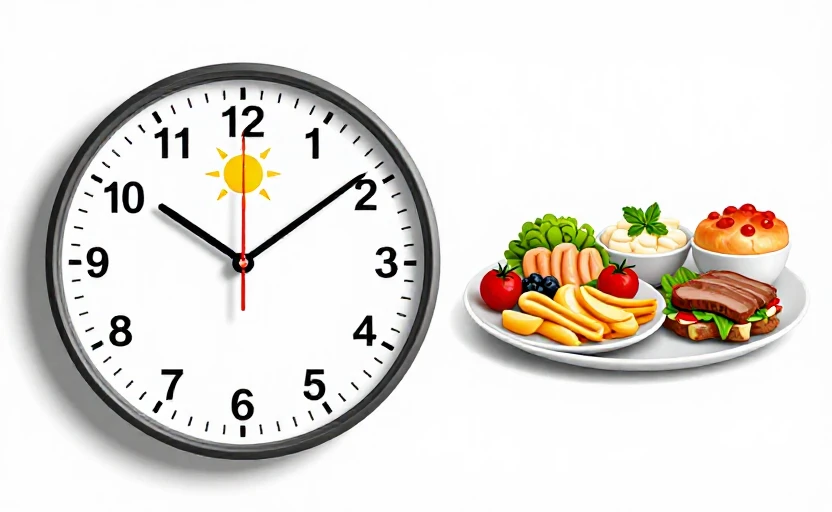
For decades, the weight loss conversation was dominated by a simple equation: calories in versus calories out. While that fundamental math still holds true, a growing body of research suggests the story is more nuanced. It’s not just what you eat or how much, but also when you eat. The timing of your meals might influence your metabolism, hunger hormones, and ultimately, your ability to manage your weight.
This isn’t about finding a magic hour to eat dessert without consequence. Instead, it’s about aligning your eating patterns with your body’s natural circadian rhythms—the internal clock that regulates everything from sleep to hormone release. Let’s explore what science actually says about meal timing and whether it can be a helpful tool in your wellness journey.
Your Body’s Internal Clock and Metabolism
Your body isn’t running on a constant, flat line all day. Its processes ebb and flow in a roughly 24-hour cycle known as the circadian rhythm. This rhythm influences core body temperature, hormone production, and crucially, how efficiently you metabolize food.
Research indicates that insulin sensitivity—how well your cells respond to insulin to take up glucose from your blood—is typically higher in the morning and decreases as the day progresses. Similarly, your metabolic rate tends to be more robust earlier in the day. This has led scientists to hypothesize that our bodies may be biologically primed to handle larger meals earlier rather than later.
Think of it like this: your digestive system has its own peak operating hours, much like the rest of you.
The Case for Front-Loading Your Calories
The concept of eating a larger breakfast and a lighter dinner, often called “front-loading,” is supported by several studies. One notable study published in the journal Obesity found that participants who consumed a high-calorie breakfast and a low-calorie dinner lost more weight and had better improvements in insulin and glucose levels than a group who did the opposite, even when total daily calories were identical.
The potential mechanisms here are compelling. A substantial morning meal may:
- Enhance feelings of fullness throughout the day, reducing overall calorie intake.
- Capitalize on higher morning insulin sensitivity, potentially leading to better blood sugar control.
- Sync with elevated cortisol levels in the morning, which help mobilize energy.
It’s a shift from the common pattern of a skimpy breakfast, a moderate lunch, and a large, often sedentary, evening meal.
The Impact of Late-Night Eating
On the flip side, consuming a significant portion of your calories late in the evening, especially close to bedtime, may work against your metabolic rhythm. Eating late can conflict with your body’s winding-down process.
Potential downsides of late eating include:
- Poorer glucose tolerance: Your body may not process sugars as effectively at night.
- Disrupted sleep: Digestion can interfere with the quality of your rest, and poor sleep is independently linked to weight management challenges.
- Misalignment with circadian rhythms: It sends a “wake-up” signal to your system when it should be preparing for rest and repair.
This doesn’t mean you need to panic if you eat dinner at 8 p.m. The concern is more about the habit of large, calorie-dense meals or snacks in the hours immediately before sleep.
Intermittent Fasting and Time-Restricted Eating
Much of the modern interest in meal timing stems from research on intermittent fasting (IF), particularly time-restricted eating (TRE). TRE involves consuming all your daily calories within a specific window, typically 8 to 10 hours, and fasting for the remaining 14 to 16 hours of the day (which includes sleep).
For example, someone might eat their first meal at 10 a.m. and their last meal by 6 p.m. The theory is that this extended fasting period allows insulin levels to drop sufficiently for the body to tap into fat stores for energy. It also naturally tends to reduce calorie intake by limiting the opportunity to eat.
Studies on TRE have shown promise for weight loss and metabolic health improvements. Importantly, many of these studies suggest that aligning the eating window earlier in the day (e.g., 8 a.m. to 4 p.m.) may offer greater benefits than a later window (e.g., 12 p.m. to 8 p.m.), reinforcing the front-loading concept.
Putting Science into Practice
So, how can you apply these insights without making your life overly complicated? The goal is consistency and alignment with your lifestyle, not perfection.
Start with a Nourishing Breakfast
If you’re a breakfast-skipper, consider introducing a balanced morning meal with protein, fiber, and healthy fats. This could stabilize your energy and curb later cravings. It doesn’t have to be huge—a smoothie, yogurt with nuts, or eggs with vegetables can set a positive tone.
Consider a Defined Eating Window
You might experiment with a gentle form of time-restricted eating, like a 10- or 12-hour window. Simply stopping food intake 2-3 hours before bed is a great first step that incorporates the science of late-night eating.
Listen to Your Body’s Signals
The best schedule is one you can sustain. If you’re not hungry in the morning, forcing a large breakfast may backfire. Pay attention to your natural hunger cues and energy levels. The science of meal timing offers a framework, not a rigid mandate.
Consistency in your daily pattern—eating at roughly the same times—may be just as important as the specific hours you choose.
Ultimately, meal timing is one piece of the puzzle. It works in concert with food quality, portion size, sleep, stress management, and physical activity. For some, shifting meal patterns can be a powerful lever for improving satiety and metabolic health. For others, the focus may remain elsewhere. As with any health strategy, it’s about finding what works sustainably for you, and consulting with a healthcare provider if you have specific metabolic conditions.