You’re hitting the gym, watching your plate, and yet the scale refuses to budge. It’s a frustratingly common story. Often, we focus solely on calories in and calories out, overlooking a powerful, invisible force that can throw a wrench into the best-laid plans: stress. It’s not just a mental burden; it’s a physiological event that can directly undermine your efforts to create a calorie deficit.
When stress becomes chronic, it shifts your body’s operating system. Hormones like cortisol flood your system, initiating a cascade of changes designed for survival—changes that are distinctly unhelpful for weight loss in our modern world. The goal isn’t to eliminate stress entirely, which is impossible, but to recognize when it’s actively working against you. Here are two key warning signs that stress might be the hidden culprit stalling your progress.
1. You’re Always Hungry, Especially for Carbs and Sweets
This isn’t ordinary hunger. It’s a specific, persistent craving for quick-energy foods like bread, pasta, chips, or candy. You might find yourself reaching for snacks shortly after a meal or feeling unsatisfied no matter how much you eat.
This drive is largely hormonal. Elevated cortisol communicates a primal need for fuel to face a perceived threat. It can increase appetite and, crucially, signal a preference for high-calorie, palatable foods. At the same time, stress can disrupt other hormones like leptin and ghrelin, which regulate satiety and hunger cues, making it harder to feel full.
Stress-induced cravings are your body’s misguided request for fast fuel, not a lack of willpower.
This creates a double bind: you’re driven to eat more of the very foods that are calorie-dense, making a sustained deficit much harder to achieve. If you notice your hunger has a frantic, specific quality tied to stressful days, it’s a strong signal that biochemistry, not just habit, is at play.
2. Your Body Is Holding Onto Weight, Particularly Around the Midsection
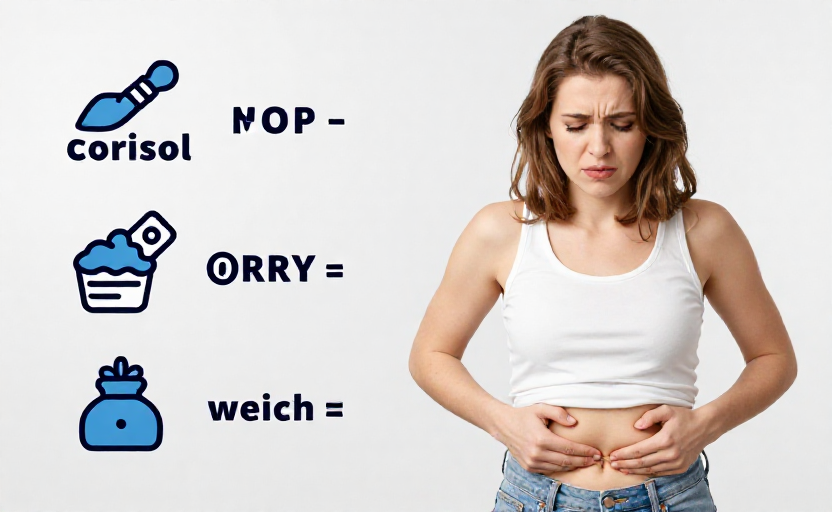
You’re doing everything “right,” but the weight, especially around your abdomen, seems stubbornly locked in place. This pattern of central weight retention is a classic physical manifestation of chronic stress.
Cortisol promotes the storage of visceral fat—the type that accumulates deep in the abdomen around your organs. This fat tissue is metabolically active and can further influence hormone balance. Furthermore, under chronic stress, your body may become more efficient at storing calories as fat, anticipating future hardship, even if you’re in a calorie deficit.
Beyond fat storage, stress can lead to:
- Water retention: Cortisol can affect fluid balance, causing temporary bloating and scale fluctuations that mask fat loss.
- Slowed digestion: The “fight-or-flight” response diverts energy away from non-essential systems like digestion, potentially leading to bloating and discomfort.
- Muscle breakdown: Prolonged high cortisol can break down muscle tissue for energy, which lowers your metabolic rate over time, making a deficit harder to maintain.
What You Can Do About It
Recognizing these signs is the first step. The next is integrating stress-moderating practices not as an extra task, but as a foundational part of your health strategy.
Focus on consistency, not perfection, with techniques that signal safety to your nervous system. This could mean ten minutes of deep breathing, a daily walk without your phone, prioritizing sleep, or setting a firm boundary on work hours. Gentle movement like yoga or tai chi can be particularly effective, as it combines physical activity with mindfulness.
Also, reframe your approach to nutrition during stressful periods. Instead of restrictive dieting, which can be another stressor, aim for balanced meals with protein, fiber, and healthy fats to help stabilize blood sugar and curb those hormonal cravings. Staying hydrated is crucial, as thirst can often mimic hunger.
The path to a calorie deficit isn’t purely mathematical. It’s a biological process deeply influenced by your state of mind and body. If you’re seeing the warning signs of stress—insatiable cravings and stubborn weight retention—addressing that tension may be the key that unlocks your progress. Listen to what your body is trying to tell you; sometimes the most productive step isn’t burning more calories, but calming your nervous system.