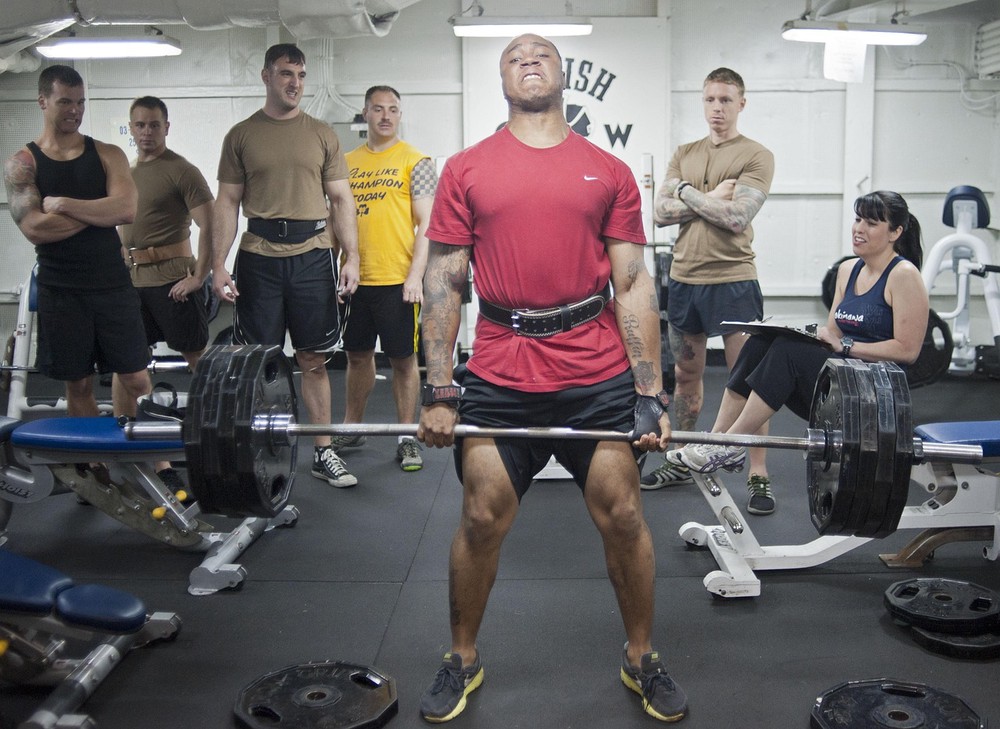
Walking up to a barbell for the first time is an honest, slightly intimidating moment. You've heard that the deadlift is the king of lifts, but you've also heard the horror stories—the popped discs, the yanked hamstrings, the lower backs that just never felt the same. The truth is the deadlift is a profoundly safe, functional movement when you understand a few key checkpoints. It is not a back exercise; it is a hip hinge that your spine can safely support if you keep it neutral. This guide is for the beginner who wants to lift without fear, not for the competitor chasing a one-rep max. We are going to walk through five practical, visual cues you can check in the mirror (or on your phone camera) before you add a single plate. No anatomy textbook, just honest movement.
Before we get into the list, let's get one thing straight: pain is not a teacher. Sharp pain in your lower back during a deadlift is a stop signal, not a challenge. Dull ache in your hamstrings or glutes the day after? That's adaptation. Learn the difference early.
1. The Setup: Are You Sitting Back or Bending Over?
The most common mistake beginners make is turning the deadlift into a stiff-legged good morning. You bend at the waist, the bar drifts away from your shins, and your lower back takes the load. Instead, think of pushing your hips back toward the wall behind you. This is called the hip hinge. Your shins should stay nearly vertical as you lower your torso. If you can see your knees sliding forward past your toes before the bar even leaves the ground, pause. Reset. You are turning your deadlift into a squat, which puts the quads in charge and leaves your spine unsupported.
2. The “Long Neck” Test for Your Spine
A safe deadlift spine looks like a straight line from the top of your head to your tailbone in the starting position. No rounding, no excessive arching. A helpful trick is the “long neck” cue: before you pull, imagine a string is lifting the crown of your head toward the ceiling. This naturally lengthens your cervical spine and helps the rest of the chain fall into a neutral position. If you look in a side-view mirror and see a C-curve in your low back, you are about to put your lumbar discs in a compromising position. Stand up, take a breath, and try again.
A neutral spine is not perfectly straight—it has a natural slight curve. “Neutral” means your vertebrae are stacked in their strongest alignment, not flattened or hyperextended.
3. The Bar Path: Your Automatic Form Check
Physics is on your side here. The barbell wants to travel in a straight vertical line because that is the shortest path to the top. If you watch your bar path on video and see a horizontal wiggle—especially if it swings out away from your body on the way up—you are likely pulling with your lower back early or letting your hips rise faster than your shoulders. A safe deadlift keeps the bar in contact with your legs the entire time. When the bar drifts away, you lose leverage and your spine acts as a lever arm. Fix this by thinking “pull the bar into your thighs” as you stand up, not “pull the bar up.”
4. Bracing Before the Pull
This is the single most underrated step for safety. Before you exert any force, take a deep belly breath into your lower abdomen (not your chest) and hold it. Imagine you are bracing for someone to punch you in the stomach. This creates intra-abdominal pressure that stabilizes your spine. Then, pull. Do not hold your breath for more than the one rep—exhale at the top or on the way down. Bracing is not optional; it is the difference between your spine relying on passive ligaments versus active muscular support. If you find yourself holding your breath for an entire set, you are risking a lightheaded moment. Reset between reps.
Common bracing mistakes
- Breathing and then losing tension. Inhale, brace, pull. Do not inhale and relax your abs to reach down.
- Using a weight belt too soon. A belt is a tool, not a crutch. Learn to brace without one first. A belt can mask poor breathing patterns.
5. The Descent: Lowering Respectfully
Most beginners get the pull right but lose all form on the way down. They round their back, drop the bar, or let it crash into the floor. The descent is not an “uncontrolled drop.” It is the eccentric phase of the lift, and it is where your back is most vulnerable to shearing forces. Keep the same hip hinge you used on the way up: push your hips back, keep your spine neutral, and slide the bar down your thighs. If you feel your lower back rounding right before the bar touches the floor, you are bending too early. Try “sticking your butt out” as you lower the bar. Your goal is to place the weight gently on the floor, not drop it.
A good rule of thumb: if you wouldn't let someone lower you into a chair by collapsing your spine, do not lower a barbell that way either.
Final Thoughts: When to Add Weight
The deadlift is addictive precisely because it feels primal and powerful. But your ego will try to rush you. A safe deadlift progression looks like this: master the hip hinge with a PVC pipe or a broomstick. Master a deadlift with just the barbell (45 pounds/20 kg). Master three sets of five with perfect video-checked form. Then add five pounds. If your form breaks—and you will know because the bar path wiggles or your back rounds—take weight off. That is not failure; that is injury prevention. You can always lift heavy next session. You cannot “undo” a herniated disc.
Listen to your body. If something feels wrong, it probably is. Deadlifting is a lifelong skill; there is no rush. Your future self, pain-free and strong, will thank you for starting slowly.