When we talk about weight loss, the conversation usually starts with diet and exercise. Burpees, meal prep, step counts—we've all been there. But there is another factor that often gets overlooked, yet it quietly influences how your body stores fat, burns calories, and responds to hunger: sleep. If you're trying to lose weight and feel like you're doing everything right but the scale won't budge, your sleep habits might be the missing piece.
This article is a practical explainer on how sleep duration directly affects body fat storage, and why prioritizing rest is one of the most effective (and underrated) tools for sustainable weight loss.
How Sleep Duration Influences Fat Storage
Your body runs on a internal clock called the circadian rhythm. When you cut your sleep short, you disrupt this rhythm, and it triggers a cascade of hormonal and metabolic changes. The most notable shift involves two key hormones: ghrelin and leptin. Ghrelin signals hunger; leptin signals fullness. When you are sleep-deprived, ghrelin levels spike and leptin levels drop. The result is an increase in appetite, especially for high-carb, high-sugar foods. Eating more of those foods leads to excess energy, which your body stores as fat.
But it's not just about eating more calories. Lack of sleep also impacts where the fat goes. A 2022 study published in the Journal of the American College of Cardiology found that people who slept fewer than seven hours a night had higher levels of visceral fat—the deep belly fat that wraps around your organs and is linked to heart disease and metabolic issues. The participants who got adequate sleep didn't show the same fat accumulation, even when their calorie intake was similar.
Key insight: Sleeping less than six hours a night may signal your body to store more fat in the abdominal region, rather than distributing it evenly.
The Metabolic Slowdown of Chronic Sleep Debt
Sleep deprivation doesn't just make you hungrier—it also reduces your resting metabolic rate (RMR). RMR is the number of calories your body burns at rest just to keep basic functions running, like breathing and circulation. When you are chronically tired, your body goes into a conservation mode. It burns fewer calories throughout the day, even if you exercise regularly.
A 2018 study in the International Journal of Obesity followed adults over a period of partial sleep restriction (5.5 hours per night) versus adequate sleep (8.5 hours). Those in the sleep-restricted group lost significantly less fat mass during a calorie-restricted diet. In fact, they lost more lean muscle mass instead of fat. Muscle burns more calories than fat, so losing muscle further slows your metabolism, creating a cycle that makes weight loss harder over time.
In practical terms, if you are dieting but only sleeping five or six hours a night, you could be sabotaging your fat loss—even if your calorie deficit is perfectly calculated.
The Cortisol Connection
Poor sleep also elevates cortisol, the stress hormone. Cortisol tells your body to hold onto energy reserves in the form of fat—especially in the belly. High cortisol levels also encourage cravings for high-calorie comfort foods. This combination explains why a sleepless night can make you reach for that doughnut or bag of chips before lunchtime.
Can You Sleep Your Way to Fat Loss?
Sleep alone won't cause dramatic weight loss, but optimizing your sleep makes every other effort more effective. When you get seven to nine hours of quality sleep, your body functions better: insulin sensitivity improves, which helps your cells use glucose instead of storing it as fat. Appetite hormones stabilize, making it easier to stick to a nutrient-dense diet. Your energy levels rise, so your workouts feel more productive and you move more throughout the day.
If you are currently sleeping less than six hours, aim to add just 30 to 60 minutes of sleep per night. That simple change can have measurable effects on body composition over several weeks.
- Consistent bedtime: Go to bed and wake up at the same time every day, even on weekends.
- Limit blue light: Put away phones and laptops at least 60 minutes before bed.
- Cool room: A bedroom temperature around 65°F (18°C) promotes deeper sleep.
- Watch caffeine: Avoid caffeine after 2 p.m.; it can linger and disrupt sleep quality.
Practical Takeaways for Weight Loss
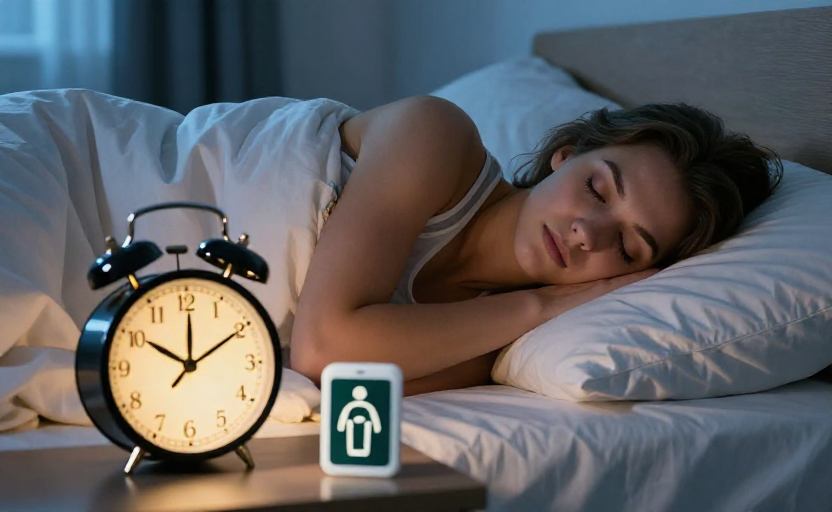
If you are already exercising and eating well, adding sleep to the equation is like turning on a switch. The body needs that rest period to repair muscles, balance hormones, and regulate metabolism. Without it, you are asking your body to run on empty—and fat storage keeps humming along.
Here are three numbers worth remembering: seven, eight, and nine. That's the range of hours most adults need for optimal metabolic health. Falling below that regularly is linked to higher body fat percentage, slower weight loss progress, and more belly fat. The exercises and the meal prep still matter, but they will work much better when supported by real, consistent sleep.