
You roll out your mat, take a centering breath, and suddenly your heart is racing before you’ve even touched your toes. If you’re a regular coffee drinker and a yoga practitioner, you may have wondered whether that morning cup is helping or hurting your practice. The short answer: caffeine’s stimulating effects can indeed mimic or trigger anxiety symptoms during yoga—especially during calming or restorative sequences. Understanding the connection can help you decide how to adjust your routine without giving up your ritual entirely.
How Caffeine Affects the Nervous System During Yoga
Caffeine is a central nervous system stimulant. It blocks adenosine, the neurotransmitter that promotes relaxation and sleep, and it triggers the release of adrenaline. That’s why you feel alert and energetic after a cup of coffee. But in the quiet, introspective space of a yoga class, those same effects can feel like jitters, restlessness, or an unexplained sense of dread.
Yoga—especially slower styles like Hatha, Yin, or Restorative—relies on the parasympathetic nervous system (“rest and digest”) to help you feel grounded. Caffeine activates the sympathetic nervous system (“fight or flight”). If you step onto your mat with caffeine still circulating in your blood, your body can be caught between two signals: one telling you to relax, and another telling you to be on high alert.
4 Signs That Coffee Is Affecting Your Yoga Practice
1. A racing heart that won’t settle after the first few poses
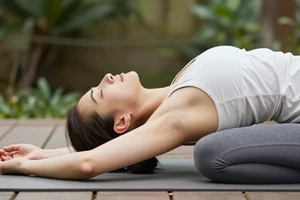
It’s normal for your heart rate to increase during a vigorous Vinyasa or power flow. But if your heart is pounding before you’ve even moved—or if it stays elevated during gentle poses like Child’s Pose or Savasana—caffeine could be the culprit. Caffeine’s half-life in the body is roughly 3 to 5 hours, so a morning coffee can still be affecting you an hour or two later.
2. Uncontrollable fidgeting or difficulty holding stillness
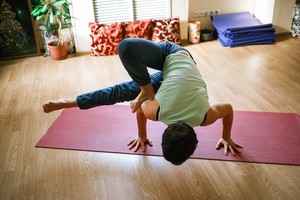
Yoga teaches us to find ease in a steady posture. If you find yourself constantly adjusting your grip on your mat, shifting weight, or feeling an inner restlessness that pulls you away from the present moment, the stimulant effect of caffeine may be overriding your ability to settle. This can be especially noticeable in balancing poses and in moments of silence.
3. Shallow or quick breathing despite your breath cues
Caffeine can lead to shallow, rapid breathing because it heightens arousal. Even when your instructor guides you into slow Ujjayi breath, you may notice that your inhales and exhales feel clipped or tight. This pattern of breathing itself can signal the brain that you’re under stress, creating a feedback loop that feels like anxiety.
4. A feeling of dread or nervousness during Savasana
Savasana (Corpse Pose) is meant to be deeply relaxing. If you lie still and instead feel a wave of worry, racing thoughts, or an impending sense of doom—even for a moment—caffeine may be unmasking underlying anxiety. Caffeine increases cortisol and adrenaline, and when you remove the distraction of movement, the physiological “threat” can become more noticeable.
If you notice any of these signs consistently, try reducing your caffeine dose or moving your coffee to after practice for a week. Small adjustments often make a big difference.
Does Coffee Help Some Yoga Practices?
Caffeine isn’t always a problem. For some people, a small amount of coffee can improve focus, energy, and performance during more athletic yoga styles like Ashtanga, Power Yoga, or Hot Yoga. The key is knowing your personal tolerance and timing. A general guideline is to allow at least 60 to 90 minutes between your last sip of coffee and your practice. This gives your body time to metabolize some of the caffeine.
What to Do If You Suspect Coffee Is Causing Anxiety
- Time it differently. Experiment with drinking coffee well before your practice—or afterward.
- Reduce the dose. Try a half-cup, a smaller brew, or a blend with less caffeine (such as a mix of regular and decaf).
- Hydrate. Caffeine is a diuretic; dehydration can worsen anxiety symptoms. Drink a full glass of water alongside your coffee.
- Try alternatives. For the pre-practice ritual, consider a low-caffeine option like green tea (which also contains L-theanine, an amino acid that promotes calm) or a caffeine-free herbal tea like peppermint or ginger.
- Keep a log. For one week, note your coffee timing, how much you drank, and how you felt during each yoga session. Patterns often become clear quickly.
When to Consider a Deeper Look
For most people, tweaking caffeine intake helps. But if anxiety during yoga persists even after you’ve stopped coffee for several days, it may be worth checking in with a healthcare provider. Generalized anxiety disorder, panic disorder, or even an overactive thyroid can also cause heart palpitations and feelings of dread. Yoga is a wonderful tool for self-awareness, but it’s not a substitute for medical evaluation.
Your morning coffee doesn’t have to be the enemy of your practice. With a little awareness and experimentation, you can find a rhythm that lets you enjoy both your ritual and your time on the mat. The goal is not to eliminate the things you love, but to understand how they affect your body so you can choose what serves you best.