Props in yoga are meant to support you—not to get in the way. But even the best-intentioned block, strap, or blanket can throw off your alignment if it's placed wrong. The challenge is that you might not notice until you feel a strain or a wobble. That’s where a breath test comes in. Instead of guessing or relying on a mirror, you can use your own breath as a real-time alignment check. It’s simple, immediate, and works for any prop-based pose.
What Does a Breath Test Actually Tell You?
When your alignment is off, your ribcage and diaphragm can’t expand fully. You might feel short of breath, or notice that your inhale is shallow and your exhale feels forced. A prop that’s positioned poorly—for example, a block that’s too high under your sacrum in a supported bridge—can compress your lower back or crowd your abdominal cavity. The breath test simply asks: when you settle into the pose with props, does your breath feel easy and full, or does it feel restricted?
If your breath flows freely, that’s a strong signal that your prop placement is working with your anatomy. If you feel any holding, tightness, or the need to gasp, it’s a sign to adjust.
Setting Up for the Breath Test: The Basics
Before you check alignment, get into the pose and arrange your props as you normally would. Take a moment to settle. Then, instead of rushing into the pose, bring your attention to your natural breath. Don’t try to change it—just observe. Here’s what to look for:
- Inhale: Does your rib cage expand evenly on both sides? Do you feel your lungs filling from the bottom up, or is the breath stuck high in your chest?
- Exhale: Does the exhale feel smooth and complete, or do you feel the urge to push air out? A forced exhale often means the prop is pressing into a sensitive area.
- Duration: Can you hold the pose for three full breath cycles without the quality of your breath degrading? If you start panting or holding on the third breath, something is off.
This test works best when you’re still—not during movement. Once you find a breath-friendly alignment, you can then move more mindfully within that setup.
Common Props and Where Breath Gets Stuck
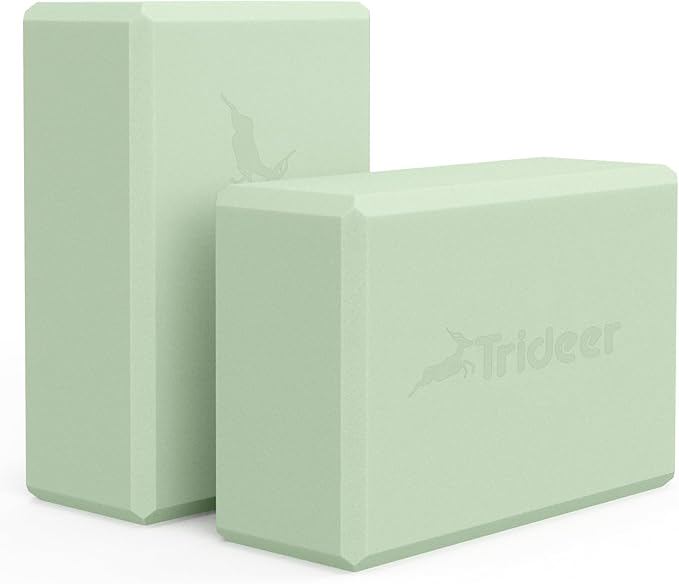
Blocks
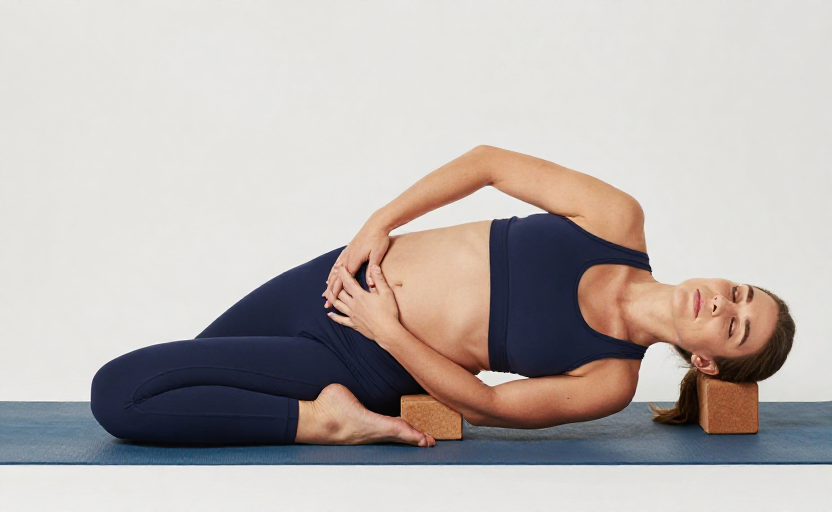
Blocks are often used to bring the floor closer or to elevate a body part. In a supported triangle pose, a block under the lower hand can feel helpful—but if it’s placed too far forward or too high, it can twist your torso and compress your diaphragm on the inhale. Try lowering the block by one level or moving it slightly back. If your breath deepens, you’ve found a better spot.
Straps
Straps are meant to extend your reach, not to bind you. In a seated forward fold (Paschimottanasana) with a strap around the feet, check if your shoulders are pulling forward and up toward your ears. That tension can restrict your breath. Instead, keep the strap long enough that your shoulders stay down and your collarbones stay wide. When you exhale, notice if you can release a little more—if not, the strap may be too short.
Blankets & Bolsters
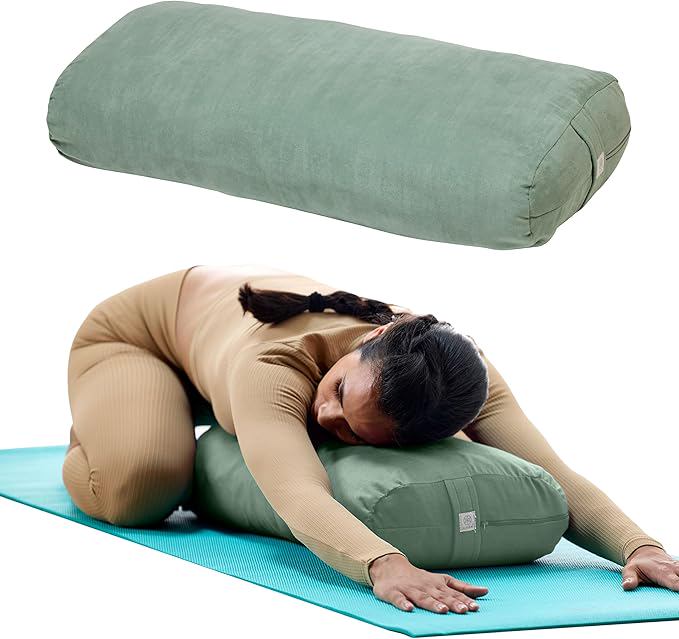
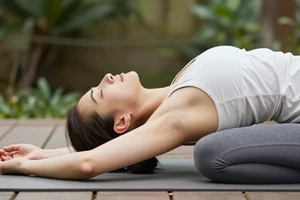
In a restorative pose like supported child’s pose (Balasana), the height and firmness of the bolster matters. If it’s too high, your rib cage can’t settle, and your breath will be shallow. If it’s too low, your chin might tuck too far, compressing your throat. Adjust until you feel your belly and ribs soften into the prop on the exhale.
A Quick Protocol You Can Use in Any Pose
Here’s a short sequence you can run through anytime you use props:
- Set up the pose with props as you normally would.
- Close your eyes (if safe) and bring one hand to your belly and one to your ribs.
- Take three slow breaths through your nose. Notice which parts of your torso expand and where you feel resistance.
- If the breath is uneven or strained, make one small adjustment—raise, lower, or reposition the prop.
- Test again with three more breaths. Repeat until the breath feels spacious and free.
A good rule of thumb: your exhale should feel like a sigh of relief, not a squeeze. If you can’t relax into the exhale, your props are fighting you, not helping you.
What If the Test Tells You to Remove a Prop Entirely?
Sometimes the breath test reveals that the prop itself is the source of tension. That’s not a failure—it’s useful information. Not every pose needs blocks or straps for every body. If removing the prop lets your breath flow fully, do it. You can always reintroduce a different prop (or a different placement) later. The goal is to support your unique structure, not to fit a template.
Applying the Breath Test Beyond the Mat
While this technique is designed for yoga, the principle applies to any seated or reclined activity where you use external support—like meditating on a cushion, sitting at a desk, or even sleeping on a pillow. Learning to read your breath as feedback about alignment is a skill that translates to everyday comfort. Over time, you’ll start to notice misalignment before discomfort arises, because your breath will tell you first.
Using a breath test to check your prop alignment is subtle but powerful. It doesn’t require any equipment, and it taps into your body’s natural intelligence. The next time you set up for a supported pose, pause before you move—and listen to what your inhale and exhale have to say. Often, they already know the answer.


![Tumaz Yoga Strap/Stretch Bands [15+ Colors, 6/8/10 Feet Options] with Extra Safe Adjustable D-Ring Buckle, Durable and Comfy Delicate Texture - Best for Daily Stretching, Physical Therapy, Fitness](https://www.glowtheorylab.com/uploads/ad202604/d62cf3b7330d7d4a.webp)