Your hips are workhorses. They support your weight, drive your stride, and let you bend, twist, and sit with ease. But hip stiffness rarely announces itself with a bang. It creeps in—subtle at first, then slowly persistent. By the time pain arrives, the joint may already have lost significant range of motion. That’s why home monitoring matters. Looking for specific, early changes in how you move can help you catch mobility problems before they become chronic.
You don’t need medical equipment or an app to do this. Just a little awareness, a few simple checks, and a habit of noticing small shifts. Here’s what to watch for and how to track it.
Why home monitoring works for hips
Hip mobility isn’t binary—healthy or broken. It exists on a continuum. Small asymmetries, such as favoring one leg when standing, often precede stiffness. At home, you can observe these patterns daily, without the white-coat effect that sometimes masks how you actually feel. A 2023 review in BMC Musculoskeletal Disorders noted that early detection of functional decline in large joints often starts with self-reported movement changes. Home monitoring simply makes that process more intentional.
The three early warning signs to track
Rather than tracking a long checklist, it’s most effective to zero in on three movement categories. These are easy to test in less than five minutes and reflect real hip function.
1. Symmetry in standing
Stand barefoot with equal weight on both feet. Close your eyes for 10 seconds, then open them. Notice if your pelvis feels tilted—like one side of your belt line is higher. Another check: look at your shoewear. Is the sole more worn on one heel? Uneven wear suggests a subtle gait change, often starting in the hip.
2. Depth in squat or bend
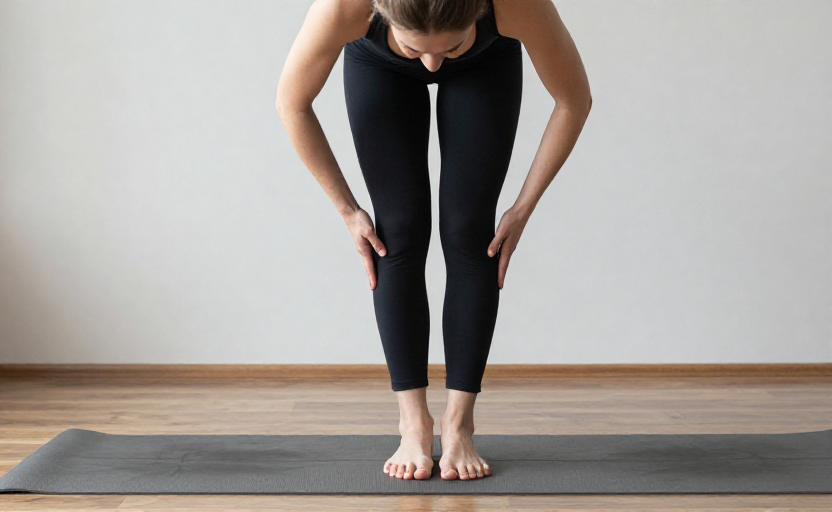
Perform a shallow squat (as low as comfortable, or just a forward bend from the hips). Observe if your knees track toward the midline or if your torso leans heavily to one side. Limited hip flexion shows up as an early stopping point on one side. Over time, this can increase load on the lower back.
3. Rotation while seated
Sit on a firm chair with your knees bent at 90 degrees and feet flat. Rotate your upper body to one side, keeping your hips still. Record how far you turn before your pelvis starts to shift. Repeat on the other side. A difference of more than 10 degrees can indicate early capsular tightness or joint irritation.
Tip: Use a phone camera to film these checks from the front and side. Video removes guesswork and helps you spot subtle asymmetries you might miss in real time.
How to log what you see
Consistency matters more than perfection. Choose one day per week to run through the three checks. Jot down a single sentence for each: “Left side felt tighter in rotation” or “Knees drifted right when squatting.” A simple note in a notebook or a voice memo works. Over a month, patterns become visible.
Look for changes that persist for two consecutive weeks or worsen week over week. An isolated tight day after a long run probably isn’t a warning sign. But ongoing asymmetry that doesn’t resolve with rest or light movement is worth taking seriously.
When to combine monitoring with professional input
Home monitoring isn’t a substitute for a clinical exam. Think of it as a filter. If you notice a consistent loss of motion or new groin pain—especially if you’re over 40 or have a family history of hip osteoarthritis—it’s prudent to consult a physical therapist or sports medicine clinician. They can perform specific tests like the FABER (flexion, abduction, external rotation) test or the impingement test that home checks cannot replicate.
The goal of home monitoring is to give you information, not anxiety. If your logs show stable, even movement, you can feel confident. If they show a slow decline, you can act early, when interventions like targeted strengthening or gait retraining are most effective.
Common missteps to avoid
- Overinterpreting normal variation: Everyone has a dominant side. A slight difference in rotation (under 10 degrees) is normal and not a warning sign.
- Only checking when you hurt: The point of monitoring is to catch changes before pain starts. If you only check during discomfort, you’ve already missed the window.
- Relying on memory: Don’t trust “I think it feels better this week.” Write it down or record it. Brains smooth over details.
A note on lifestyle factors
Hip mobility is influenced by more than just the joint. Prolonged sitting tightens the hip flexors; weak glutes can change your stride; even sleep position (fetal curl) can restrict range overnight. Home monitoring is most useful when you also note relevant context. If you sat for eight hours yesterday and notice stiffness, that’s a different signal than stiffness after a normal day. Add a context note alongside your movement check.
Home monitoring won’t diagnose a labral tear or grade your cartilage loss. But it can do something equally valuable: tell you, with real data from your own body, when it’s time to get help. That early heads-up is often what keeps a small mobility issue from becoming a life-limiting one.