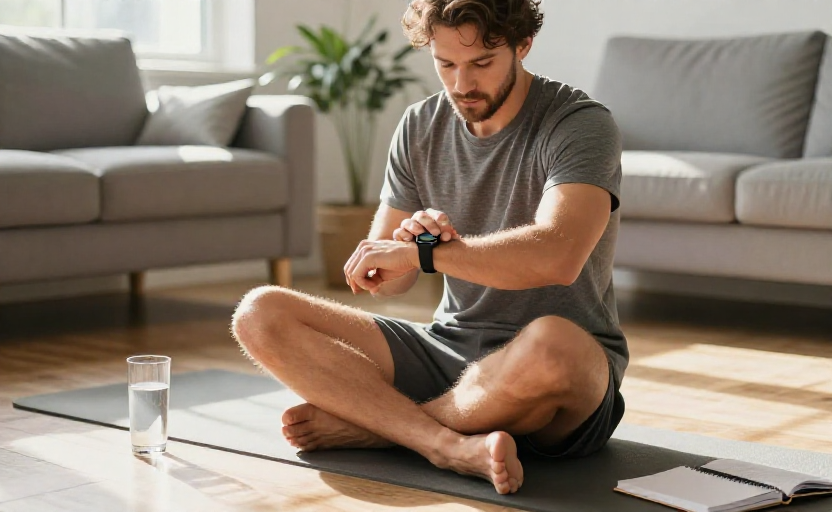
Recovery is where the real work pays off. For athletes, the gap between a good training block and a great one often comes down to how well you bounce back. But you don't need a sports science lab to keep tabs on your recovery. With a few simple, reliable methods, you can track how your body is handling stress right from your living room. This isn't about over-analysis; it's about listening to the signals that matter most.
Why home recovery monitoring matters
Training breaks down muscle tissue and depletes energy stores. Recovery is the repair process that makes you stronger. Without enough recovery, fatigue accumulates, performance plateaus, and injury risk climbs. Monitoring at home helps you spot early warning signs of overreaching or inadequate sleep before they turn into an illness or a sidelining injury. It also lets you know when you're ready to push hard again.
Think of it as a feedback loop: you train, you recover, you measure a few key markers, and you adjust your next workout or rest day accordingly. It's practical, not obsessive.
Heart rate variability for daily readiness
Heart rate variability (HRV) is one of the most researched and accessible metrics for recovery tracking. HRV measures the time variation between heartbeats. A higher, more variable reading generally indicates a rested, ready-to-perform nervous system. A lower or suddenly dropping HRV signals stress—from hard training, poor sleep, or external life pressure.
How to use it at home: Most athletes use a chest-strap heart rate monitor or a wrist-based wearable that supports HRV measurement. First thing in the morning, before getting out of bed, take a one-minute reading. Many apps (like HRV4Training or Apple Health) log this automatically. Look for trends rather than single-day numbers. If your HRV is 10% or more below your personal baseline for several days, consider an easier training day or active recovery.
Practical tip: Try to take your HRV reading at the same time each morning, under similar conditions (same room temperature, after using the bathroom). Consistency matters more than perfection.
Resting heart rate: a simpler companion metric
If HRV feels too nuanced, your resting heart rate (RHR) can be just as telling. Measure it in the morning while lying in bed, before any movement. A normal RHR varies by age and fitness level, but a notable increase—say, 5–10 beats per minute above your usual baseline—often indicates incomplete recovery, dehydration, or an approaching illness. A drop in RHR over weeks is a sign of improved cardiovascular fitness.
Subjective feeling: the underrated recovery signal
Numbers are powerful, but they don't capture everything. A simple morning check-in can be just as valuable. Rate your perceived recovery on a 1–10 scale: 1 means completely exhausted, 10 means ready for a personal best. Ask yourself: How did I sleep? Are my legs heavy or light? Any unusual soreness, stiffness, or low motivation?
Keep a small notebook or a notes app entry for this. Many recovery apps also have a "readiness" or "wellness" questionnaire. The value is in spotting patterns over several weeks, not in a single score.
Sleep quality: the foundation of recovery
You can't out-recover bad sleep. Sleep is when growth hormone peaks, muscle repair accelerates, and the brain clears metabolic waste. Tracking sleep doesn't mean obsessing over your sleep stages. Focus on duration (most athletes need 7–9 hours) and consistency (same bedtime and wake time, even on weekends).
If you use a wearable, look at total sleep time and interruptions. If you don't, simply note whether you woke up feeling refreshed or groggy. Subjective sleep quality correlates well with recovery status. A string of poor sleep nights is a clear signal to dial back training intensity.
Two simple physical tests to gauge readiness
Before a workout, you can do quick functional checks that don't require any gear:
- The grip strength check: Your grip strength naturally fluctuates with recovery state. If you notice your handshake or grip on a pull-up bar feels notably weaker than usual, your nervous system may be fatigued.
- The morning mobility test: Stand up and reach for your toes. If you feel noticeably tighter or less mobile than your normal baseline, that stiffness can indicate muscle inflammation or incomplete recovery from the previous day's session.
These tests won't diagnose anything specific, but they're fast, free, and give you a real-time body feedback loop. If you fail both checks (weak grip and tight movement), it's a good day for stretching, walking, or complete rest.
Why you should track trends, not daily spikes
One bad night of sleep or a single low HRV reading isn't a crisis. Training stress, hydration, caffeine timing, and even stressors like a work deadline can temporarily skew a metric. The goal is to watch the moving average over 7 to 14 days.
If you see a consistent downward trend in HRV, a rising resting heart rate, and poor subjective readiness, it's time for a recovery week—not a rest day, but a deliberate reduction in training volume and intensity. Conversely, if your metrics are stable or improving, you can confidently push harder.
Many wearables and apps provide a "readiness" or "training readiness" score that combines these factors. Use it as a suggestion, not a rule.
Keeping it simple: what not to obsess over
Recovery tracking is a tool, not a test. Avoid these common traps:
- Don't compare your HRV or RHR to someone else's. Baseline is personal.
- Don't chase a perfect score. Trends matter; daily fluctuations are normal.
- Don't rely on a single metric. Sleep, feeling, and a basic measurement like HRV together paint a clearer picture.
- Don't let tracking create anxiety. If checking numbers stresses you out, skip the gadgets and just use the subjective feeling check.
Monitoring recovery at home isn't about replacing professional coaching or medical advice. It's about giving you actionable feedback so you can train smarter, rest intentionally, and ultimately perform better. Start with one habit—morning HRV or a simple 1–10 readiness score—and build from there. Your body already knows how to recover; this just helps you listen a little more closely.