For many of us, the fear of a fall is a quiet, persistent background hum that grows louder with age. It can subtly change how we move through the world, making us hesitant, less active, and more isolated. Yet, the ability to prevent a fall isn't just about luck or sheer willpower; it's a skill built on a foundation of strength, awareness, and, most critically, balance. This is where a specific, mindful approach to yoga, informed by physiotherapy principles, can be profoundly transformative.
As a physiotherapist, I see balance not as a static state of standing perfectly still, but as a dynamic, ongoing conversation between your body and your environment. It's the continuous, micro-adjustments your ankles, hips, and core make as you walk on an uneven path, turn to answer a question, or simply get up from a chair. Yoga, with its emphasis on body awareness, controlled movement, and foundational strength, offers a perfect language for this conversation. The goal here isn't to achieve the most advanced postures, but to cultivate a stable, confident, and resilient body that moves with intention.
Why Balance Fades and How Yoga Helps
Balance naturally declines due to a combination of factors: weaker muscles (especially in the ankles and core), slower reaction times, diminished proprioception (your body's sense of where it is in space), and even changes in vision. A sedentary lifestyle accelerates this decline. Traditional yoga addresses these points directly, but a physiotherapy lens sharpens the focus on functional, real-world stability.
Balance-focused yoga prioritizes movements that mimic daily life—shifting weight, reaching, turning, and recovering from a slight stumble. It trains the neuromuscular system to respond efficiently, building what we call "postural strategies." These are the automatic ways your body catches itself, primarily using your ankles for small sways, your hips for larger shifts, and finally, taking a step if needed. By practicing these strategies in a safe, controlled environment, you reinforce the neural pathways that keep you upright when it matters.
Foundational Poses for Stability
Start by practicing near a wall, chair, or kitchen counter you can lightly touch for support. The aim is to challenge your balance, not to fight for survival. Consistency with these foundational poses is far more valuable than occasional, intense sessions.
Mountain Pose (Tadasana) – The Blueprint
This is your balance home base. Stand with feet hip-width apart, weight evenly distributed across the four corners of each foot (ball of the big toe, ball of the little toe, and both sides of the heel). Engage your thigh muscles to lift the kneecaps slightly, gently draw your navel toward your spine, and roll your shoulders back and down. Breathe steadily. This simple act of standing with awareness recalibrates your posture and centers your gravity.
Spend a full minute here before moving on. Feel the connection between your feet and the floor.
Weight Shifts and Heel Raises
From Mountain Pose, slowly shift your weight onto your right foot, then back to center, then to the left. Keep the movements smooth and controlled. Next, practice lifting both heels off the floor, then lowering with control. This builds essential ankle strength and calf endurance, crucial for walking and navigating stairs.
Tree Pose (Vrikshasana) – Dynamic Stability
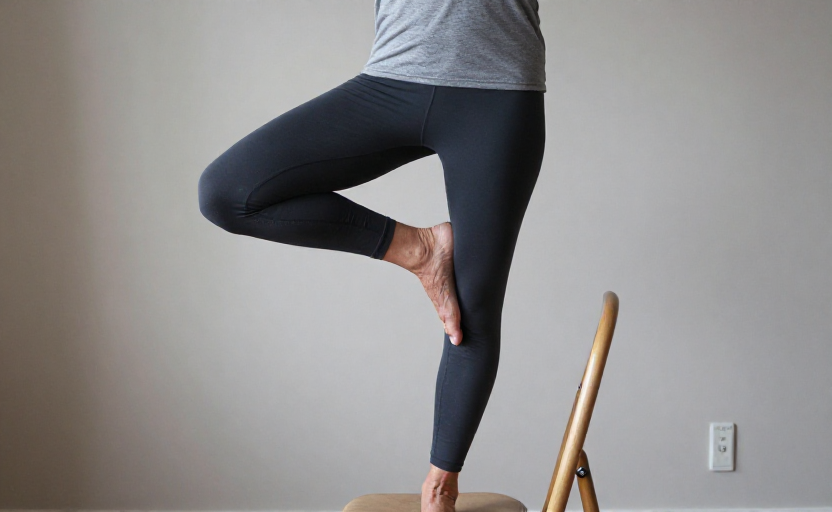
Place the sole of your right foot on your left inner ankle, calf, or inner thigh (never on the knee). Find a focal point on the wall ahead. Press your foot into your leg and your leg back into your foot to create stability. Hold for 30 seconds to a minute, then switch sides. This pose challenges single-leg stance, engages your core, and improves concentration.
Warrior III (Virabhadrasana III) – Integration
From standing, hinge forward from your hips as you extend one leg straight back, creating one long line from your head to your heel. Your torso and back leg should be parallel to the floor. You can keep your hands on your hips, reach them forward, or touch a wall for support. This pose integrates your entire posterior chain—glutes, hamstrings, back muscles—which are vital for preventing a forward fall.
Building a Safer Practice
Safety is paramount. Always have a stable support within reach. Remove loose rugs from your practice area and wear clothing that allows you to see your feet and ankles. If you have specific health concerns like severe osteoporosis, vertigo, or significant joint issues, consult your doctor or a physiotherapist before beginning. A qualified yoga therapist or instructor experienced in therapeutic yoga can provide invaluable personalized guidance.
Listen to your body. A mild shake in a standing leg is normal as muscles fatigue; sharp or joint-specific pain is a signal to stop. Balance can fluctuate daily based on fatigue, stress, or even hydration. Be kind to yourself on "wobbly" days.
Weaving Balance into Your Day
The true test of this practice happens off the mat. Try these micro-habits:
- Stand on one foot while brushing your teeth (use the counter for light support).
- Practice sitting down and standing up from a chair without using your hands, using only your leg strength.
- When waiting in line, subtly shift your weight and feel your feet actively grounding.
- Walk heel-to-toe in a straight line, as if on a balance beam, for a few steps.
This mindful approach transforms balance from an abstract concern into an active, empowering practice. You're not just waiting to see if you'll fall; you're actively building a body that knows how to stay upright, react gracefully, and move through your world with renewed confidence and calm.