When most people think about building a stronger core, they picture crunches, planks, and leg lifts. But your core—the complex network of muscles that stabilizes your spine, pelvis, and hips—depends on more than just exercise. The foods you eat play an essential role in muscle repair, nerve function, and overall structural support. If you skip the right nutrition, your workouts can only do so much.
Below are seven foods that can help bolster your core from the inside out. They are not a shortcut to six-pack abs, but they do provide the building blocks your body needs to build strength, improve coordination, and stay balanced as you age.
1. Salmon for omega-3s and muscle recovery
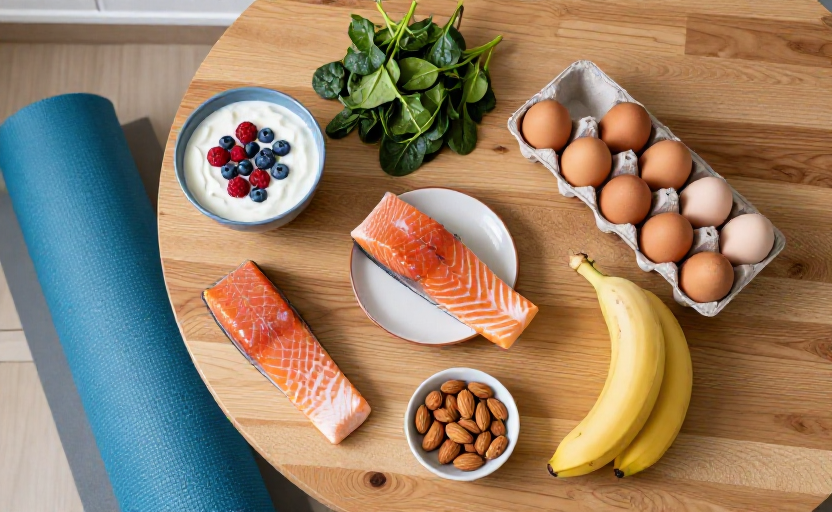
Salmon is rich in omega-3 fatty acids, which help reduce inflammation after a challenging core workout. Less inflammation means faster recovery and less stiffness between sessions. It also provides high-quality protein, which is necessary for repairing the deep abdominal and back muscles that form your core. For best results, aim for wild-caught salmon a couple of times per week.
2. Leafy greens for magnesium and nerve function
Spinach, kale, and Swiss chard are packed with magnesium. This mineral is critical for muscle contraction and nerve signaling—both of which are constantly at work when your core engages to keep you upright and balanced. Adequate magnesium also helps prevent muscle cramps, allowing you to hold a plank or a yoga pose longer without your muscles seizing up.
Tip: Pair your greens with a source of vitamin C, like lemon juice or bell peppers, to enhance iron absorption and support oxygen delivery to working muscles.
3. Eggs for vitamin D and muscle strength
Eggs are one of the few natural food sources of vitamin D, a nutrient that directly influences muscle strength and balance. Low vitamin D levels have been linked to weaker core muscles and a higher risk of falls in older adults. The protein in eggs also supplies the amino acids your body uses to maintain lean muscle mass, which is essential for stability.
4. Greek yogurt for protein and calcium
Plain Greek yogurt delivers a concentrated dose of protein—about twice as much as regular yogurt—plus calcium. Calcium is not just for bones; your muscles rely on it to contract properly. When your core muscles contract in a coordinated sequence, you maintain balance during movement. Protein helps rebuild those muscles so they can do it again the next day.
5. Bananas for potassium and electrolyte balance
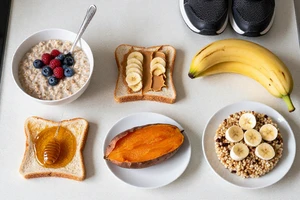
Bananas are famous for their potassium content, a key electrolyte that supports muscle function and prevents cramping. Even mild electrolyte imbalances can make your muscles feel weak or uncoordinated, which directly affects core stability. A banana before or after a workout can help keep your energy steady and your muscles ready for balance-demanding movements like single-leg stands or rotational exercises.
6. Almonds for vitamin E and oxidative stress
Almonds are a convenient source of vitamin E, an antioxidant that helps protect muscle cells from oxidative stress caused by intense training. They also provide magnesium and healthy fats that support sustained energy. A small handful of almonds can be a smart snack for anyone looking to maintain the endurance needed for longer core-focused sessions.
7. Berries for antioxidants and joint health
Blueberries, strawberries, and raspberries are loaded with antioxidants that reduce muscle inflammation and support collagen production. Collagen is a structural protein found in tendons and ligaments—the tissues that connect your core muscles to your spine and pelvis. Keeping those connective tissues healthy helps you maintain a sturdy, balanced frame.
While no single food will transform your core overnight, consistently including these nutrient-dense options in your diet can support the strength, recovery, and coordination that make balance exercises more effective. Remember that building a core strong enough to keep you stable for daily activities—not just for impressive planks—requires a whole-body approach that pairs smart nutrition with regular movement.