
When we think about improving our yoga practice, especially as we get older, our minds often go straight to the mat—the poses, the breath, the flow. But what if a significant part of the equation was actually in the kitchen? The food we eat provides the raw materials our bodies use to build strong connective tissue, lubricate joints, and maintain the muscle strength essential for stability. For seniors practicing yoga, focusing on specific nutrients can be a powerful, complementary strategy to support balance and joint comfort, making each session feel more grounded and sustainable.
This isn’t about a restrictive diet or miracle cures. It’s about intentional nourishment. By weaving certain foods into your regular meals, you’re directly supplying your body with the compounds it needs to protect cartilage, reduce inflammation that can lead to stiffness, and support the neuromuscular communication vital for good balance. Let’s explore seven foundational foods that can help you build a more resilient body from the inside out.
How does food actually help with balance and joints?
It helps to think of your body as a structure that’s constantly being repaired and rebuilt. The synovial fluid that cushions your joints, the cartilage that prevents bone-on-bone contact, the ligaments that provide stability, and the muscles that control movement all require specific nutrients. Chronic, low-grade inflammation can wear down these tissues over time, leading to stiffness and discomfort. Meanwhile, poor nerve health or muscle weakness can directly undermine your sense of equilibrium.
The right foods combat this in two primary ways. First, they provide anti-inflammatory compounds that help calm the systemic inflammation that can aggravate joints. Second, they deliver the precise vitamins, minerals, and proteins that are the building blocks for repair and maintenance. When you eat for joint and balance support, you’re not just feeding your hunger—you’re facilitating your body’s own natural maintenance processes.
Foods to focus on
Fatty fish like salmon and sardines
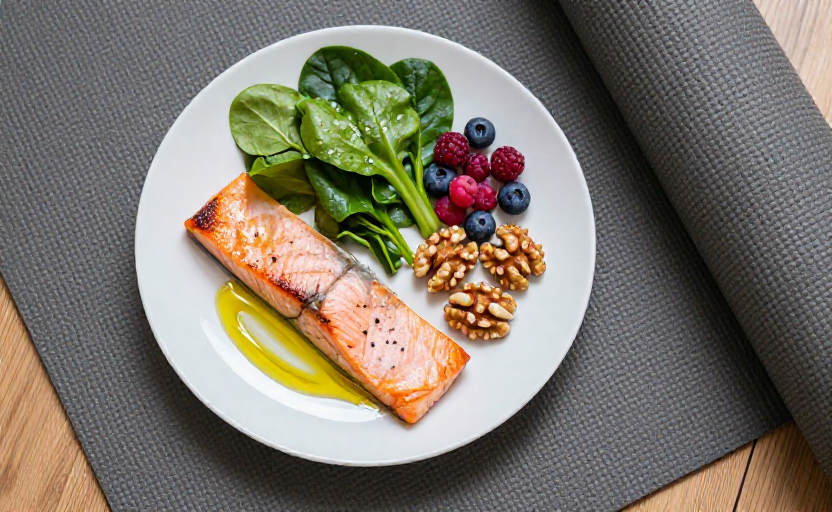
Fatty fish are perhaps the most celebrated food for joint health, and for good reason. They are rich in omega-3 fatty acids, specifically EPA and DHA. These are powerful anti-inflammatory agents. Research suggests they can help reduce the production of inflammatory molecules and enzymes that contribute to cartilage breakdown. For yoga practitioners, this can mean less morning stiffness and more fluid movement during sun salutations.
Aim to include a serving of fatty fish like wild-caught salmon, mackerel, or sardines at least twice a week.
Leafy greens (spinach, kale, Swiss chard)
Dark leafy greens are nutrient powerhouses. They are excellent sources of vitamin K, which is essential for bone health and may play a role in the formation of cartilage. They’re also packed with antioxidants like vitamin C and beta-carotene, which fight oxidative stress—a contributor to tissue aging and inflammation. The magnesium in greens supports muscle function and nerve signaling, both critical for maintaining balance.
Berries (blueberries, strawberries, raspberries)
Vibrantly colored berries are loaded with antioxidants, particularly anthocyanins, which give them their deep hue. These compounds have strong anti-inflammatory effects. For joints, this means protection against the oxidative damage that can degrade cartilage and synovial fluid. The cognitive benefits of berries are a bonus, as a sharp mind is key for focused, balanced movement on the mat.
Nuts and seeds (walnuts, almonds, chia seeds, flaxseeds)
This category offers a double benefit. Walnuts and chia seeds provide plant-based omega-3s (ALA). While the body converts ALA to the more active EPA and DHA at a lower rate, they still contribute to an anti-inflammatory diet. More importantly, nuts and seeds are fantastic sources of vitamin E, a fat-soluble antioxidant that helps protect cell membranes in joint tissues. They also provide magnesium and protein for muscle support.
Olive oil
Extra virgin olive oil is a cornerstone of the Mediterranean diet, renowned for its anti-inflammatory properties. The key compound is oleocanthal, which has been shown to have effects similar to ibuprofen in inhibiting inflammatory pathways. Using olive oil as your primary cooking fat or in dressings is a simple, flavorful way to support joint comfort daily.
Greek yogurt or kefir
Balance relies heavily on strong muscles, and muscle strength requires protein. Greek yogurt and kefir are excellent sources of high-quality, easily digestible protein. They also contain calcium and vitamin D (if fortified), crucial for bone density. Furthermore, the probiotics in kefir and some yogurts support gut health, which is increasingly linked to systemic inflammation regulation.
Turmeric and ginger
While often used as spices, these rhizomes deserve a spotlight. Curcumin, the active compound in turmeric, is one of the most potent natural anti-inflammatories studied. Ginger contains gingerol, which also has significant anti-inflammatory and antioxidant effects. Incorporating them into meals—think turmeric in scrambled eggs or lentil soup, ginger in stir-fries or tea—can provide gentle, consistent support for joint comfort.
Putting it all together on your plate
The goal isn’t to obsess over each meal, but to create a consistent pattern of nourishment. A day of eating for balance and joints might look like a spinach and berry smoothie with chia seeds for breakfast, a large salad with salmon, olive oil dressing, and walnuts for lunch, and a curry with turmeric, ginger, and plenty of vegetables for dinner, with Greek yogurt as a snack.
Hydration is also part of this foundation. Water is a major component of synovial fluid. Staying well-hydrated helps keep this natural lubricant viscous and effective, ensuring your joints move smoothly through each vinyasa and hold.
Remember, food works slowly and synergistically. It supports the work you do on the mat by creating an internal environment conducive to repair and resilience. Pairing this mindful approach to nutrition with your regular yoga practice is one of the most holistic ways to cultivate strength, stability, and ease for years to come.